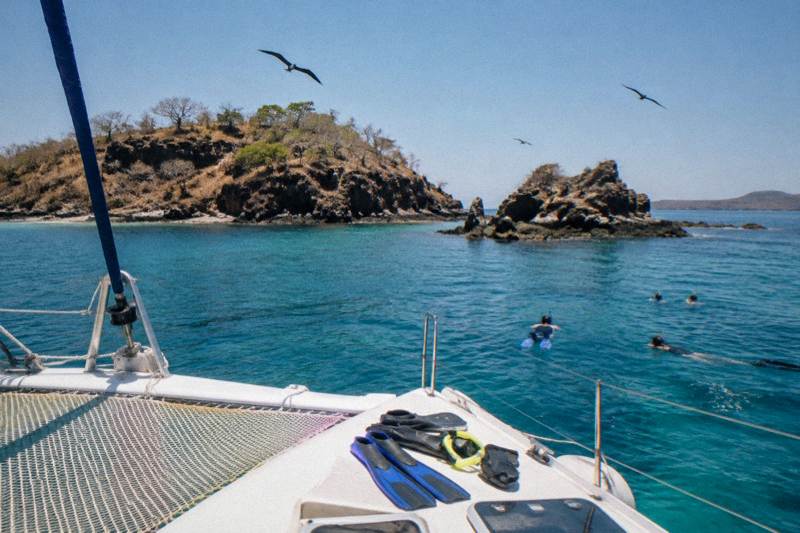
Tamarindo Estuary Boat Tour: Mangroves, Birds And Crocodiles
The Tamarindo Estuary is the mangrove heart of Las Baulas National Marine Park, and the small-boat trip through it is a completely different animal from the ocean catamaran cruise this site catalogues. Here is what the estuary tour involves, what lives in there, and how to choose between the two.
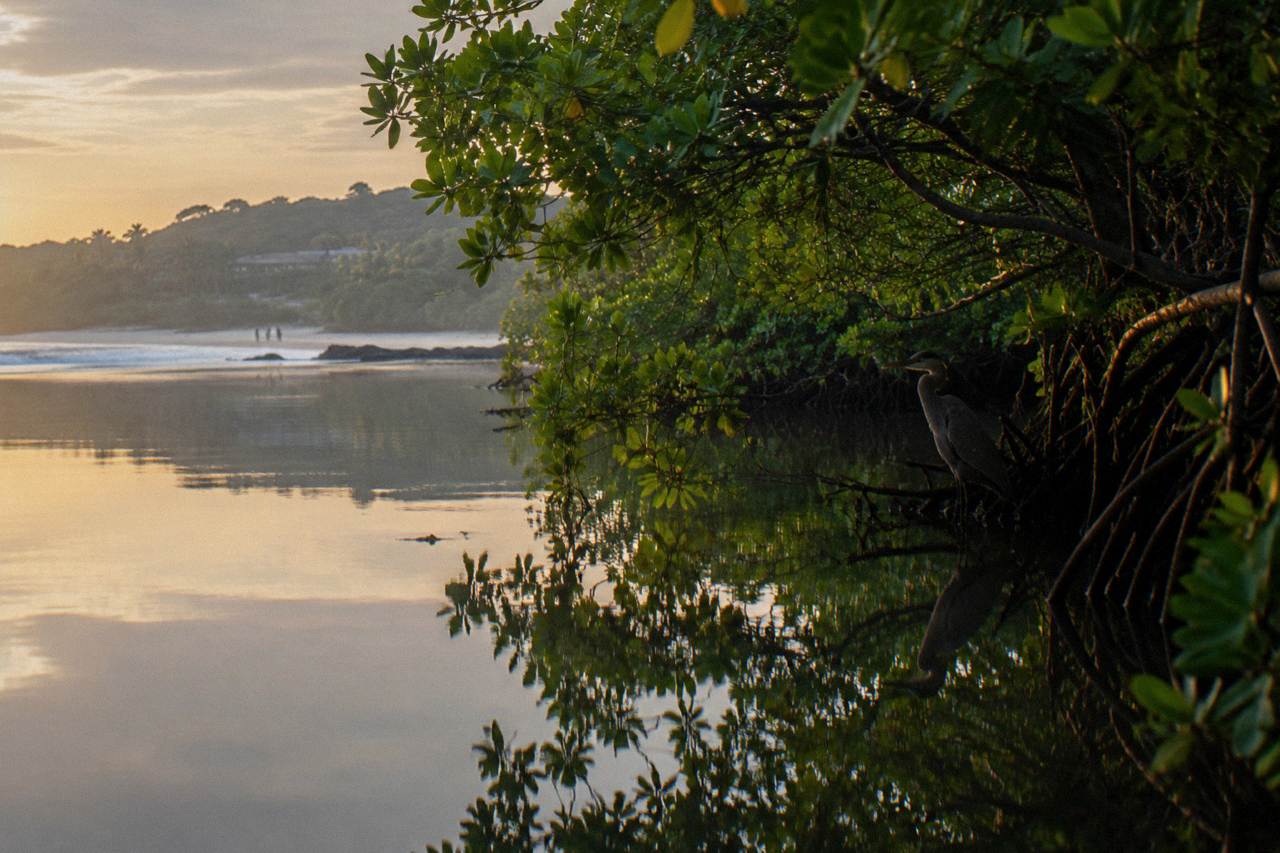
Short answer
The Tamarindo estuary boat tour is a small-boat, tide-dependent mangrove trip inside Las Baulas National Marine Park, sold separately from this site's catalogue of ocean catamaran cruises. Trips drift the channels for howler monkeys, crocodiles and birds over roughly two hours. Catamaran options here run from $88 per person shared, or from $500 per group private.
The Tamarindo Estuary separates the town's beach from Playa Grande, and the park service that manages it calls the wetland of worldwide importance. Its channels are the domain of a small-boat nature trip: a quiet, slow drift under a mangrove canopy, watching for howler monkeys, crocodiles, herons and egrets. That is the honest frame for this page. The estuary tour is a real and worthwhile outing, but it is not what this site sells, and pretending otherwise would mislead you. Every product catalogued here is a catamaran cruise on the open Pacific, from the morning family nature catamaran with kids' games to the sunset sail with open bar. This guide explains the estuary trip accurately, then shows how it compares with the ocean options you can actually book through these pages, because most readers weighing a estuary visit are really choosing between two kinds of boat day. If you're watching your budget, the guide to free things to do in Tamarindo lays out beaches, sunsets and tide pools that cost nothing, and makes an honest case for when one paid catamaran day earns its price.
What Is The Tamarindo Estuary Boat Tour?
The Tamarindo estuary boat tour is a roughly two-hour small-boat ride through the mangrove channels of Las Baulas National Marine Park, drifting between Tamarindo and Playa Grande with a guide pointing out monkeys, crocodiles and wading birds. It runs on the tide, not a fixed clock, because the channels are only passable at certain water levels. It is a separate product from the ocean catamaran cruises catalogued on this site, which are the bookable alternatives covered below.
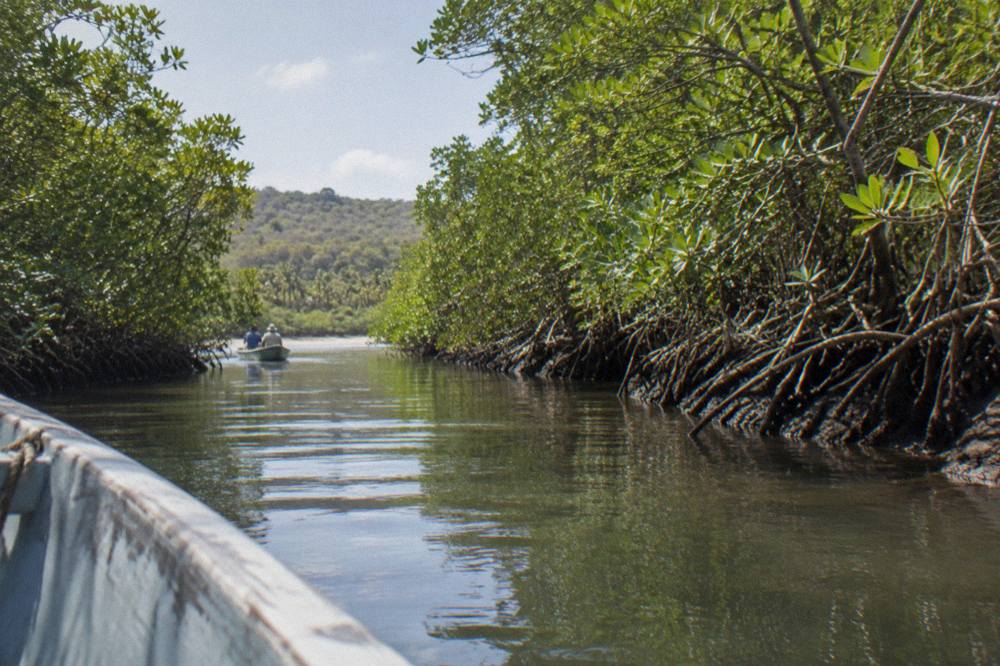
The estuary sits inside a national park, which changes the character of the trip. The park's official SINAC page lists a mangrove tour with local guides as one of the services at the site, and local guides run the boats. No reservation is needed for an estuary visit, according to the same page. The water is calm, there is no swell, and nobody swims: this is a looking trip, not a snorkeling trip.
The catalogue on this site contains no estuary listing. That is a deliberate editorial position rather than a gap. If you want the mangroves, buy the mangrove trip from whoever runs it that week in Tamarindo, at the going local rate. If you want to be on the water with snorkeling, lunch and an open bar, the catamaran cruises here, such as the 4.5-hour all-inclusive day sail from $90 per person, are the ocean-side counterpart. The two trips answer different questions, and the rest of this page helps you decide which question you are actually asking.
Timing matters more on the estuary than on any ocean trip. Operators of the mangrove runs note the tours are tide dependent, so departure times shift day to day with the water. Ocean catamarans, by contrast, sail on fixed schedules timed to the sun: sunset trips leave Tamarindo in the early afternoon, about 12:45 to 1:15 pm, because the sun goes down between about 5:16 pm in mid November and about 6:08 pm in late June. Plan the estuary around the tide table, and the catamaran around the clock.
What Wildlife Lives In The Tamarindo Estuary?
Operators describe howler monkeys, crocodiles, birds and the possibility of sharks in the protected estuary and mangrove channels of the park, with sightings reported but never guaranteed. Recent 2026 estuary and marine-park listings emphasize wildlife viewing over any swimming. Out on the open coast, catamaran guests in 2026 reported turtles, dolphins, whales and flying fish from the Marlin del Rey trips, again as reports, not promises.
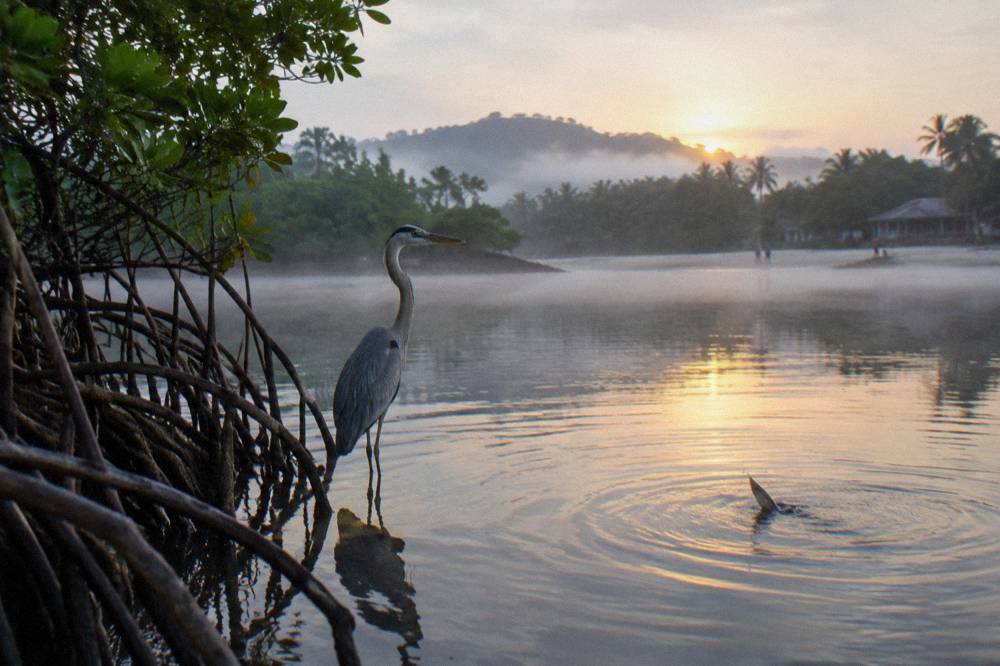
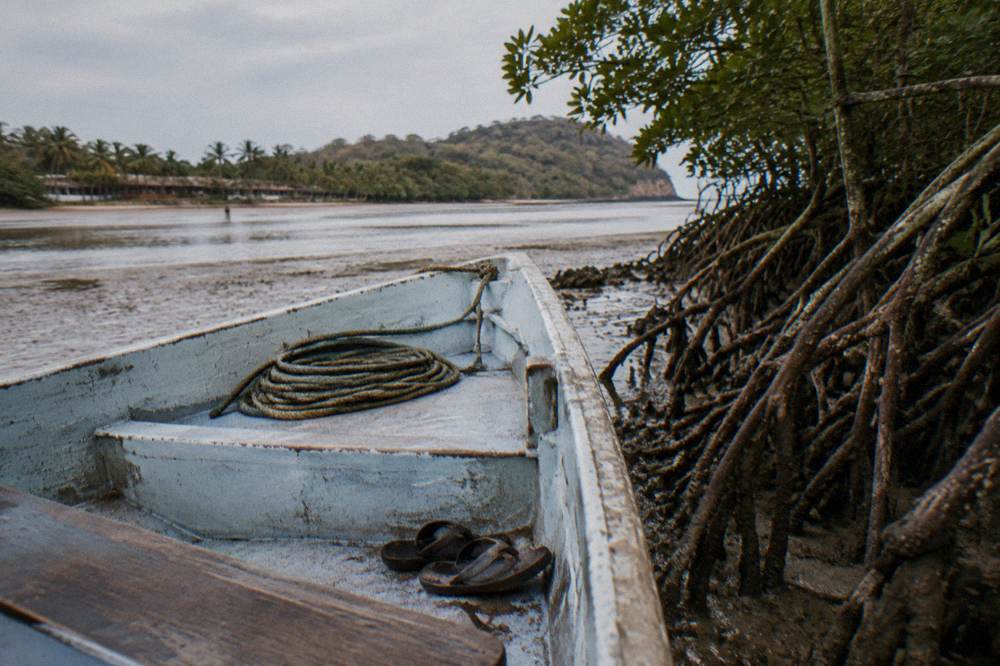
The mangrove side of the wildlife ledger is a forest story. Howler monkeys roar from the trees, crocodiles slide off the banks, and herons, egrets and kingfishers work the shallows. The park's own materials describe the wetland as internationally important, and the estuary trip is the standard way to see it. Nothing in the estuary is promised: animals appear or they do not, and a good guide reads the channel for both.
The ocean side is a pelagic story, and a seasonal one. Humpback whales reach this coast in two waves: a northern group reported from December to March or April, and a southern group roughly July to mid November, peaking August to September, according to press reporting and the official ICT guide to northern Guanacaste. Guest reviews of the Marlin del Rey catamaran cruises from June, July and October 2026 mention sea turtles, dolphins, whales and flying fish. Any boat operator who guarantees a sighting is overselling; the honest phrasing is that encounters are reported and possible.
Snorkeling is where the two worlds split hardest. The open beach at Tamarindo is often cloudy with sediment and wave action, while clarity improves markedly at nearby coves and the Catalina Islands, which a listing describes as a 45-minute catamaran sail from Tamarindo. Operators report underwater visibility of 15 to 25 meters in the dry season versus 8 to 12 meters or less in the green season. That is why the ocean catamarans moor at secluded bays for their snorkel stops, a thing an estuary flat-bottom boat simply cannot do. For a fuller treatment of that side, read the Tamarindo snorkeling tours guide.
When Is The Best Time Of Year For An Estuary Or Boat Trip Around Tamarindo?
For the estuary, the tide matters more than the month: trips run year-round when the channels have water. For the ocean catamarans, December to April brings the dry season, calmer seas and the best reported visibility, while May to November brings greener landscape, afternoon rain and stronger swells. October is the wettest month in the 30-year rainfall normals for Tamarindo.
Timing decisions for this coast are really season decisions, and the seasons behave differently inland on the mangroves than offshore. In the estuary, rain swells the river and can stir the water, but the trip itself continues; the tide sets the schedule. Offshore, the Papagayo winds peak December to March and can chop the surface, and operators note wind tends to rise after about 11 am in those months, which is why morning snorkel departures get recommended.
| Season | Months | Estuary conditions | Ocean catamaran conditions |
|---|---|---|---|
| Dry | December to April | Trips run on the tide, drier banks | Calmer seas, visibility 15 to 25 m reported, Papagayo wind chop possible |
| Green | May to November | Higher water, lusher forest, afternoon rain | Visibility 8 to 12 m or less reported, stronger swells, fewer crowds |
| Wettest month | October | Rain most days on the 30-year normals | Trips still run; expect afternoon downpours |
Sea temperature barely moves, which surprises visitors: the Guanacaste coast averages about 27.3 C in January, its coolest, and about 29.4 C in May, its warmest. Swimming is comfortable year-round on the ocean side. The estuary, again, is a no-swim environment regardless of temperature.
The best time for a Tamarindo boat tour guide breaks the month-by-month call in more depth, including the rainy-season tradeoffs in Tamarindo boat tours in rainy season.
Wondering whether to just put everyone on a catamaran and be done with it?
How Does The Estuary Tour Compare With A Tamarindo Catamaran Cruise?
The estuary trip is a short, calm, tide-dependent mangrove drift focused on land and tree wildlife, with no swimming and no meal service. A Tamarindo catamaran cruise is a four to five and a half hour ocean sail that combines snorkeling, lunch or dinner, an open bar and a sunset, on a fixed schedule. They share only the word boat, and many visitors do both on different days.
The practical differences stack up fast, and they matter most for families and for anyone prone to seasickness. The estuary has flat water, so motion is a non-issue; the ocean has swell, and the rough seas question has its own discussion. The estuary is short, roughly two hours in local reports, so it suits small children and short attention spans; the catamarans run half a day, which is a bigger commitment and a bigger ticket.
| Factor | Estuary boat tour | Ocean catamaran cruise |
|---|---|---|
| Water | Flat mangrove channels | Open Pacific, swell varies |
| Duration | About 2 hours (local reports) | 4 to 5.5 hours per listing |
| Wildlife focus | Monkeys, crocodiles, birds | Turtles, dolphins, whales, reef fish (reported) |
| Swimming | None | Snorkel stops at bays |
| Food and drink | Varies by operator | Meal and open bar on most listings |
| Schedule | Tide dependent | Fixed departure timed to sunset or morning |
| Booking | Sold locally, not in this catalogue | Bookable here, from $88 per person shared |
Price is where honesty matters most. This site does not publish estuary prices because the estuary trip is not in its catalogue and rates are set by local operators who change them; check the board on the beach or your hotel. The catalogue's own range is firm: shared ocean catamarans run from $88 per person for the budget Pacific Lounge sunset cruise to $169 per person for the open bar cruise with hotel transfers, and private charters run from $500 per group for a private snorkel boat to $2,972.98 per group for a private charter on the Marlin del Rey. The full breakdown lives in the Tamarindo catamaran cruise prices guide. If you're flying into Liberia and need to reach the coast before your boat departs, the Liberia Airport to Tamarindo transfer guide covers shuttle, taxi and private options along with drive times.
Can You See Turtles On An Estuary Or Catamaran Tour Around Tamarindo?
Turtle viewing at Las Baulas is currently restricted: the park is one of the world's most important leatherback nesting sites, but nesting numbers have collapsed and organized turtle observation inside the park is reportedly unavailable. Boats do not enter the nesting beach. Sea turtles are reported from the ocean catamarans in season, including 2026 guest reviews mentioning turtles, but no operator can promise a sighting.
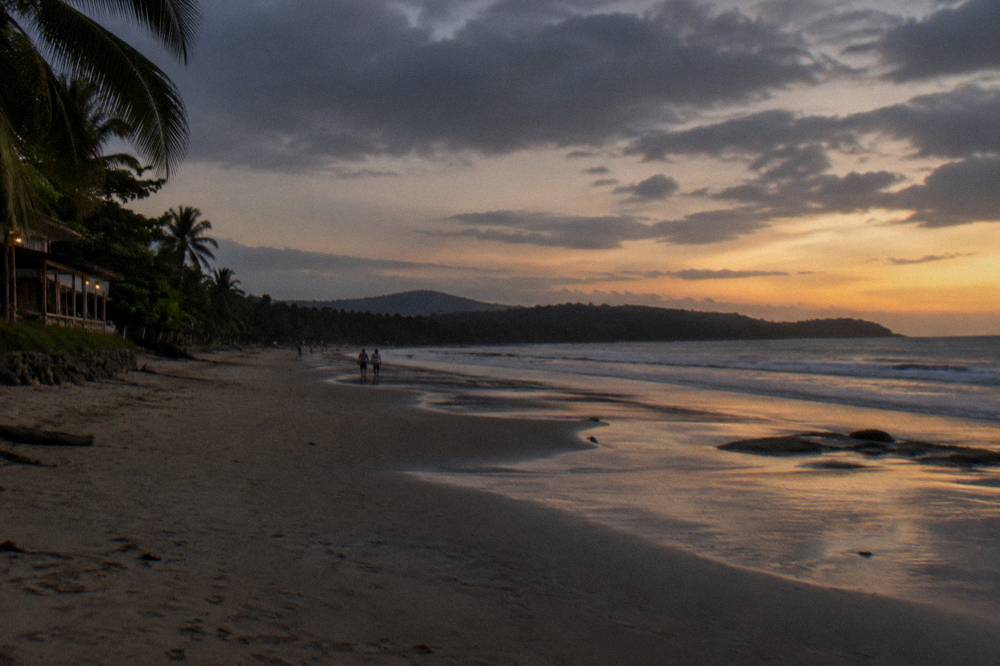
This section deserves the plainest writing on the page. Las Baulas hosts three nesting turtle species, leatherback, olive ridley and black turtle, with leatherbacks nesting on Playa Grande, Langosta and Ventanas between 20 October and 15 February. Conservation reporting puts the leatherback population down more than 95 percent since the late 1980s, with recent seasons recording only a handful of females. The park's rules are strict for good reason: groups of at most 15 people with a guide, no photographing or touching, observation from behind in silence, and a red-filter flashlight carried only by the guide. Organized turtle observation is currently not available, per a 2026 reading of the park's own page, and boat tours never land on the nesting beach.
On the water, the honest statement is that sea turtles appear in guest reports from the ocean cruises: June, July and October 2026 reviews of the Marlin del Rey trips mention them alongside dolphins and whales. The turtle watching question has a full treatment, and the Las Baulas park and Tamarindo boats guide covers the rules in detail. What no page on this site will tell you is that a sighting is coming.

If a gentle daytime boat with wildlife talk and a meal sounds like the right compromise between forest and ocean, the Blue Dolphin public catamaran tour is the closest catalogue match: a 4.5-hour trip from $90 per person, rated 4.5 from 990 reviews, with snorkel gear and an open bar listed.
How Much Does A Boat Trip Cost And How Do You Book Around Tamarindo?
Estuary trips are sold by local operators at rates this site does not publish, since the product is outside its catalogue; expect to book on the ground in Tamarindo. Ocean catamarans are bookable here with firm shared prices from $88 to $169 per person and private charters from $500 to $2,972.98 per group. Every catalogue listing shows free cancellation.
The two booking paths could not differ more. The ocean side is a listings business with published prices, inclusions and cancellation terms. When comparing, read what each catalogue line actually includes, because the flags differ: the sunset sail from $97 per person lists lunch, an open bar, snorkel gear, two kayaks and a paddle; the 5-hour guided sunset boat tour from $95 per person lists dinner, snorkel gear and paddle boards but does not state an open bar; the open bar cruise with hotel transfers at $169 per person lists round-trip transportation, brunch and restrooms on board.
| Catalogue option | Type | Price basis | Duration | Listed highlights |
|---|---|---|---|---|
| Budget Pacific Lounge sunset | Shared | from $88 per person | 5 hours | Lunch, open bar, snorkel gear, kayak, paddleboard |
| 5-hour guided sunset boat tour | Shared | from $95 per person | 5 hours | Dinner, snorkel gear, paddle boards |
| Timarouba sunset sail, open bar | Shared | from $97 per person | 5 hours | Lunch, open bar, snorkel gear, 2 kayaks |
| Open bar cruise, hotel transfers | Shared | from $169 per person | 5 hours | Round-trip transport, brunch, open bar |
| Private snorkel boat, photos included | Private | from $500 per group | 4 hours | Crew, snorkel gear, snacks and drinks |
A few listings show price on the listing rather than a number here, including the Albatros sunset sail and the luxury Panache charter; treat those as inquiry products. Pickup also varies: only lines that state it, such as the Flamingo-area trips and the transfer cruise above, include hotel pickup, so check the listing for transport on anything else. Departure beach matters too, and the Playa Flamingo boat tours guide explains the difference between boarding at El Chiringuito on Tamarindo beach and boarding at Marina Flamingo or the Lazy Lizard area, which is about a 31 to 35 minute drive away.
The featured sunset option pairs well with an estuary morning, since it sails the same coastline at golden hour: from $97 per person, 5 hours, rated 4.5 from 504 reviews, with an open bar, lunch and snorkel gear listed. See the Timarouba sunset sail page for details and Check availability.
Which Boat Trip Should Families With Kids Choose Around Tamarindo?
Families split naturally between the estuary's short, flat, wildlife-dense drift and a morning ocean catamaran with gear, food and games aboard. The catalogue's morning family nature catamaran lists kids' games, lunch and an open bar over 4.5 hours from $98 per person, and it has too few reviews for a star claim yet, which is stated plainly here. Minimum ages vary by tour, so check the listing.
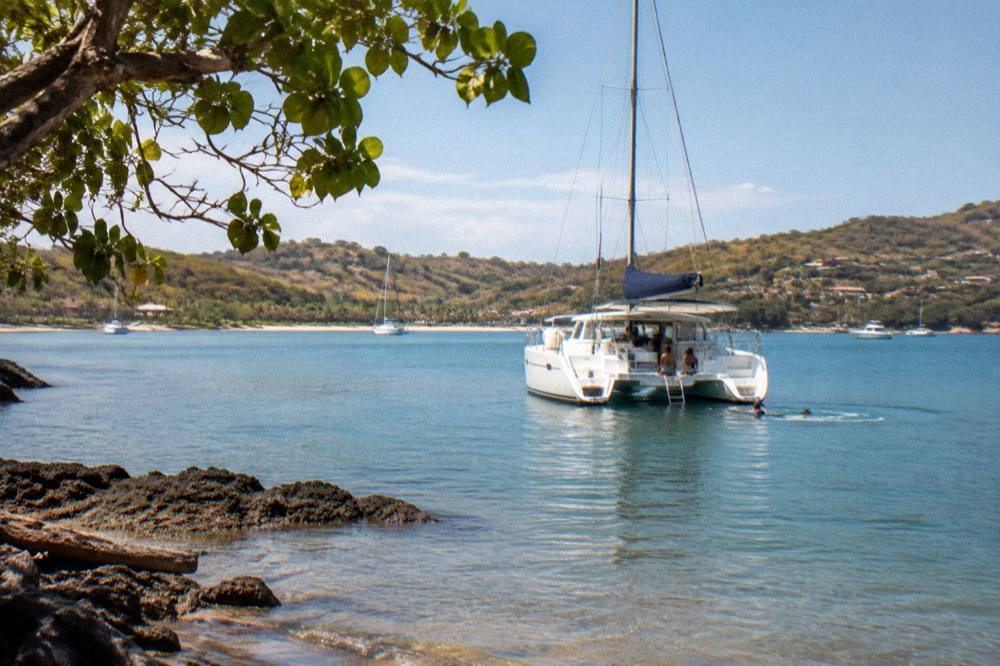
The honest tradeoff for parents: the estuary wins on attention span and zero motion, and loses on facilities, since a small mangrove boat has no lunch service, no slide and no snorkel stop. A family catamaran gives structure: a scheduled half-day, a meal, drinks, water toys and crew who run the kids' entertainment. The morning departure also fits the small-body clock better than a sail that returns after sunset, and mornings get the calmer wind window before the afternoon build-up.
The catalogue's family-fit flagship is the morning nature catamaran with kids' games, which lists a full morning cruise on a modern catamaran with a rooftop, sunbathing, swim and snorkel stops in secluded bays, an open bar, a quality lunch served by the crew and an experienced English-speaking crew. It runs 4.5 hours from $98 per person, boarding at El Chiringuito on Tamarindo beach, with free cancellation listed. Its review pool is still small, so no rating is printed here; decide on the inclusions, not a star figure. Details and booking live on the morning family catamaran page.
For older kids and confident swimmers, the same-family alternative is the daytime Blue Dolphin catamaran covered above, rated 4.5 from 990 reviews, which lists chicken fajitas, an open bar, snorkeling and a stand-up paddle board. Whichever you choose, this site, Tamarindo Catamaran Cruises, puts all of these ocean-side trips in one place, and the boat tours guide walks through each major listing.
Common Questions About The Tamarindo Estuary Boat Tour
What Is The Tamarindo Estuary Boat Tour?
A roughly two-hour small-boat drift through the mangrove channels of Las Baulas National Marine Park between Tamarindo and Playa Grande, guided, tide dependent, focused on monkeys, crocodiles and birds rather than swimming. It is sold separately from the ocean catamaran cruises catalogued on this site.
Can You See Turtles On An Estuary Or Catamaran Tour Around Tamarindo?
Organized turtle observation inside Las Baulas is currently restricted and reportedly unavailable, and boats do not enter the nesting beach. Sea turtles appear in guest reports from ocean catamarans, but no sighting can be promised by any operator.
How Does The Estuary Tour Compare With A Tamarindo Catamaran Cruise?
The estuary is shorter, calmer and wildlife-focused with no swimming. The catamaran is a 4 to 5.5 hour ocean sail with snorkel stops, a meal, an open bar on most listings and a sunset return, on a fixed schedule.
How Much Does A Boat Trip Cost And How Do You Book Around Tamarindo?
Estuary rates are set by local operators and are not published here. Ocean catamarans on this site run from $88 per person shared to $169 per person with hotel transfers, and private charters run from $500 to $2,972.98 per group, all bookable through these pages with free cancellation listed.
When Is The Best Time Of Year For An Estuary Or Boat Trip Around Tamarindo?
The estuary runs year-round on the tide. Ocean conditions favor December to April for calm seas and 15 to 25 m reported visibility; May to November is greener and wetter with 8 to 12 m reported, and October is the wettest month on the 30-year normals.