Can Catamarans Handle Rough Seas In Tamarindo?
How catamaran hulls handle swell off Tamarindo, when the Guanacaste coast is calmest, what cancels a trip, and how nervous sailors choose a stable boat.
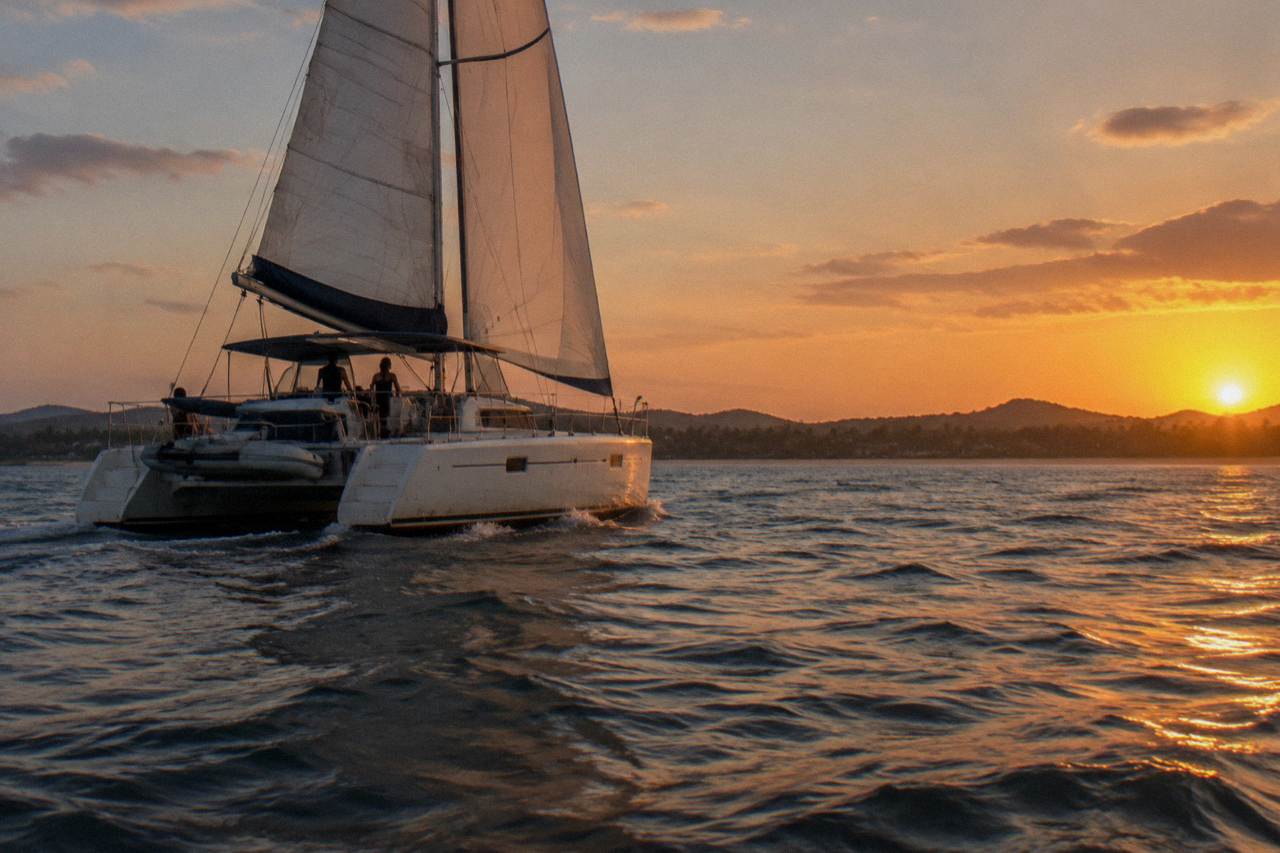
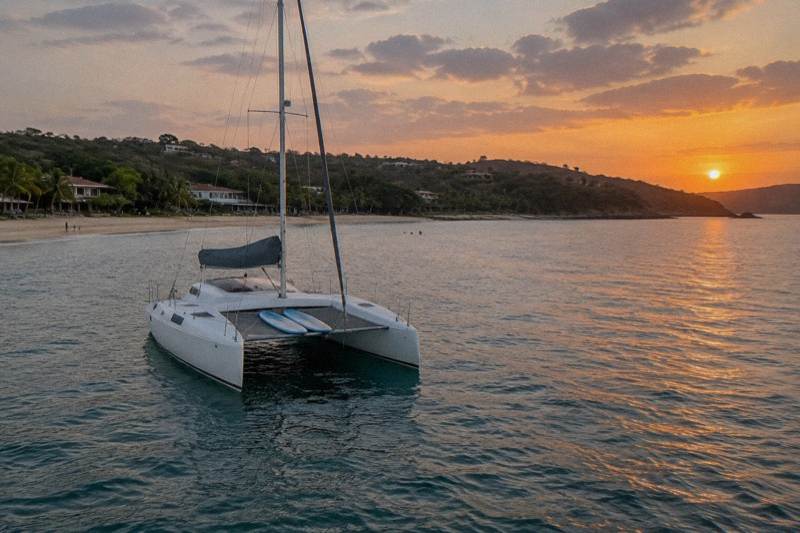
Yes, catamarans handle rough seas better than most boats their size, and that is a design fact rather than marketing. Two hulls spaced wide apart give a catamaran a stable platform that resists rolling, and the trampoline deck between the hulls lets waves pass through instead of slamming a solid wall of hull. Off Tamarindo the sea is usually moderate, and the rough-water windows are seasonal and predictable, which matters more for your plans than any hull geometry.
That said, "rough seas" means different things to a naval architect, a crew member and a first-time sailor holding the rail. This article separates the three. It covers why catamarans behave the way they do in swell, what the sea off the Guanacaste coast actually does month by month, when operators cancel, how Costa Rican authorities frame boat safety, and which of the bookable trips from Tamarindo suit someone who worries about motion. Everything priced or rated here comes from the current listings themselves. If you want to see how rain, wind and sea temperature shift across the calendar, the month-by-month guide to Tamarindo weather for boat days lays it out in detail.
For context, the featured trip on this site is the Timarouba sunset sail, a shared catamaran listed at 4.5 from 504 reviews, from $97 per person, departing the El Chiringuito area of Tamarindo beach for a 5-hour run with lunch, open bar, snorkel gear, two kayaks and a paddleboard. It is a good reference point throughout, because a large shared catamaran with a wide deck is exactly the format nervous sailors tend to tolerate well.
Can Catamarans Handle Rough Seas?
A catamaran's two hulls give it roughly twice the beam of a similar-length single-hull boat, so it rolls far less and stays level where a monohull heels over, and that advantage holds across every condition a Tamarindo day sail or sunset cruise will ever meet. The trade-off is that catamarans can pitch more sharply into short, steep chop, and in truly extreme conditions their stability has limits like any vessel. Crews adjust the route when conditions move outside the boat's comfort zone.
Expand on the mechanics a little, because they explain what you feel on board. A monohull boat carries lead or ballast low in the keel and leans as wind pushes the sails; passengers stand on a tilted deck all afternoon. A catamaran refuses to heel because the two hulls act like outriggers, and the wide bridge deck stays close to level. When a swell arrives, the boat rises and falls with the wave face instead of corkscrewing through it. Guests who get seasick on fishing boats routinely report feeling fine on a catamaran, and the reason is physical, not psychological.
The honest caveat is chop. Short, wind-driven waves spaced closely together, the kind the Papagayo winds produce between December and March, can make the bow areas punch through wave crests with a shudder. It is uncomfortable, occasionally splashy, and completely normal. Crews on the bigger cats, like the Marlin del Rey day sail from Tamarindo (rated 4.6 from 685 reviews, from $132 per person) or the Blue Dolphin day catamaran (4.5 from 990 reviews, from $90 per person), plan their headings around it, and both listings include the lunch-and-drinks pattern that makes a midday pause in a sheltered bay part of the trip.
None of this is unique to Costa Rica, but the Tamarindo fleet is almost entirely catamarans for exactly these reasons: passenger comfort in Pacific swell, a stable platform for snorkel stops and lunch service, and shallow draft to reach the coves north of town. That is the market speaking.
Why A Catamaran Feels Steadier Than It Looks
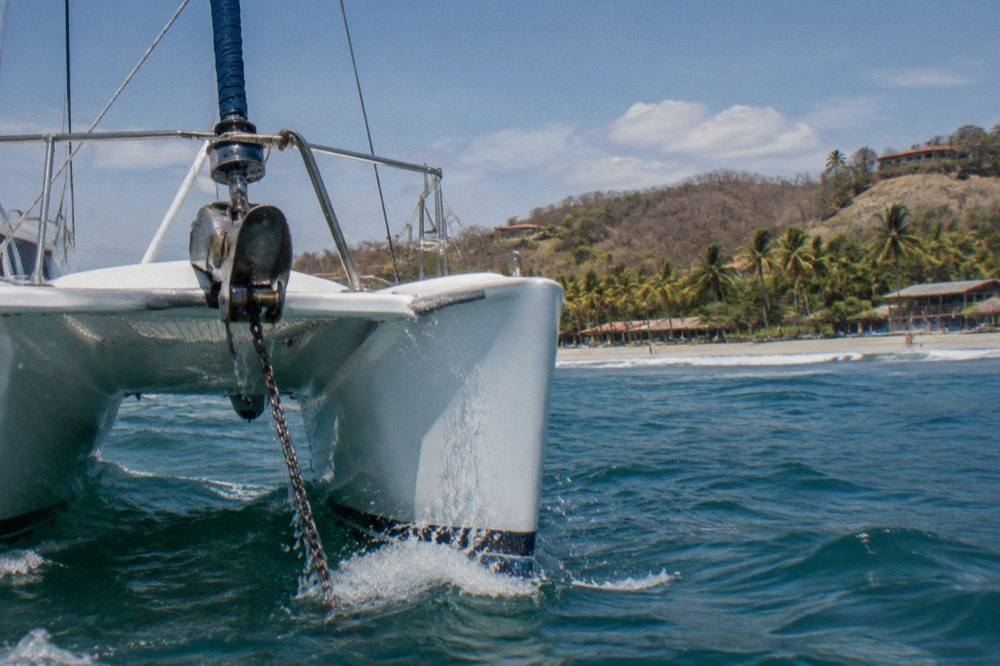
The steadiness comes from width, not weight: a catamaran resists rolling because its two hulls sit several meters apart, so the boat has to lift one whole hull to tilt, and on a sunset cruise that means the deck you walk on, the table your lunch sits on and the rail you lean against all stay near level. A monohull of the same length would be leaning 15 degrees or more under the same sail.
Picture a person standing with their feet together versus standing with their feet wide apart. Push both, and the wide stance barely moves. That is the whole principle. Boat designers call the resistance "form stability", and it is why catamarans became the default passenger vessel for tours worldwide: operators can serve a hot meal, run an open bar and let forty people wander with drinks because the platform under them is not swinging.
The shallow draft helps too. Catamarans sit high and draw little water, so skippers can tuck into bays and behind headlands where the swell flattens, which a deep-keel boat cannot do. Off Tamarindo that means the fleet's snorkel stops, in coves and along the coast toward the Catalina Islands area, happen in water that is typically far calmer than the open beach. Press reporting on Tamarindo snorkeling notes that open-beach water is often cloudy and stirred up, while clarity improves markedly at nearby coves and islands.
There is one more design point worth knowing before you book: size matters within the format. The Pacific Lounge public sunset catamaran (4.8 from 30 reviews, from $88 per person, 5 hours) and the larger Marlin del Rey vessels are big, wide boats where a few degrees of swell barely register underfoot. Smaller, more intimate options, like the private sailboat experience for up to 6 guests (from $900 per group, 5 hours), trade some of that planted feel for closeness to the water. If stability is your main worry, bigger is genuinely calmer.
What Rough Water Off Tamarindo Actually Looks Like
The Tamarindo coast has two distinct sea states: dry season from December to April with reliable sun, smaller surf and calmer mornings, and green season from May to November with afternoon rains, occasional stronger swells and the wettest weather in September and October. Operators report snorkel visibility of 15 to 25 meters in dry season versus 8 to 12 meters or less in green season. Neither season produces what an oceanographer would call rough seas on a typical day.
The numbers behind that summary are worth seeing side by side:
| Period | Typical sea state | Reported snorkel visibility | Rain pattern |
|---|---|---|---|
| December to April (dry) | Calmer mornings, wind chop possible afternoons | 15 to 25 m, operators report | Very little, February driest |
| May to August (early green) | Moderate, afternoon rain likely | 8 to 12 m or less | Building, heavy by August |
| September to November (late green) | Occasional stronger swells | 8 to 12 m or less | Wettest, October peak |
| December to March (Papagayo winds) | Short steep chop when winds blow | Variable, wind-driven | Dry but blustery days |
The Papagayo winds deserve their own sentence. These are strong northeasterly gap winds that peak between December and March, and while they bring dry, sunny weather, they can roughen the surface for hours at a time, especially in the afternoon. One operator source recommends morning departures for sailing and snorkel trips because wind typically rises after about 11 am in those months, which lines up with why the morning family catamaran tour (from $98 per person, 4.5 hours) and the morning Flamingo catamaran trips exist as a format at all. The pattern is reported by operators, not guaranteed by physics, but it is consistent enough that the fleet schedules around it.
If you are already thinking about packing for blustery conditions, the what to bring on a catamaran checklist covers wind layers, reef-safe sunscreen and seasickness timing in more detail than this page needs.
Do Catamaran Tours Get Cancelled For Weather?
Yes, trips cancel when the sea or wind is genuinely unsafe, the decision belongs to the captain and operator rather than the booking page, and every one of these Tamarindo listings shows free cancellation, so a weather cancellation does not cost you the ticket.
What actually triggers a cancellation is worth understanding, because travelers often overestimate it. Operators cancel for sustained strong winds, unsafe swell at the boarding point, or official advisories, and they reschedule or refund. They do not cancel for clouds, a gray sunset or a rain shower, since rain in the tropics often passes in twenty minutes. Green-season afternoons frequently deliver exactly that: a soaking, a rainbow and a calm evening sail afterward. The rainy season boat tours guide walks through the month-by-month trade-offs if your dates are fixed.
One practical note on boarding: several Tamarindo departures board from the beach itself, sometimes via a dinghy from the sand, which means the most physical moment of the whole trip can be stepping aboard in surf. Crews do this daily and assist passengers. If that step worries you more than the sailing, the trips that depart Marina Flamingo, like the 4-hour sunset cruise with lunch (4.9 from 160 reviews, from $102 per person) or the catamaran cruise with hotel transfers (from $169 per person, brunch and open bar listed), board from a dock, and the transfer listing includes round-trip hotel transportation in an air-conditioned vehicle.
The Marlin del Rey sunset snorkel cruise (4.7 from 352 reviews, from $104 per person, 5 hours) and the Timarouba sunset sail both run the standard pattern of sail out, sheltered bay stop, lunch, open bar and sunset return, and both list free cancellation.
Seasickness On A Catamaran: What Actually Helps
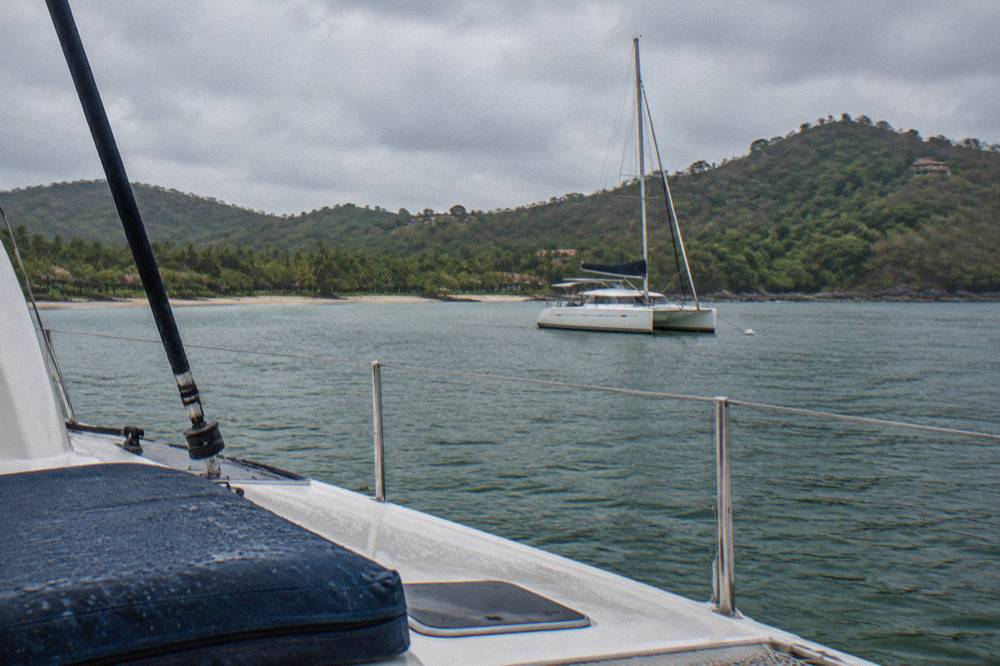
Motion sickness is less common on catamarans than on monohulls because the deck stays level, but it is not impossible, and the effective countermeasures are timing, position and medication rather than willpower: sitting amidships near the centerline, watching the horizon, and taking remedies before departure rather than during the trip. Green-season afternoons and Papagayo-wind days are when the few queasy reports cluster.
The pharmacology is simple and worth planning. Over-the-counter options like dimenhydrinate work best taken 30 to 60 minutes before boarding, which is why the departure logistics matter: know your boarding time at El Chiringuito or your pickup window, and dose accordingly. Ginger products and acupressure bands have mixed evidence but no downsides. Alcohol, a heavy fried lunch right before departure and reading a phone screen in a moving cabin are the three classic mistakes; the open bar is better enjoyed after the snorkel stop than before it.
Position on the boat matters more than most first-timers expect. The middle of the bridge deck, close to the centerline, moves least; the bows and the stern move most. On a big cat like the vessels in the fleet, the difference between standing at the forward trampoline in chop and sitting midships under shade is dramatic. Crews field this question constantly and will point you to the calmest seats if you ask, and life jackets are available on board per the safety guidance below.
A small table of the practical levers:
| Lever | What to do | Why it works |
|---|---|---|
| Timing | Take remedies 30 to 60 min before boarding | They prevent, they do not cure |
| Position | Sit or stand midships, near centerline | Least vertical motion on any boat |
| Eyes | Watch the horizon, avoid phone screens | Reconciles inner ear and vision |
| Stomach | Light meal before, open bar after the swim | Full stomach plus motion is the worst combo |
| Format | Choose morning departures in windy months | Wind typically builds after late morning |
Costa Rican Boat Safety Rules And What They Mean For You
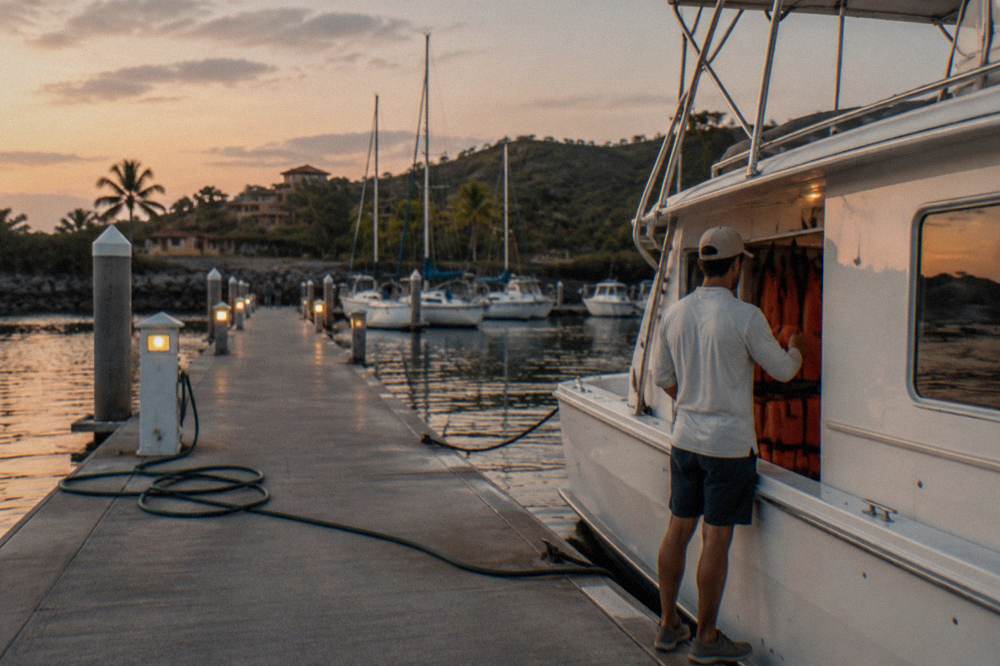
Costa Rica's Coast Guard guidance requires boats to carry life jackets matched to the approved passenger capacity, visible and accessible, with children's sizes on hand, plus at least one lifebuoy with rope and a valid navigation certificate confirming annual technical inspection. On open-hull boats, the transport ministry advises that all passengers wear certified life jackets in good condition. These are published official positions, and any licensed tour catamaran operating from Tamarindo is working inside them.
The primary sources are worth citing directly. The MOPT guidance on boat and watercraft prudence states the open-hull life jacket rule and advises verifying navigation permits and avoiding trips in rough seas, and press reporting of Guardacostas safety warnings details the life jacket, lifebuoy and inspection certificate requirements. For swimmers, note that Costa Rica's Ley 9780, reformed in 2025, mandates lifeguard units on national beaches, but coverage varies and many beaches have no warning signs; the Canadian government's Costa Rica travel advice flags riptides and few supervised beaches. Swim from the boat where the crew says, ask about currents, and check your own government's current travel advisory before any trip abroad.
None of this should read as alarming. It is the ordinary regulatory backdrop of a mature tourist coast, and the practical takeaways for a catamaran customer are three: life jackets are on board and children's sizes exist, the captain's call on weather overrides everyone's plans including yours, and the crew is the authority on where to swim.
Which Tamarindo Trips Suit A Nervous Sailor Best?
Pick a large shared catamaran, a dry-season or morning departure, and a trip with a sheltered bay stop; that combination points to the Timarouba sunset sail, the Marlin del Rey day sail, and the big Pacific Lounge public sunset, all wide-beam boats with free cancellation listed. Private charters add control over pace, from $800 per group for a 4.5-hour private sailing catamaran to $2,972.98 per group for a private Marlin del Rey charter (4.7 from 70 reviews).
The comparison across the formats most relevant to stability:
| Trip | Format | Rating and reviews | Price | Why it suits nervous sailors |
|---|---|---|---|---|
| Timarouba sunset sail | Shared, 5 h | 4.5 from 504 reviews | from $97 per person | Big boat, calm bay stop, lunch and open bar listed |
| Pacific Lounge public sunset | Shared, 5 h | 4.8 from 30 reviews | from $88 per person | Wide rooftop catamaran, dinner listed |
| Marlin del Rey day sail | Shared, 4.5 h | 4.6 from 685 reviews | from $132 per person | Large vessel, lunch and open bar listed |
| Cruise with hotel transfers | Shared, 5 h | No rating on file | from $169 per person | Dock-style departure detail on listing, brunch listed, round-trip transport included |
| Private sailing catamaran | Private, 4.5 h | Too few reviews for a rating claim | from $800 per group | Your group sets the pace and the skipper adjusts |
The honest framing for the two no-rating lines: one listing simply has no rating on file and the other has too few reviews to support a star claim, so judge them on the format and inclusions rather than scores. The private option is quietly the best seasickness hedge of all, because a private captain can shorten the sail, extend the bay stop and route around chop in a way a scheduled public trip cannot. For a deeper look at the whole private format, see the private catamaran charter guide.
Before the final questions, a note on how this site fits together: Tamarindo Catamaran Cruises exists to compare exactly these listings, hull by hull, price by price. The trip picker and the homepage sort all of these trips if the table above left options open.
Common Questions About Catamarans In Rough Seas
Can catamarans handle rough seas?
Yes. A catamaran's widely spaced hulls keep the deck level and resist rolling far better than a single-hull boat, and the design is a standard choice for passenger tours worldwide. Off Tamarindo, conditions are usually moderate, seasonal and predictable, and crews cancel or reroute when they are not.
Do catamarans flip in big waves?
In normal tour conditions, no. A catamaran has to lift an entire hull out of the water to capsize, which takes extreme conditions that a scheduled passenger trip never sails into. Captains shorten routes or cancel long before conditions approach the boat's limits.
Is a catamaran better than a monohull if I get seasick?
For most people, yes. The level deck of a catamaran reduces the rolling motion that triggers most seasickness. Remaining risks come from short wind chop and pitching, which sitting midships and taking remedies before boarding largely address.
When is the sea calmest off Tamarindo?
Dry season, December to April, brings calmer mornings, smaller surf and operators reporting 15 to 25 meters of snorkel visibility. Within that window, Papagayo winds from December to March can chop up afternoons, so morning departures are the steadiest choice.
What happens if my catamaran tour is cancelled for weather?
The operator reschedules or refunds, and every one of these Tamarindo trips shows free cancellation. Weather cancellations are the captain's call and cluster in the wettest weeks of September and October plus individual windy days.
Are life jackets required on Tamarindo catamaran tours?
Costa Rican Coast Guard guidance requires life jackets matched to passenger capacity, visible and accessible, with children's sizes, plus a lifebuoy with rope and a valid navigation certificate with annual inspection. On open-hull boats, passengers must wear certified life jackets per transport ministry guidance.