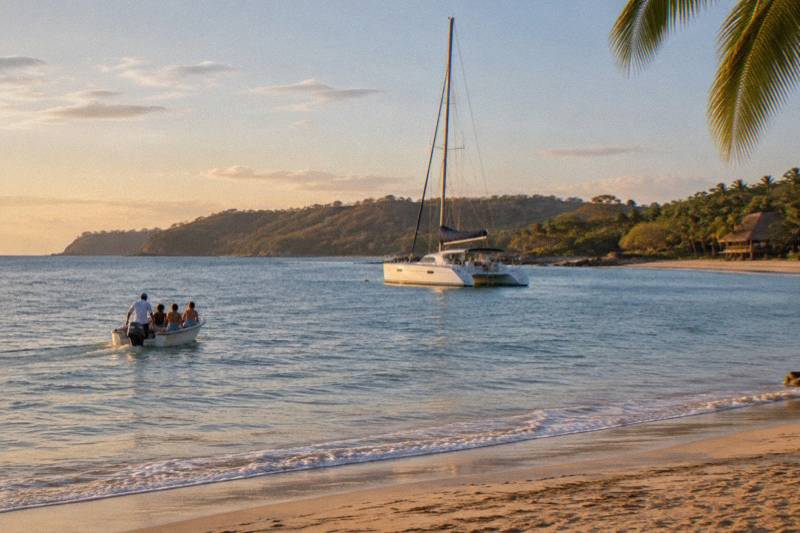
Tamarindo Boat Tours In The Rainy Season: Do They Run?
The green season brings afternoon rain to Guanacaste, but the catamarans keep sailing. Here is what actually changes between May and November, and how to plan around it.
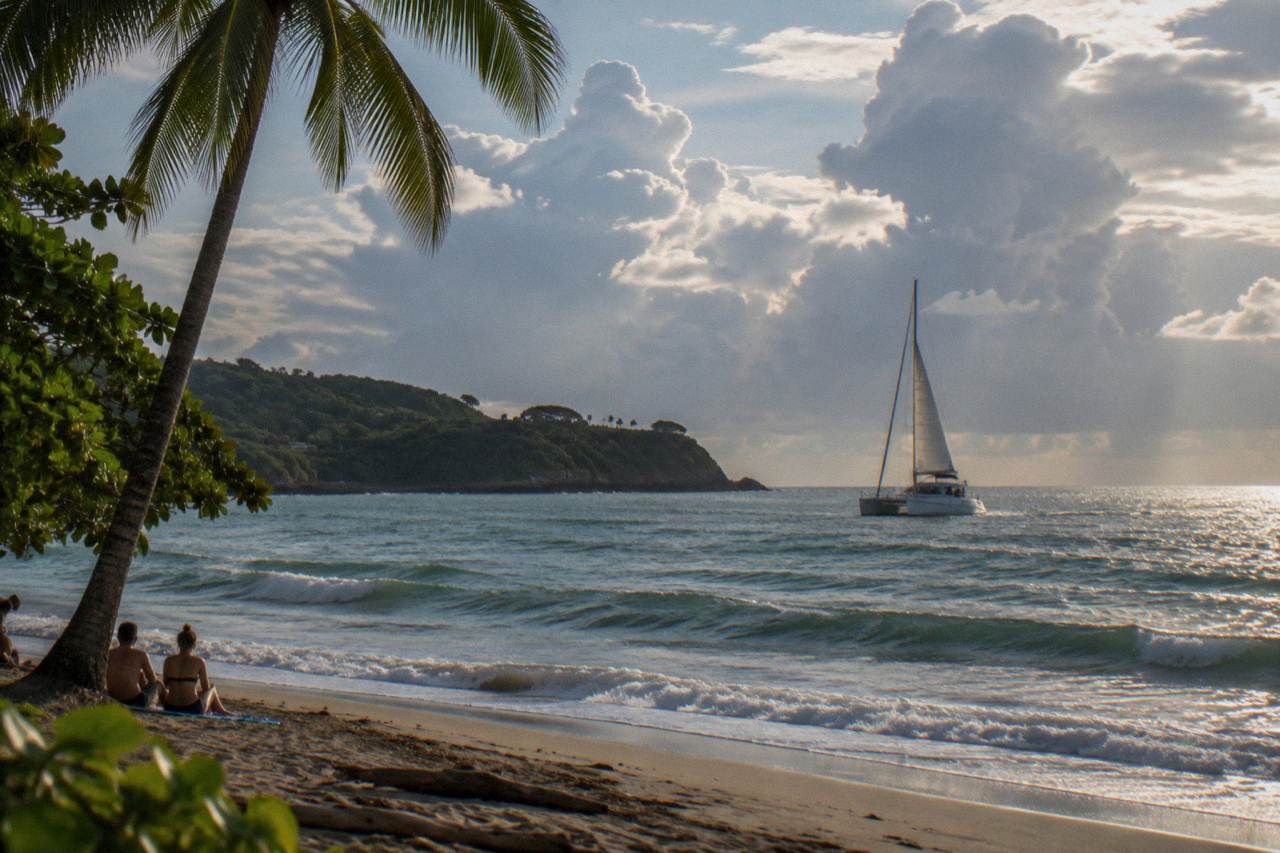
Rain in Tamarindo is not an all-day event. The Guanacaste green season, which runs from May to November, delivers most of its water in afternoon bursts, and the 30-year rainfall averages show the pattern clearly: October is the wettest month at about 354.1 mm, while February barely registers 3.5 mm. Day cruises, including the Blue Dolphin catamaran from El Chiringuito on Tamarindo beach with its 1:00 pm departure, sail through almost all of it, and a few true morning departures exist as well. The boats do not stop for the season; they adjust.
That is the core message green-season travelers keep searching for, and it is true: shared day sails, sunset cruises and private charters on Tamarindo Catamaran Cruises are bookable across every month of the wet half of the year, from the $90 Blue Dolphin day trip to the $97 Timarouba sunset sail with open bar and lunch. Rain changes the texture of the day, not the existence of the trip. This guide walks through what actually happens between May and November: when rain falls, what operators do about it, whether the snorkeling holds up, and which departures give you the best odds.
Do Boat Tours Still Run In Tamarindo During The Rainy Season?
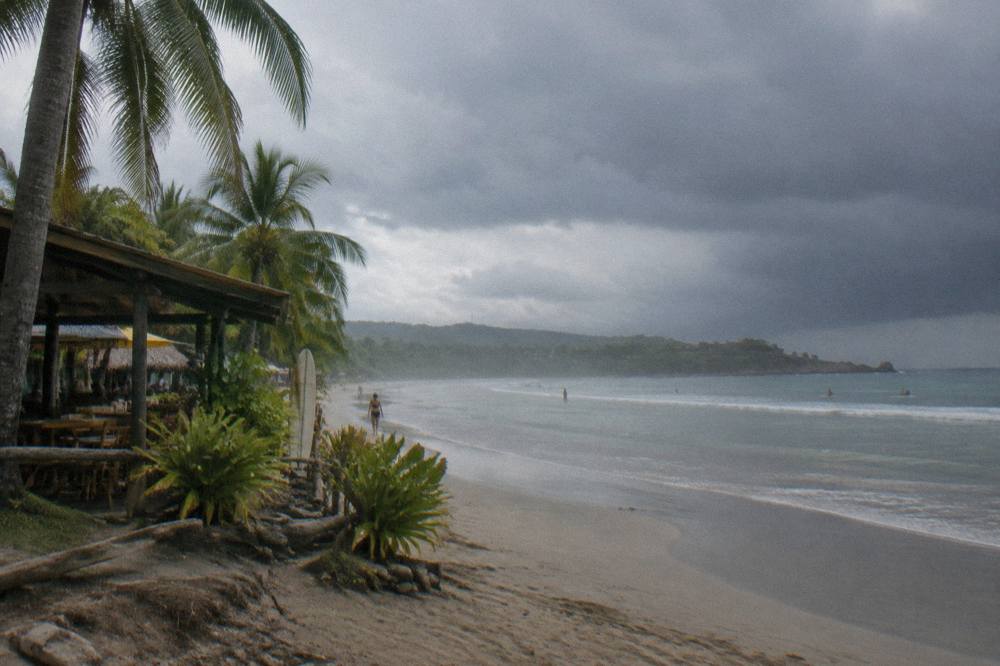
Yes. Catamaran tours in Tamarindo run all through the rainy season, roughly May to November, since rain here concentrates in the afternoons and rarely washes out a whole day. Day and sunset cruises depart most days, and only a handful of these listings are true morning departures. Cancellations come when seas are unsafe, not merely because it is raining.
These listings make this plain. The Blue Dolphin day catamaran, a 4 hour 30 minute trip rated 4.5 from 990 reviews, from $90 per person, departs El Chiringuito on Tamarindo beach year round. So does the Timarouba sunset cruise with open bar and lunch, from $97 per person. The public sunset catamaran with open bar and a full meal, from $95 per person, boards at Caballo del Mar on Tamarindo beach in the wet months as in the dry ones. None of these trips are seasonal products that shut down from May to November.
What actually grounds a trip is sea state, not rainfall. Operators report that green-season swells can run larger than dry-season conditions, and crews make the call on safety grounds. A passing shower over the bay usually means a wet deck and a good story; sustained rough seas mean the operator reschedules or refunds. Every one of these trips notes free cancellation, so a weather-driven change is an inconvenience rather than a lost payment.
There is a real upside that dry-season visitors never see. Green season means fewer boats, more room on the trampoline, and a coast that turns from gold to vivid green behind the mangroves of the Tamarindo Estuary. Humpback whale sightings from these trips are reported in season, with the southern group present roughly July to mid November and peaking August to September, though no operator can promise an encounter. If your dates fall in the wet half of the year, the sea is still open.
All three list free cancellation, which matters when you are booking around an unsettled forecast.
When Does The Tamarindo Rainy Season Start And End?
The rainy season in Tamarindo runs from May to November, with the dry season from December to April. The wettest months are September and October, led by October at about 354.1 mm of rain on 30-year averages. The transition is gradual: April already picks up about 36.2 mm, and by December rainfall falls back to about 14 mm.
The 30-year normals for Tamarindo, covering 1990 to 2020, give the month-by-month picture. January through March are effectively dry, at roughly 4.2 to 4.9 mm each. April ticks up to about 36.2 mm as the transition begins, then May jumps to about 241.6 mm and the wet half of the year takes hold. June, August, September and October all sit between about 249.5 and 354.1 mm, with a slight dip in July at about 181.9 mm that locals sometimes call a mini summer. November drops fast, to about 117.7 mm, and December is nearly dry again at about 14 mm.
| Month | Average rainfall (mm) | What it means for boats |
|---|---|---|
| January | 4.2 | Full dry season, busiest seas |
| February | 3.5 | Driest month of the year |
| March | 4.9 | Dry, hot, calm |
| April | 36.2 | Transition begins |
| May | 241.6 | Green season starts |
| June | 286.1 | Afternoon rain pattern |
| July | 181.9 | Slight mid-year dip |
| August | 249.5 | Humpback peak season |
| September | 330.8 | Wet, quiet, green season |
| October | 354.1 | Wettest month |
| November | 117.7 | Rains taper off |
| December | 14.0 | Dry season returns |

Sea temperature barely moves through all of this. The Guanacaste coast averages about 27.3 degrees Celsius in January, its coolest, and about 29.4 in May, its warmest. Swimmers and snorkelers will not feel a seasonal cliff; the difference between the coldest and warmest month is about two degrees. The Papagayo winds are the more noticeable force, and they peak December to March, inside the dry season, which surprises visitors who assume wind and rain travel together.
For trip planning, the practical read is that early green season, May to August, offers the best balance: rain yes, but usually in shorter afternoon bursts, plus the southern humpback group arriving from July onward. September and November are the gamble months, and October is the one where a multi-day visit could genuinely lose a scheduled sail. If your dates are fixed inside October, build a backup day into the itinerary.
What Happens If It Rains On The Day Of Your Catamaran Tour?
Usually, the trip still goes out. Light rain is not a safety issue, and crews treat a passing shower as normal green-season weather. Operators cancel or reschedule only for unsafe sea conditions, and every one of these listings includes free cancellation, so a weather cancellation does not cost you the money. Rebooking is the normal path.
The mechanics matter to understand. A catamaran can sail through rain without any problem; what it cannot safely do is run snorkel stops in heavy swell or dock tenders in surf. So the typical rain-day adjustment is a shortened water stop, a reroute to a sheltered cove, or a longer sail with the meal and open bar served under cover. The public sunset catamaran with open bar and a full meal, from $95 per person, serves its burrito bar regardless of weather. The Blue Dolphin day trip still serves chicken fajitas, black beans and fresh fruit on a wet afternoon.
Booking strategy in green season is straightforward: reserve early, watch the forecast, and know the cancellation terms. All 32 of these listings come with free cancellation, so the financial risk of a green-season booking is low. The scarce thing is not money but calendar. If your trip is cancelled on your last full day, there is no do-over. Book boat days toward the front of your stay, not the back, so a reschedule has room to land.
Captains make the final call on the day itself. Mornings are often the calmer window before afternoon winds build, though only a few trips here are true morning departures; most day cruises leave around midday. For a wider look at the calendar question, see the guide on the best time for a Tamarindo boat tour.
Morning, Midday Or Sunset: Which Departure Works Better In The Green Season?
A few true morning departures exist, and they have the edge in the rainy season: Tamarindo's rain concentrates in the afternoon while mornings stay dry far more often. Sunset sails still run, and rain often clears by late afternoon, but an early trip generally buys the most reliable weather window plus calmer seas before wind builds.
Operators and travel sites report that wind and weather deteriorate after late morning, and in the Papagayo months the guidance is blunt: conditions roughen after about 11 am. The same logic applies to rain. A typical green-season day in Tamarindo dawns clear, clouds build through late morning, and the rain arrives sometime between early and late afternoon. Early is still the ideal, but only a few tours here offer true morning departures. Most day cruises board around midday, and the sunset sails leave later still.
True morning departures are scarce here, with only a Flamingo morning catamaran and one family-oriented morning sail fitting the window. Most day cruises leave around midday instead. The Blue Dolphin public catamaran runs 4 hours 30 minutes and gets you back before the heaviest build-up. The all-inclusive day sail from Calle Cruz in Tamarindo, from $90 per person, rated 4.5 from 123 reviews, runs 4.5 hours with lunch and snorkel gear. The nature catamaran with kids' games, from $98 per person, keeps a similar shape. Over at Playa Flamingo, the morning catamaran rated 5.0 from 44 reviews includes hotel pickup, a rarity among these listings.
| Departure type | Typical window | Green-season odds | Trip example |
|---|---|---|---|
| Day cruise (midday) | late morning to early afternoon | Best: seas calmest before afternoon winds | Flamingo morning catamaran, 5.0 from 44 reviews |
| Midday sail | 11 am to 4 pm | Mixed: may meet the first rain | All-inclusive day sail, from $90 |
| Sunset cruise | 1 pm to 6 pm | Good: rain often clears late | Timarouba sunset sail, from $97 |
| Private charter | Flexible | Best: you pick the window | Private catamaran, from $800 per group |
None of this makes sunset cruises a bad green-season bet. The rain pattern often clears by late afternoon, and a wet early afternoon can leave the sky stripped clean for the descent toward the horizon. Sunset lands latest from late June into early July, and earliest in early to mid November. The five-hour guided sunset boat tour from El Chiringuito, from $95 per person, rated 4.6 from 180 reviews, serves its burrito-bar dinner as the sky does its work. If you want both weather insurance and the sunset, the honest answer is to book two trips on different days, one of each.
Is Snorkeling Good On The Guanacaste Coast In The Rainy Season?
Snorkeling holds up in the green season but reads softer. Operators report underwater visibility of about 8 to 12 m or less from May to November, versus 15 to 25 m in the dry season, because runoff and swell cloud the water. Location is the fix: coves, points and the islands keep their clarity far better than Tamarindo's open beach.
That visibility range comes from operator reporting, not a lab, but it matches the physics. Rainfall moving through rivers and estuaries carries sediment into the nearshore water, and green-season swell keeps it stirred. The open beach at Tamarindo is often cloudy even in the dry season; the water improves significantly at nearby coves and at the Catalina Islands, which listings describe as reachable by a roughly 45-minute sail from Tamarindo and known for manta rays and dolphins as reported sightings.
This is why the snorkel-focused trips sail somewhere else. The Blue Dolphin day catamaran stops at a sheltered snorkel spot with gear and a stand-up paddleboard included. The Flamingo catamaran trip with lunch and drinks, from $100 per person, rated 4.9 from 20 reviews, departs Marina Flamingo, where the coast's rocky points sit closer. The Playa Flamingo sunset trip that includes hotel pickup from Tamarindo, from $95 per person and rated 4.9 from 1,170 reviews, the most reviewed listing here, brings kayaks and paddleboards alongside the snorkel gear.
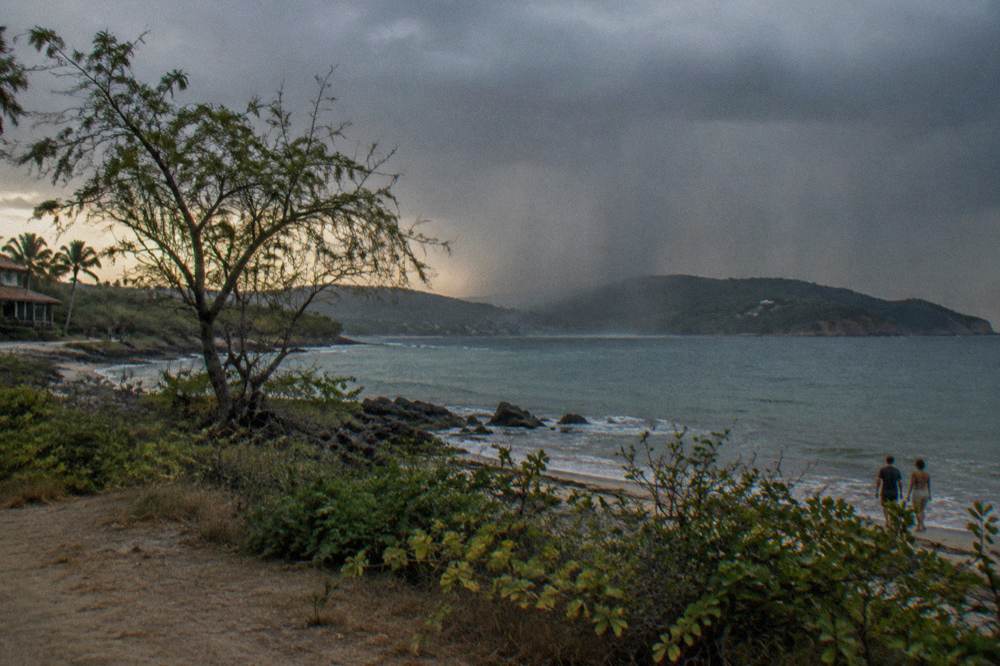
Marine life does not take the season off. Recent guest reviews of Tamarindo catamaran trips report sea turtles, dolphins, whales and flying fish between June and October 2026, and humpback whales from the southern group are present off the Pacific coast roughly July to mid November, with the peak in August and September, as the Tico Times seasonal reporting describes. These are sightings, never guarantees, and no honest listing will promise you a whale. But if being on the water during humpback season appeals, the green season is precisely when it happens. If all that marine life makes you want to get in the water yourself, our guide to swimming in Tamarindo's ocean covers the currents, the surf, and where boat trips find calm water.
For the depth rundown on where the masks go in, our Tamarindo snorkeling tours guide compares the stops; the estuary mangroves, with their howler monkeys, crocodiles and birds, are a separate tide-dependent small-boat outing covered in the Tamarindo estuary boat tour guide.
Which Tamarindo Boat Tours Suit A Green Season Trip Best?
The green-season shortlist favors trips with sheltered snorkel stops, meals included and free cancellation: a few true morning departures exist, such as the Flamingo morning catamaran, but most day cruises leave midday, including the Blue Dolphin day catamaran from $90 and the all-inclusive day sail from $90, plus the Timarouba day trip from $99.50. For sunset, the Timarouba sunset cruise from $97 or the five-hour guided sunset boat tour from $95. All list free cancellation and depart Tamarindo beach or Playa Flamingo.
Durations of four to five hours dominate because they fit inside or around the afternoon window. The 5.5-hour sunset cruise with open bar from $120 per person is the longest Tamarindo-beach option, and its extra hour sits exactly where green-season weather is least stable, so treat it as a good trip with a bigger weather bet attached. At the other end, the four-hour sunset cruise from Marina Flamingo, from $102 per person and rated 4.9 from 160 reviews, is shorter, and its waterslide is a genuinely green-season-friendly feature: kids in the water in a sheltered bay do not care about a distant shower.
The budget Pacific Lounge public sunset catamaran, from $88 per person and rated 4.8 from 30 reviews, is the cheapest firm-priced option among these listings, and its five-hour run from El Chiringuito includes lunch, an open bar with cocktails, snorkel gear, kayak and paddleboard. On a green-season budget, it delivers the full feature set at the lowest entry price. The review pool is small, so read recent feedback on the live booking page before committing.
| Tour | Duration | Price | Rating | Green-season fit |
|---|---|---|---|---|
| Blue Dolphin day catamaran | 4 h 30 m | from $90 | 4.5 from 990 | 1 pm start, snorkel gear, SUP |
| All-inclusive day sail | 4.5 h | from $90 | 4.5 from 123 | Midday departure from Calle Cruz |
| Timarouba day sail | 4 h | from $99.50 | 4.5 from 203 | Kayaks and paddleboards included |
| Budget Pacific Lounge sunset | 5 h | from $88 | 4.8 from 30 | Lowest firm price, full inclusions |
| 5-hour guided sunset boat tour | 5 h | from $95 | 4.6 from 180 | Dinner included, no open bar stated |
| Sunset cruise with open bar | 5.5 h | from $120 | New listing | Longest window, biggest weather bet |
Private charters also earn their keep in the wet months, mainly for flexibility. The private sailing catamaran from El Chiringuito, from $800 per group for 4.5 hours with light meal and open bar, and the private sunset sail with food and open bar, from $1,167 per group rated 4.8 from 33 reviews, let your group shift timing with the day. The full private-charter picture, including the Flamingo fleet, is in our private catamaran charter guide.
What Should You Pack For A Rainy Season Catamaran Day?
Pack for both sun and shower: reef-safe sunscreen, a light rain shell, a dry bag for phones, a towel, and a change of clothes for after the sail. Green-season rain is warm, so the shell is for comfort, not cold, and the dry bag matters more than the umbrella. Sea temperature sits about 27 to 29 degrees Celsius year round, so swimwear works every month.
The sun point deserves emphasis, because green-season cloud fools people. Ultraviolet exposure at 10 degrees north latitude is intense under broken cloud, and reflections off the water add to it. Costa Rica has created a reduced tariff line for reef-safe mineral sunscreens, which signals the direction of policy even though no nationwide chemical ban exists; several marine-protected areas and operators encourage or require reef-safe products, so bring one. The SINAC park rules for the nearby Las Baulas marine park, published on the official SINAC page, bar single-use plastics in the park, and that habit travels well onto any boat.
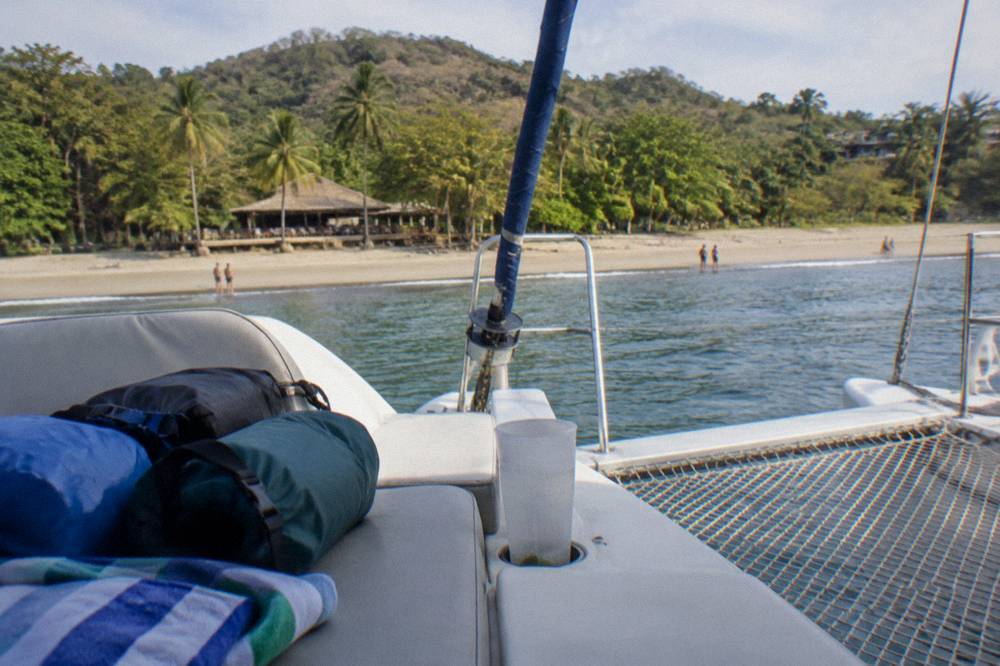
For the full checklist, including what the listings themselves provide, our what to bring on a Tamarindo catamaran guide goes item by item. The green-season additions are few: a packable rain shell, a dry bag, and flip-flops you do not mind getting wet, since boarding at El Chiringuito is a beach launch. Cash in small bills for the crew tip is worth carrying; boat crews in Guanacaste commonly receive about 5 to 10 USD per person for a half-day tour, as operators and travel sites report, a custom rather than a rule, and our Costa Rica tipping on boat tours guide covers the etiquette in full.
The five-hour guided sunset boat tour is a good candidate for that packing list in practice: dinner is a chipotle-style burrito bar served on board, fees and taxes are included, and the listing notes snorkel gear and paddle boards, so your own kit only needs to cover the personal items. Its open bar status is not stated on the listing, so check the live listing for what drinks are provided before you board.
Are September To November Trips Worth Booking?
Yes, if you accept the trade: September to November is the wettest stretch, with about 117.7 to 354.1 mm of rain per month, but it brings the lowest crowds, with peak southern humpback months in August and September just behind. Book early-day departures, keep dates flexible, and the odds favor sailing.
The rainfall table tells the honest story: September averages about 330.8 mm, October about 354.1 mm and November about 117.7 mm. October is the commitment month. A one-week October stay has a real chance of losing at least one scheduled boat day, and the right response is to book two candidate days and treat one as backup, since every one of these trips carries free cancellation. September carries similar rain but the humpback peak of August to September overlaps its front half, which for many travelers is worth the weather bet.
Among these listings, one is built for exactly this scenario: the catamaran cruise with open bar and hotel transfers from Tamarindo runs five hours from $169 per person, with round-trip transport in an air-conditioned vehicle, brunch on board and an open bar. It is the most expensive of the shared trips, above every sunset sail, and on a rain-threatened day its door-to-door transfers remove the wet-bike-or-soaked-taxi problem entirely. No rating is published yet, so judge it on inclusions and cancellation terms rather than a star figure.
What you get in exchange for the rain risk is a different coast. Boats are quieter, beaches are near empty, the hills behind Tamarindo and Playa Grande sit green instead of gold, and sunset cruises, timed against sunsets that peak latest in late June and early July and bottom out in early to mid November per timeanddate's Tamarindo data, often get the post-rain skies that photographers chase. The weather logic, month by month, is laid out in our Tamarindo weather by month guide, and the month-level timing detail sits in the best time for a Tamarindo boat tour guide.
The closing summary for a green-season booker: pick a midday cruise if snorkeling is the point, keep the sunset sail for a clearing sky, front-load boat days in your stay, and let free cancellation do the insurance work. The boats run. The rain mostly behaves. Bring the dry bag.
Common Questions About Rainy Season Boat Tours In Tamarindo
Do boat tours in Tamarindo run during the rainy season?
Yes. Catamaran tours operate year round from Tamarindo beach, Playa Flamingo and the surrounding Guanacaste coast. Rain usually arrives in the afternoon, so day cruises, most of them leaving around midday, sail most days and sunset cruises run the majority of days too. Cancellations are driven by unsafe seas, not by rain alone.
What is the wettest month in Tamarindo?
October, averaging about 354.1 mm of rain on 30-year normals. September is close behind at about 330.8 mm. November tapers to about 117.7 mm as the dry season approaches.
Do I get a refund if my catamaran tour is cancelled for weather?
Every catamaran trip listed here includes free cancellation. If an operator cancels for sea conditions, rescheduling or a refund through the listing is the normal outcome. Read the specific listing's terms before you book.
Is snorkeling worse in the green season?
Visibility is lower. Operators report about 8 to 12 m or less from May to November, versus 15 to 25 m in the dry season. Trips that stop at sheltered coves and the islands hold clarity much better than Tamarindo's open beach.
Should I book a morning or sunset tour in the rainy season?
Either works. Rain tends to concentrate in the afternoon and wind can build later in the day, but only a few true morning departures exist here. Most day cruises leave around midday and sunset sails go out late, when showers have often cleared. A two-trip plan covers both.
Can I see whales on a rainy season boat tour?
Possibly, never guaranteed. The southern humpback group is reported off the Pacific coast roughly July to mid November, peaking August to September, and recent guest reviews of Tamarindo catamarans report whales, dolphins and turtles in 2026. No operator promises a sighting.