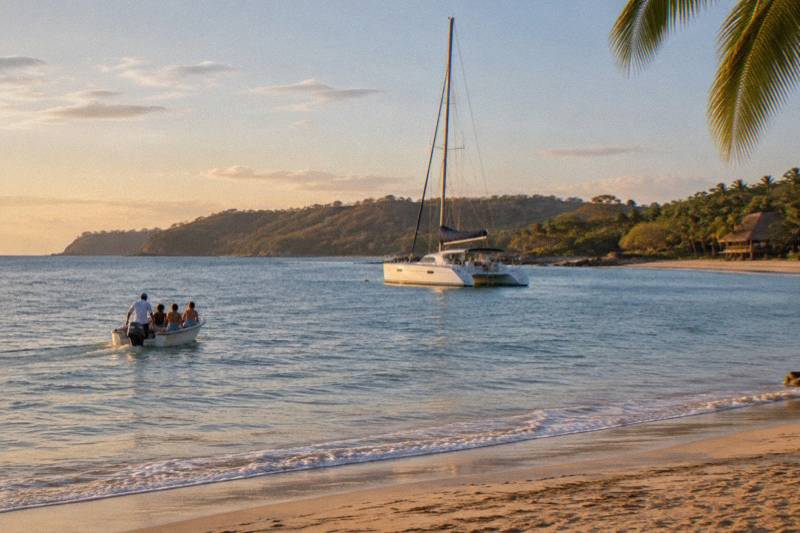
Best Time For A Tamarindo Boat Tour: Month By Month
Tamarindo runs on two seasons, dry and green, and both put boats on the water. Here is how rain, wind, visibility, whale windows and sunset times stack up month by month, and which catamaran departure fits each one.
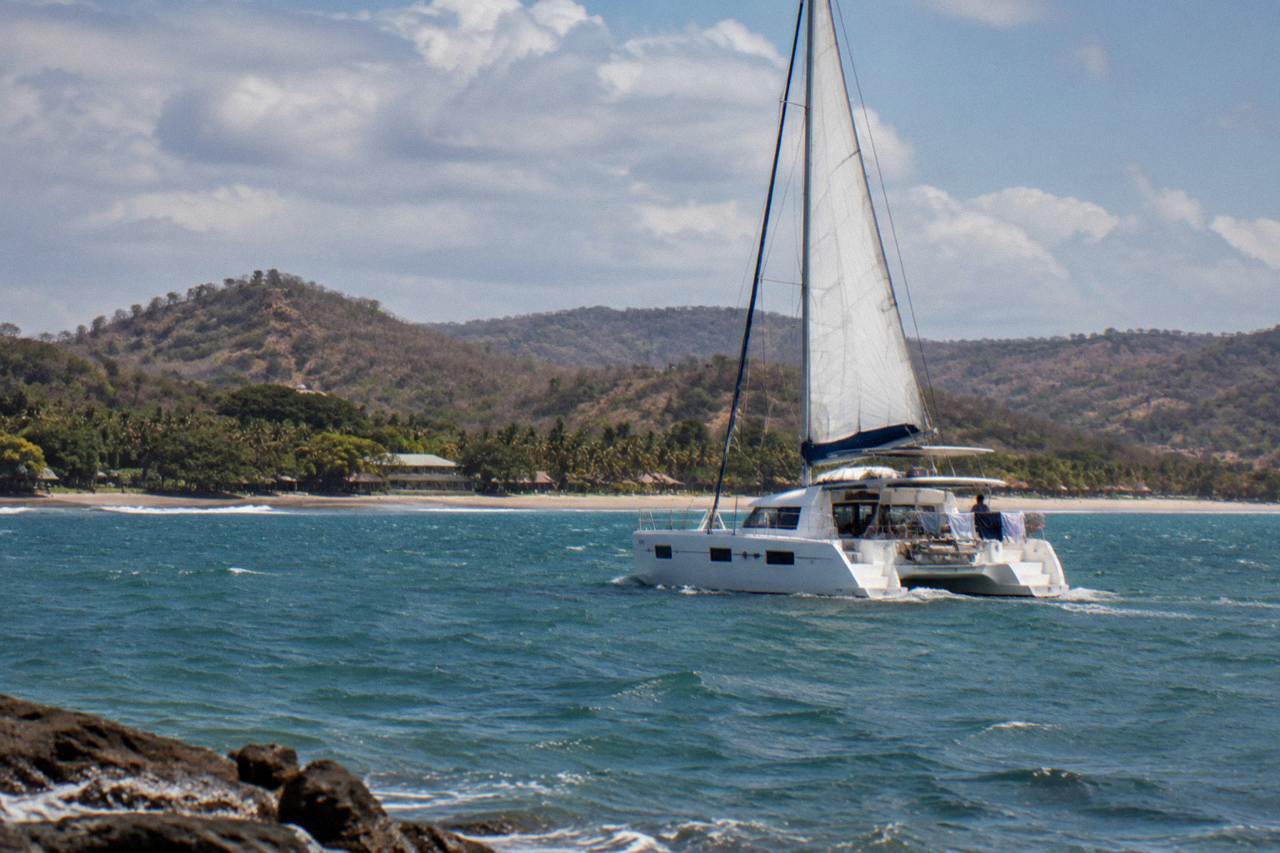
Tamarindo sits close enough to the equator that daylight barely moves all year, sunset landing between its earliest point in early to mid November and its latest in late June and early July, according to the timeanddate astronomy tables. What does move, dramatically, is water. The Guanacaste coast swings from a dry season of near cloudless skies and glassy mornings to a green season of afternoon downpours, warmer seas and humpback whales passing offshore. Both seasons sell catamaran seats, and both deliver sunsets, but they suit different trips.
This guide walks through the year month by month, drawing on rainfall and sea temperature normals for Tamarindo, reported snorkel visibility ranges, and the trips themselves, so you can pick a month first and a departure second. The featured trip for timing questions is the Timarouba sunset sail, from $97 per person with lunch, open bar, snorkel gear, kayaks and a paddleboard, rated 4.5 from 504 reviews. Day sailors like the Blue Dolphin public catamaran and the Flamingo sunset sail with 1,170 reviews fill out the picture. Once you've picked your month, our guide to the best catamaran tour in Tamarindo ranks the top boats by reviews, inclusions and departure beach so you can choose the right one with confidence.
When Is The Best Time To Visit Tamarindo For A Boat Tour?
The best time to visit Tamarindo for a boat tour is December to April, when the dry season brings about 4.2 to 36.2 mm of monthly rain, calmer seas and the clearest snorkel water of the year. If whales are the priority, late July through September overlaps the southern humpback peak. Every month runs catamarans, so the honest answer depends on whether you value clarity, wildlife or green season prices.
That answer comes with a trade-off table worth reading twice. Dry season is the high season: hotels fill, beaches crowd, and every sunset cruise in town is busy. Green season, May to November, is wetter, with October the wettest month at about 354.1 mm of rain on 30 year normals, but rains fall heavily in the afternoon far more often than all day. Seas are often calmer before midday, though only a few of these trips, such as a morning sail from Flamingo and one family morning cruise, actually depart in the morning; most day cruises leave around midday. Operators report snorkel visibility of about 8 to 12 m or less in green season, against 15 to 25 m in dry season.
The middle path is the shoulder. Late November and early December sit at the dry season's front edge: rain drops from October's peak to about 117.7 mm in November and about 14 mm in December, crowds have not peaked, and the whale-watching overlap with the southern humpback group is only just ending. Late April and early May flip that: the rains return around 241.6 mm in May, but the sea is at its warmest, about 29.4 C on Guanacaste coast averages, and prices soften before the true green season settles in.
One constraint does not change with the seasons: sunset. It lands within a window of roughly 50 minutes across the entire year, so a sunset cruise is never mistimed by month, only by departure. The Tamarindo sunset times guide breaks the clock down in detail.
How Do The Dry And Green Seasons Change A Tamarindo Catamaran Cruise?
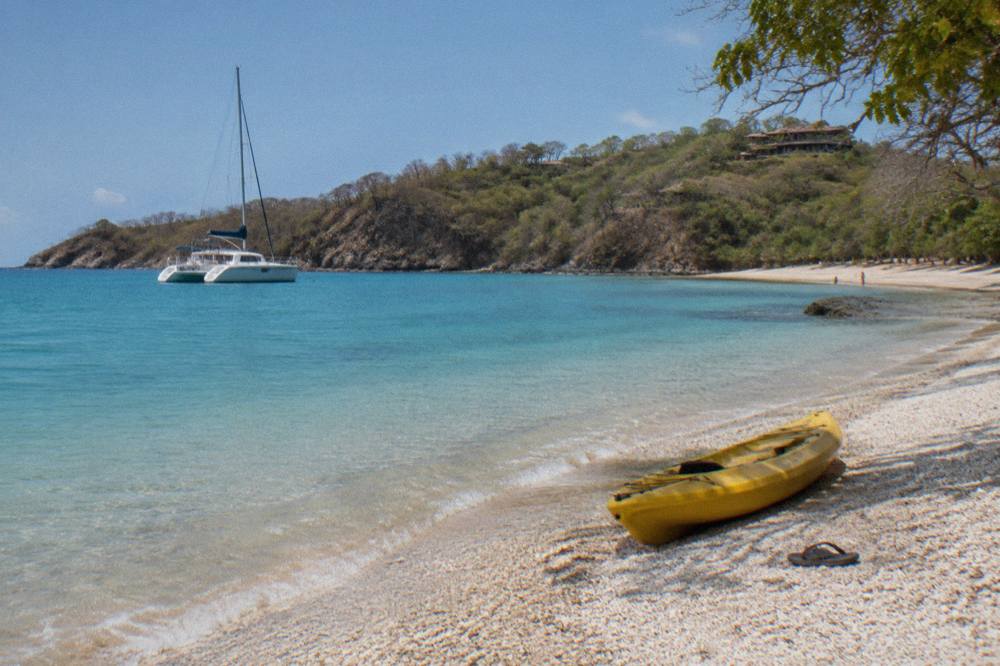
Dry season, December to April, changes a Tamarindo catamaran cruise by delivering calm, clear, cooler water and reliable sun, roughly 4.2 to 36.2 mm of rain per month. Green season, May to November, brings 181.9 to 354.1 mm per month, warmer seas near 29 C, afternoon squalls and better whale odds. Sea temperature stays swim-friendly all year.
The dry season is what the brochures photograph. Rain normals for Tamarindo show February as the driest month at about 3.5 mm, January about 4.2 mm and March about 4.9 mm, with December at about 14 mm and April stepping up to about 36.2 mm as the season closes. The sea cools to its yearly low, about 27.3 C in January and 27.9 C in February, still comfortably swimmable. The catch is wind: the Papagayo gap winds peak December to March and can chop the surface and stir sediment, which is why several operators schedule snorkel stops in protected coves rather than the open beach, where water is often cloudy even in dry months.
Green season inverts that. Rain climbs steeply, June about 286.1 mm, August about 249.5 mm, September about 330.8 mm, October about 354.1 mm, then falls off a cliff to about 117.7 mm in November. Mornings are frequently gorgeous, and wind tends to rise after about 11 am, especially in the Papagayo months, so earlier is generally the smarter call, though only a few true morning departures exist and most day cruises leave around midday. The sea warms through the period, peaking about 29.4 C in May. The rainy season boat tours guide covers the practical side, rescheduling, refunds and what a wet afternoon actually looks like from the water.
| Month | Rain, 30 year normals | Sea temp, coast average | Season feel |
|---|---|---|---|
| January | about 4.2 mm | about 27.3 C | Dry, windy, peak crowds |
| February | about 3.5 mm | about 27.9 C | Driest month |
| March | about 4.9 mm | about 28.9 C | Dry, wind easing |
| April | about 36.2 mm | about 29.3 C | Dry season's warm end |
| May | about 241.6 mm | about 29.4 C | Green season start, warmest sea |
| June | about 286.1 mm | about 28.8 C | Afternoon rains |
| July | about 181.9 mm | about 28.9 C | Drier pocket, whales arrive |
| August | about 249.5 mm | about 29 C | Whale peak begins |
| September | about 330.8 mm | about 28.7 C | Wet, whale peak |
| October | about 354.1 mm | about 27.8 C | Wettest month |
| November | about 117.7 mm | about 27.6 C | Rains taper fast |
| December | about 14 mm | about 28 C | Dry season returns |
For the tour itself, both seasons work but favor different departures. In dry season, take the afternoon sunset cruise and let the calm mornings belong to the surfers. In green season, flip it: a midday day cruise such as the Blue Dolphin public catamaran, from $90 per person, 4 hours 30 minutes with a meal, open bar and snorkel gear, catches calmer water before the afternoon build-up, and a few true morning departures exist too, like the morning catamaran from Playa Flamingo. The featured Timarouba sunset sail covers both cases, since its roughly 5 hour run includes the snorkel stop and the sunset in one ticket.
What Are The Sea Conditions And Winds By Month On The Guanacaste Coast?
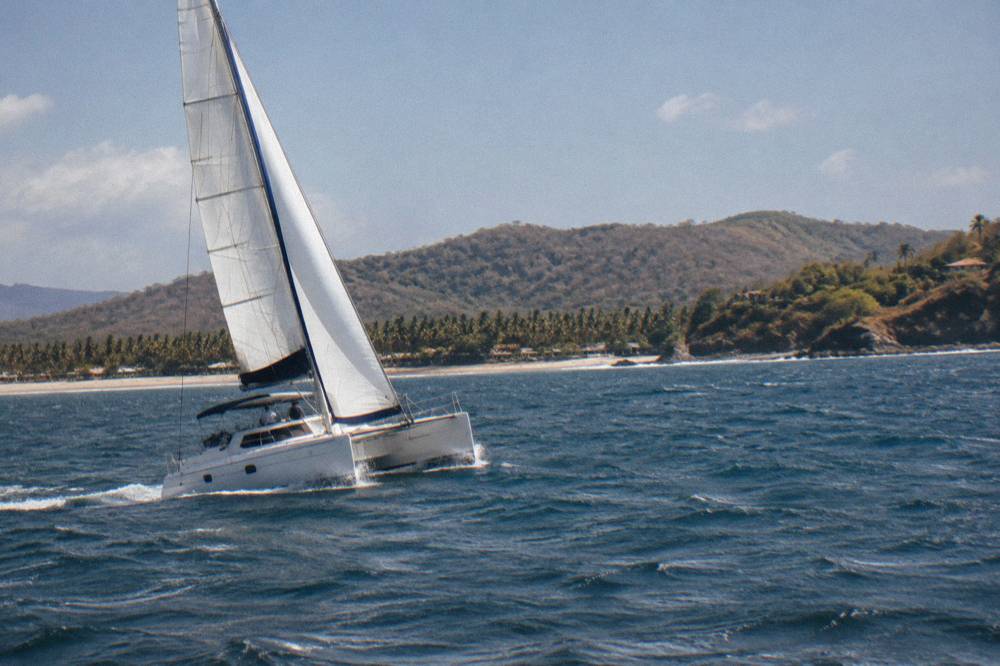
Sea conditions on the Guanacaste coast are calmest and clearest December to April, with operators reporting 15 to 25 m visibility, though Papagayo winds from December to March can chop the surface. May to November brings warmer water near 29 C, softer winds and visibility of about 8 to 12 m. In the Papagayo months wind picks up after about 11 am, so the flattest water comes early in the day, though only a couple of tours here offer true morning departures.
The Papagayo winds are the detail most first-time visitors miss. These northeasterly gap winds peak December to March, and they do two things to a boat day: they cool the surface slightly and they build short, steep chop once the morning is gone. Local operators note the wind typically rises after about 11 am in those months, which is worth knowing when you pick a departure slot. A catamaran handles chop well, it is the stable hull form for exactly this, but snorkeling in a stirred-up bay is less rewarding, and crews adjust the stop accordingly.
Green season flips the wind problem and adds rain instead. Rainfall is heaviest from May through November, and rivers can carry sediment out of the estuaries after heavy rain, which is what drops reported visibility to the 8 to 12 m range. The counterweight is thermal: sea temperatures hold between about 27.6 C and 29.4 C, so nobody is getting cold in the water, and underwater light earlier in the day is often good before afternoon clouds build.
Safety rules do not change by season. Costa Rica's transport ministry advises passengers to verify a boat's navigation permit, avoid trips in rough seas, and note that everyone aboard open-hull vessels must wear a certified life jacket, per MOPT's official boating guidance. Listings such as the Pacific Lounge cruises state that life jackets and safety equipment are on board, and every one of these trips offers free cancellation, which matters in a season where a squall can move a departure.
| Condition | Dry season, Dec to Apr | Green season, May to Nov |
|---|---|---|
| Reported snorkel visibility | 15 to 25 m | 8 to 12 m or less |
| Wind character | Papagayo winds, Dec to Mar, building afternoons | Generally softer, afternoon squalls |
| Sea temperature | about 27.3 to 29.3 C | about 27.6 to 29.4 C |
| Typical rain pattern | Rare, light | Afternoon heavy showers, Oct wettest |
| Best departure slot | Midday or sunset | A few true morning departures |
| Crowd level | Peak | Lower, softest Sep and Oct |
The practical read: if flat water and glassy snorkeling are the goal, aim for late March, April, late November or early December, the shoulder weeks when the wind has eased but the rains have not arrived. Locked into January? Book the sunset cruise and give the morning to the beach. September calls for a day cruise leaving around midday, with the afternoon kept for pool time, though note that only a few of these listings depart in the true morning. The weather by month guide extends this table with air temperatures and humidity.
When Is Snorkeling Best From A Tamarindo Or Flamingo Catamaran?
Snorkeling from a Tamarindo or Flamingo catamaran is best from December to April, when operators report 15 to 25 m of visibility, and at island or cove stops rather than the open beach, where water is often cloudy year round. Water is calmest and clearest before wind builds after about 11 am, so the few true morning departures, such as the Flamingo morning cruise, have an edge, while most day sails leave at midday.
The location point deserves emphasis because it is the single biggest quality lever. Water clarity at Tamarindo's open beach is often reduced by sediment and wave action, but it improves markedly at nearby coves and around the Catalina Islands, which snorkel and wildlife listings from Tamarindo visit, along with shell-rich Playa Conchal. One listing describes a roughly 45 minute catamaran sail from Tamarindo to the Islas Santa Catalina for guided snorkeling. The lesson: the boat matters more than the month, because the boat is what gets you to the clear water.
Nearly every snorkel-capable trip among these listings includes gear, and several add kayaks or paddleboards. The one gap: the Marlin del Rey day sail does not state snorkel equipment. The all-inclusive day sail from Tamarindo, from $90 per person, rated 4.5 from 123 reviews, runs 4.5 hours with lunch, drinks, snorkel equipment and two kayaks. The Blue Dolphin public catamaran, also from $90 per person and rated 4.5 from 990 reviews, includes a chicken fajita meal, drinks and snorkel gear across 4 hours 30 minutes. From the Flamingo side, the catamaran tour with meal, from $95 per person, rated 4.7 from 178 reviews, lists hotel pickup from Tamarindo, Potrero, Las Catalinas and Playa Flamingo, plus kayaks, SUPs and a guided snorkel session.
Seasonal stacking is simple. Dry season plus an island stop is the ceiling: clear water, warm sea, and lighter winds earlier in the day. Green season plus a cove stop is still genuinely good, especially in July's drier pocket, and you will likely share the boat with fewer people. The month to mentally discount is October, not because boats do not sail, but because the heaviest rain, about 354.1 mm on normals, means the most sediment and the most rescheduled afternoons. The snorkeling tours guide compares the snorkel stops trip by trip.
When Can You See Whales And Dolphins From A Tamarindo Boat Tour?
Humpback whales are reported off the Guanacaste coast in two windows, a northern group roughly December to March or April and a southern group roughly July to mid November, peaking August to September. Dolphins, turtles and flying fish appear in guest reports year round. No sighting is ever guaranteed, and none of these trips promises one.
Costa Rica is unusual in hosting both humpback populations, which is why the whale calendar here is nearly year round. The southern hemisphere group arrives around July from Antarctic and southern Chilean waters and stays to mid November, with August and September the reported peak, while the northern group passes roughly December to March or April. Recent guest reviews of the Marlin del Rey catamaran, in June, July and October, reported sea turtles, dolphins, whales and flying fish on the sailing and snorkel outing. Those are reports, not schedules: the ocean does not take bookings. If you're weighing which boat gives you the best shot at those sightings, our guide to the best catamaran tour in Costa Rica explains how to choose.
The trip descriptions are careful the same way, calling sightings possible rather than promised. Flamingo sunset catamaran listings mention turtles, whales, dolphins and rays as things guests may spot along the coast. That phrasing is honest, and it is the right expectation to board with. What a catamaran does guarantee is time on the water where those animals live, plus the snorkel stop, the meal and the sunset, which is why a whale-window month is a bonus rather than a requirement.
| Wildlife window | Roughly when | Source type |
|---|---|---|
| Southern humpbacks | July to mid November, peak Aug to Sep | Press and official tourism guide |
| Northern humpbacks | December to March or April | Press and official tourism guide |
| Dolphins, turtles, rays | Reported year round in guest reviews | Guest reports on live listings |
| Leatherback nesting, Las Baulas | 20 October to 15 February, restricted viewing | SINAC official page |
The turtle row carries an asterisk the size of a beach. Las Baulas National Marine Park, whose official SINAC page governs the rules, limits groups to 15 people with a local guide, forbids photographing or touching turtles, and restricts nesting observation heavily. Turtle observation tours inside the park are currently unavailable because nesting numbers are very low. Catamarans do not enter the nesting beach at all, so none of these trips is a turtle tour; the Las Baulas and Tamarindo boats guide covers what the park does allow.
Which Month Should You Pick For A Tamarindo Sunset Cruise?
Any month works for a Tamarindo sunset cruise. The latest sunsets land in late June to early July, the earliest in early to mid November, and the swing between them stays modest. What really changes month to month is sea state and crowd level: December to April delivers the reliable dry evening, while May to November brings softer crowds, a greener coast and whale-season odds, at the cost of some rain risk.
The arithmetic is kind to procrastinators. A 5 hour afternoon cruise departing around 1:00 pm lands its sunset leg squarely in the golden hour, whether it is January or July. Sunset trips here cluster at 4 to 5.5 hours: the Timarouba sunset sail runs about 5 hours from $97 per person with lunch, open bar, snorkel gear, kayaks and paddleboards; the Catamaran Snorkel Sunset Cruise from Tamarindo or Playas del Coco, rated 4.7 across 352 reviews, runs 5 hours from $104; and the budget Pacific Lounge public sunset, from $88 per person and rated 4.8 across 30 reviews, packs lunch, open bar, snorkel gear, kayak and paddleboard into its 5 hours.
Month selection, then, is about the water before the sunset and the sky after it. February and March deliver the most dependable evenings, dry air, clean horizon, calm anchorage for the swim stop. July through September trade a small rain risk for the southern humpback window and a noticeably quieter boat. October sunsets can be spectacular precisely because of the cloud, but also rained out, so keep the free-cancellation flexibility every listing here carries. December is the crowd compromise: dry season reliability with the holiday peak just beginning.

For the Flamingo departures, the same logic applies with a transfer wrinkle. The Playa Flamingo sunset catamaran, from $95 per person, rated 4.9 from 1,170 reviews, is the most reviewed of these listings and includes hotel pickup and drop off from close-in locations, which matters because it boards at the Lazy Lizard area of Playa Flamingo, about a 31 to 35 minute drive from Tamarindo. In green season, build slack into that drive; an afternoon downpour can slow the coastal road even when the sailing window is fine.
What About Crowds, Prices And Timing Your Booking?
Crowds in Tamarindo peak during the dry season, late December through March. Shared trips across these listings run $88 to $169 per person, sunsets from $88 to $133.35 and day sails from $90 to $169, so savings come mainly through hotels and availability rather than ticket price. Book earliest for February and holiday weeks.
It is worth being precise about what changes by season and what does not. The shared sunset sails on this site span from $88 per person, the budget Pacific Lounge listing, to $133.35 for the sunset sailing and snorkeling tour from Playa Tamarindo, with most clustered between $95 and $120. Shared day trips can run higher, up to $169 with hotel transfer included. The bigger difference is whether you can still get a seat: February and the late December holiday window sell out earliest, and the small-boat and private options go first.
Private charters follow the same pattern at group prices. The private sunset catamaran from Tamarindo lists from $1,167 per group for 4 hours with lunch, open bar, snorkel gear and a paddleboard, rated 4.8 from 33 reviews. The private Flamingo sunset catamaran, rated a perfect 5.0 from 50 reviews, runs from $1,900 per group with unlimited drinks and hotel pickup. Green season is when those boats have open dates and negotiable calendars; dry season is when they are wedding-booked weeks out.
| Timing goal | Pick this window | Best-fit tour |
|---|---|---|
| Clearest snorkel water | Dec to Apr, Mar to Apr ideal | Blue Dolphin day catamaran, from $90 |
| Whale odds | Aug to Sep peak | Timarouba sunset sail, from $97 |
| Fewest crowds | Sep to Oct, or early Dec | Budget Pacific Lounge sunset, from $88 |
| Warmest sea | May, about 29.4 C | Flamingo catamaran with meal, from $95 |
| Most reviewed trip | Any month | Flamingo sunset sail, 1,170 reviews |
| One of the few true morning sails | Dry season calm | Morning catamaran with kids' games, from $98 |
A practical booking sequence: choose the month by what this guide says matters to you, then choose the departure type, a midday or day cruise when snorkeling is the priority, an afternoon sailing when the sunset is the point, a private charter for a group occasion. Then check the live listing for that specific trip, because departure points differ, El Chiringuito on Tamarindo beach for many sailings, Marina Flamingo or the Lazy Lizard area for the Flamingo boats, and hotel pickup appears on several listings, mostly among the Flamingo departures. Every one of these trips shows free cancellation, which is the hedge that makes an early green season booking reasonable. Once the tour slot is settled, the guide to sizing your Tamarindo stay helps you fit the catamaran day into the rest of your trip.
The comparison of all these options, departure by departure, lives in the boat tours compared guide, and the full price breakdown is in the catamaran cruise prices guide. For a shorter orientation, the Tamarindo Catamaran Cruises homepage comparison and trip picker sorts these trips by format, budget and departure beach.
The short version of a long year: December to April for the postcard conditions, August to September for whales, July for the quiet green season sweet spot, and October only if rain does not bother you. Whatever month you land on, the sunset still lands too, earliest between early and mid-November, latest from late June into early July, and there will be a catamaran pointed at it.
Common Questions About Tamarindo Boat Tour Timing
When is the best time to visit Tamarindo for a boat tour?
December to April, the dry season, offers about 4.2 to 36.2 mm of monthly rain, calm seas and operator-reported snorkel visibility of 15 to 25 m. If whale watching is the priority, late July to September overlaps the southern humpback peak. Boat tours run in every month.
What is the wettest month in Tamarindo?
October, with about 354.1 mm of rain on 30 year normals, roughly 100 times February's 3.5 mm. Green season rain falls mostly in afternoon showers, so catamaran cruises, from midday day sails to sunset trips, still run most days.
When can you see whales from a Tamarindo catamaran?
Humpback whales are reported off Guanacaste roughly December to March or April, the northern group, and July to mid November, the southern group, peaking August to September. Sightings appear in guest reviews but are never guaranteed, and no listing promises them.
Is the sea warm enough to swim year round in Tamarindo?
Yes. Guanacaste coast sea temperature averages range from about 27.3 C in January to about 29.4 C in May, so the swimming stop on a catamaran tour is comfortable in every month.
Do catamaran tours run in the green season?
Yes. These listings operate year round and show free cancellation. Calmer mornings are the rule once wind and rain build in the afternoon, and reported snorkel visibility drops to about 8 to 12 m, so day cruises from midday onward carry the most weather risk.
What time is sunset in Tamarindo?
Sunset falls between about 5:16 pm in early to mid November and about 6:08 pm in late June and early July. A 4 to 5.5 hour afternoon cruise departing around 1:00 pm catches the sunset in any month of the year.