Free Things To Do In Tamarindo And When A Boat Trip Is Worth It
Tamarindo gives away its best show every evening: the sun drops into the Pacific from the sand and it costs nothing. This guide covers the free beaches, tide pools, estuary views and park rules around town, and then makes the honest case for the one splurge most budget travelers end up making, a catamaran day on the water.
Short answer
The free things to do in Tamarindo are the public beaches, sunsets watched from the sand, tide pools at nearby coves, walking the estuary edge and visiting Las Baulas park land during daytime hours. Every catamaran trip on this site is paid; the cheapest firm-priced shared sunset sail starts from $88 per person with lunch and open bar listed.
Sunset over Tamarindo drifts to its latest in late June and early July, then slips back to its earliest in early to mid November, and the show from the beach costs exactly nothing. That is the anchor of a budget stay here: this stretch of the Guanacaste coast hands out its biggest attractions, sand, surf, wildlife overhead and a sky that ignites most evenings, without a ticket booth. The town has grown around those free assets, and a traveler with a towel, sunscreen and a bicycle can fill several days without spending on activities at all.
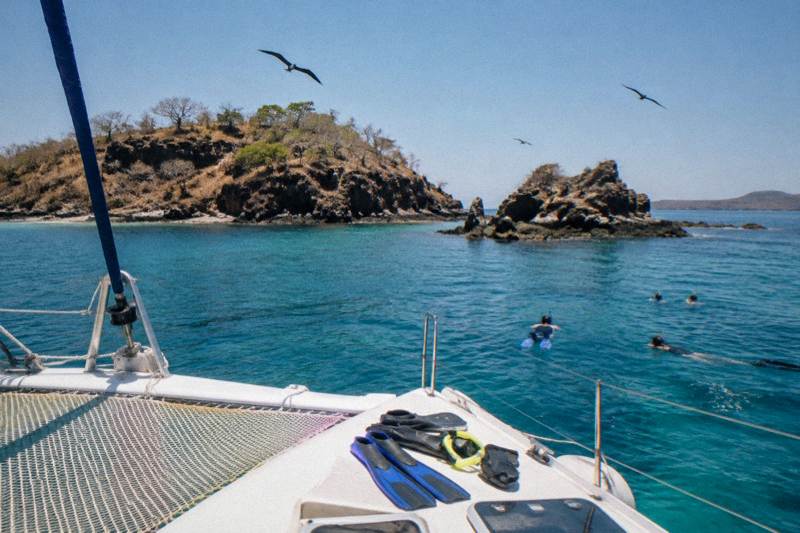
This guide walks through what is genuinely free around Tamarindo, the beaches, the sunsets, the tide pools, the estuary edge and the national park next door, and then deals with the question every budget reader eventually asks. Should one day of the trip go to a catamaran? Every boat trip here is paid, and pretending otherwise would be dishonest. The cheapest firm-priced shared sunset sail among these listings is the Pacific Lounge public sunset catamaran, from $88 per person with lunch, open bar and snorkel gear listed, and for many visitors it is the single purchase that justifies itself.
What Can You Do In Tamarindo Without Paying?
The free options in Tamarindo are the public beach itself, sunset viewing from the sand, tide pools at nearby rocky coves, walking the estuary edge where mangroves meet the ocean, and surfing if you bring your own board. None of these carry a town gate or a beach club fee, and all sit within a short walk or ride of central Tamarindo. The land side of Las Baulas National Marine Park is also open for daytime visits; check access and any fee at the park booth.
Costa Rican law treats the shoreline as public land, which is why every beach in this guide is free to walk and swim at, in principle, though swimming safety varies and lifeguard coverage is limited. Playa Tamarindo itself is the easiest starting point: a long, walkable crescent of sand with surf schools, shaded spots and the estuary mouth at its northern end. The free version of a Tamarindo day follows the rhythm of the coast, early hours that tend to be calmer and brighter, midday spent in shade, evenings given over to the sunset.
Two practical notes shape every free day here. First, bring your own water and shade; free does not mean serviced, and midday sun on this coast is serious. Second, reef-safe mineral sunscreen is worth packing even for beach days, since protected marine areas and tour operators along this coast increasingly encourage it, and there is no reason to treat the free beach differently from the boat.
The budget math matters because Tamarindo's paid activities cluster around the water, and the water is also where the free ones live. A day split between an early beach walk, a shady lunch and an evening on the sand covers the essentials of the town for the cost of food alone. The sections below break down each free option, what it actually offers, and where the honest limits are, including the restrictions on turtle watching that catch many visitors by surprise.
Which Beaches Around Tamarindo Are Free To Visit?
All of the main beaches in the area, Playa Tamarindo, Playa Langosta, Playa Grande, Playa Ventanas and, a short drive north, Playa Conchal and Playa Flamingo, are public and free to enter. The differences between them are character, not price: Tamarindo is the busy surf town beach, Langosta is the quieter rocky end, Grande is the wild park beach, and Conchal is famous for its shell-strewn sand.
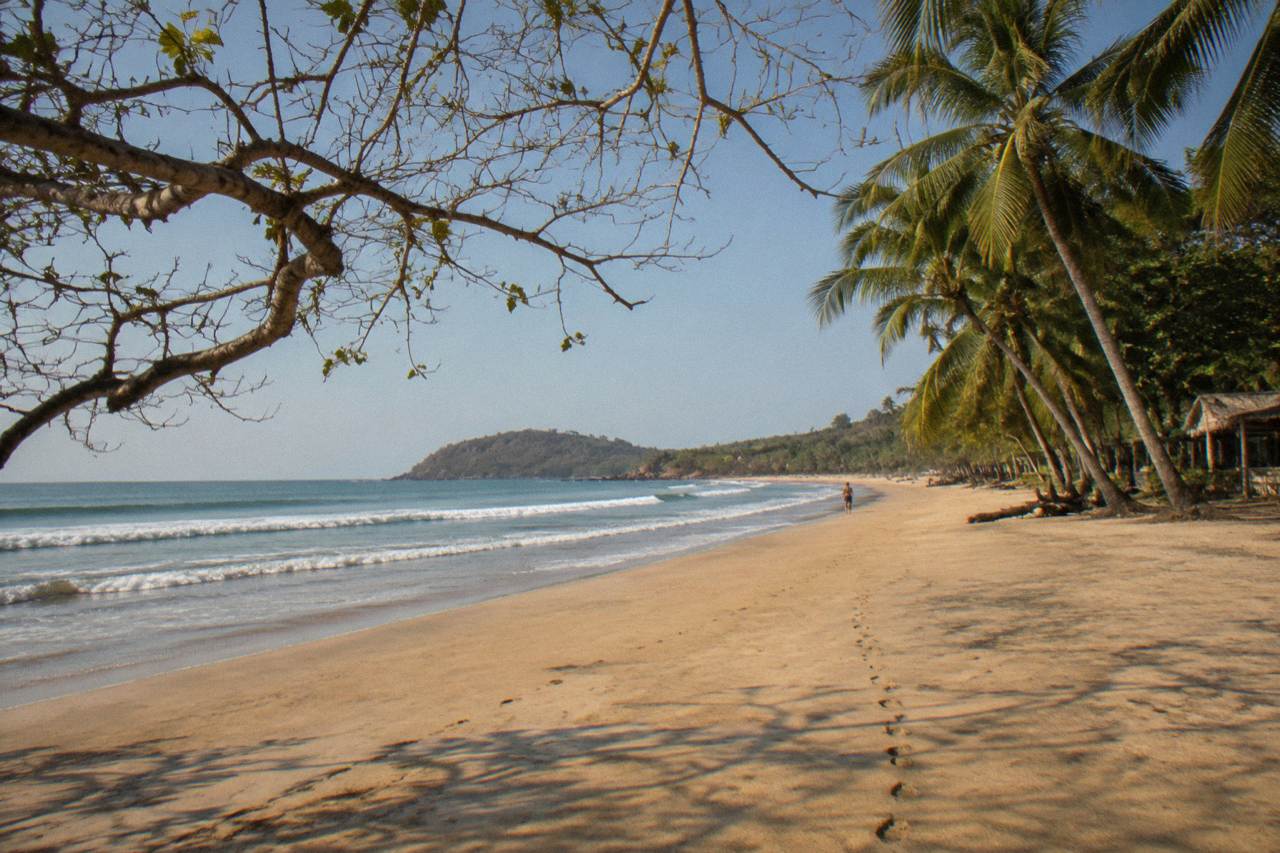
Playa Tamarindo is the default. It is long, sandy, walkable at any tide and backed by the town, so a free day here needs no transport at all. The northern end meets the Tamarindo Estuary mouth, where the mangroves of Las Baulas begin, and the walk along that edge is one of the better free wildlife outings in town, more on the estuary below.
A short trip south, Playa Langosta is the local's quieter alternative, rocky patches, estuary views at its southern end and far fewer people. North across the estuary, Playa Grande sits inside the national park: a broad, powerful surf beach with no development on the sand, open during park hours. The park service, SINAC, lists the park as open every day of the year from 6:00 AM to 6:00 PM, with surfing explicitly named as an allowed activity at Playa Grande and Playa Langosta. Farther up the coast, Playa Conchal, roughly a 29 to 35 minute drive from Tamarindo, is widely rated for its shells and clear shallows, and Playa Flamingo, about 31 to 35 minutes away, is the white-sand bay where several catamarans in this catalogue actually board.
| Beach | Distance from central Tamarindo | Character | Free access notes |
|---|---|---|---|
| Playa Tamarindo | Walkable | Busy surf-town beach, all services nearby | Public, free, lifeguard coverage limited |
| Playa Langosta | Short walk or ride south | Quieter, rocky sections, sunset views | Public, free |
| Playa Grande | Across the estuary, short drive | Wild park beach, strong surf | Check access and any fee at the park booth |
| Playa Conchal | About 29 to 35 minutes by road | Shell sand, clear shallows | Public, free |
| Playa Flamingo | About 31 to 35 minutes by road | White-sand bay, marina | Public beach free; boat tours depart here |
Swimming deserves one honest paragraph. Currents on this coast are real, warning signs are not always present, and supervised beaches are few; ask locally about conditions on the day and swim where others swim. For a fuller treatment of which stretches suit which swimmers, see our guide to swimming and ocean conditions in Tamarindo.
For readers whose free-day plan is really a scouting mission for one paid water day, the beach geography matters: the Flamingo sunset catamaran listings, including a 4-hour sail rated 4.9 from 1,170 reviews, board from the Flamingo side, while most Tamarindo departures leave from the El Chiringuito area of the main beach. Knowing which beach you want to end your day on shapes which boat, if any, you book.
Where Can You Watch The Sunset For Free In Tamarindo?
The free sunset show in Tamarindo happens on the sand, and it starts early: the latest sunsets of the year fall late June into early July and the earliest in early to mid November, so the free viewing window opens in the late afternoon and closes within the hour. The main beach, the Langosta rocks and the estuary mouth are the classic free front-row seats, and no ticket, tour or restaurant minimum is required.
The numbers come from astronomical tables for this exact latitude. On 22 October 2026 the sun sets at 5:22 pm; in mid February it is about 5:51 pm; in mid June about 6:07 pm. There is no daylight saving time in Costa Rica, so the shift across the year is gentle, roughly fifty minutes total. What that means practically: in dry season, plan dinner after the sky show, not during it, because the light is gone by 6:30 pm.
| Period | Sunset time in Tamarindo | Free viewing tip |
|---|---|---|
| Early December | About 5:16 pm | Earliest sunsets of the year; arrive by 4:45 pm |
| February | About 5:51 pm | Slightly later; dry, clear skies most evenings |
| Late October | About 5:22 pm | Green season, dramatic clouds possible |
| Mid June | About 6:07 pm | Latest sunsets; longest evenings on the sand |
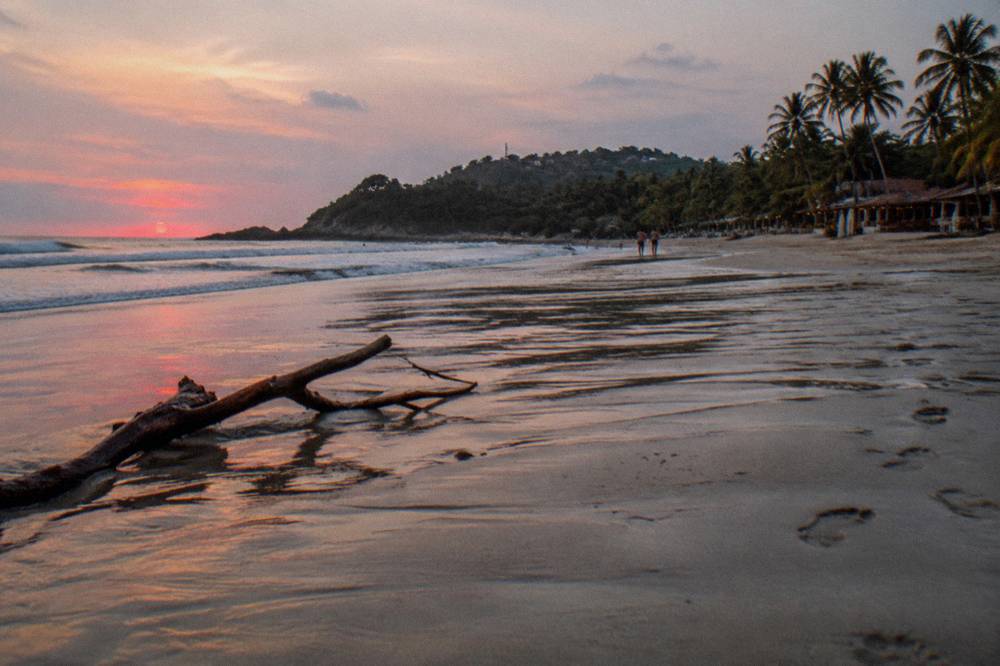
The honest comparison is with the paid version. Watching from the beach is free and lovely; watching from a catamaran, out on the water with the coastline silhouetted, is the experience most visitors remember and the reason the sunset-sail category exists. The two are not competitors so much as tiers. The free sunset asks for a walk; the boat asks for a ticket and returns an open bar, a meal and five hours at sea. Our page on Tamarindo sunset times and viewing spots covers the free seats in detail.
If the budget stretches to exactly one paid evening, the public sunset catamaran is the standard choice: the Pacific Lounge public sunset sail runs 5 hours from $88 per person with lunch, open bar and snorkel gear listed, and it departs from the El Chiringuito area of the main beach, so the free sunset walk to the departure point and the paid sunset at sea stack neatly into one evening. Check availability if that combination fits your dates.
Can You See Wildlife Or Turtles For Free Near Tamarindo?
Wildlife around Tamarindo is free to look for but restricted to guarantee: howler monkeys, crocodiles and birds appear along the estuary and park edges at no cost, while sea turtles are the exception, turtle observation inside Las Baulas is currently restricted, organized turtle tours at Playa Grande are reportedly unavailable, and no boat enters the nesting beach. Never plan a Tamarindo trip around a promised turtle sighting.
The rules come from the park service. Las Baulas National Marine Park is visited by three nesting turtle species, leatherback, olive ridley and black turtle, with the leatherback season running 20 October to 15 February on the beaches of Grande, Langosta and Ventanas. But nesting numbers have collapsed, recent seasons are reported at only a handful of leatherback females, and 2026 press and operator pages report that organized turtle observation inside the park is not currently available. The park's own page has been read as saying no turtle observation is offered.
What remains free and legal: walking the park's public beach and estuary areas during open hours, watching for howler monkeys in the mangroves, and birding along the estuary edge. The park rules where turtle activity exists are strict, groups capped at 15 with a guide, no photography, no touching, guide-only red-filter light, and boats do not land on the nesting beach. Daytime park rules also ban pets, single-use plastics, camping and beach driving, and the park service lists surfing at Grande and Langosta and shallow diving at Playa Carbon as allowed activities.
Marine life from the water is a different story and a paid one. Recent guest reviews of the Marlin del Rey catamaran report sea turtles, dolphins, whales and flying fish on 2026 trips, and the Flamingo sunset listings mention turtles, dolphins and rays as possible; none of it is promised, and sightings depend entirely on season and luck. Humpback whales are reported in two windows, northern animals December to March or April and southern animals roughly July to mid November, peaking August to September.
The honest budget framing: the estuary edge and park land give you monkeys, birds and crocodiles for free, at the right hour and tide. The ocean's bigger animals are, in practice, only reachable by boat, which is one of the quiet arguments for a paid day. Our deep dive on turtles and Las Baulas from Tamarindo covers the rules in full.
Is The Tamarindo Estuary Free To Explore On Foot?
The Tamarindo Estuary, the mangrove wetland inside Las Baulas that the park service calls of worldwide importance, can be walked along its edges for free from the beach side, but the boat tours through the mangroves are paid outings sold separately and are not in this site's catalogue. Walking the edge costs nothing; going up the channels by boat is a small-boat tour with its own operator and price.
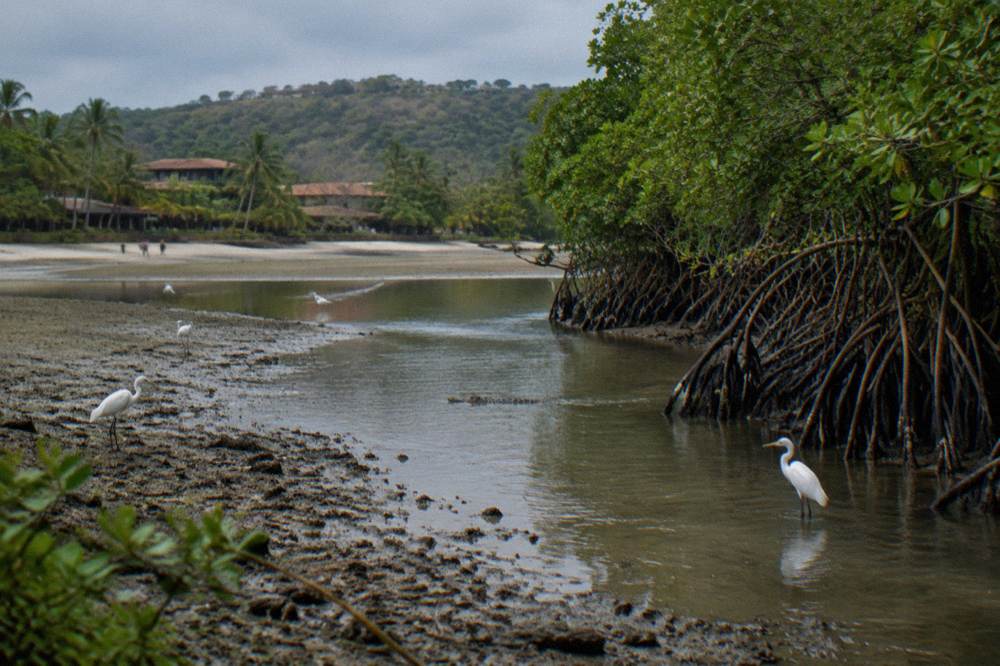
The free version is real and underrated. The estuary mouth sits at the north end of Playa Tamarindo, and the walk toward it passes mangroves where howler monkeys are commonly heard and seen, herons and egrets work the shallows, and crocodiles are occasionally spotted from the bank. Tide matters: at low tide the channels shrink and wading birds concentrate, at high tide the water fills the mangrove roots. There is no gate, no fee and no guide requirement for the beach-side edge, though a local guide sharpens what you actually notice.
The paid version, small-boat estuary tours with a naturalist guide, is a separate product line. We do not list one and will not quote a price for it here; those trips are sold elsewhere in town. For readers who want to be on the water with a booking they can compare, the nearest catalogue options are the catamarans: a midday trip such as the all-inclusive day sail, which departs at 11:30 am, 4.5 hours from $90 per person with lunch and open bar listed, or the Blue Dolphin day catamaran, 4.5 hours from $90 per person, rated 4.5 from 990 reviews, both of which include snorkel stops rather than mangrove channels.
The distinction matters for planning. If your interest is monkeys, birds and the mangrove forest itself, the free estuary edge walk, timed to the tide, delivers most of it. If your interest is being out on the water with gear, food and drinks handled, that is a catamaran day, and the budget question in the next section applies.
What About Tide Pools And Free Walking Spots On The Guanacaste Coast?
Tide pools dot the rocky sections of coast around Tamarindo and Langosta and are free to explore at low tide, and the free walking options extend to the length of Playa Tamarindo at any tide, the Langosta rocks, and the park beaches north of the estuary. The only costs are transport to the farther spots and the timing discipline to arrive when the tide is out.
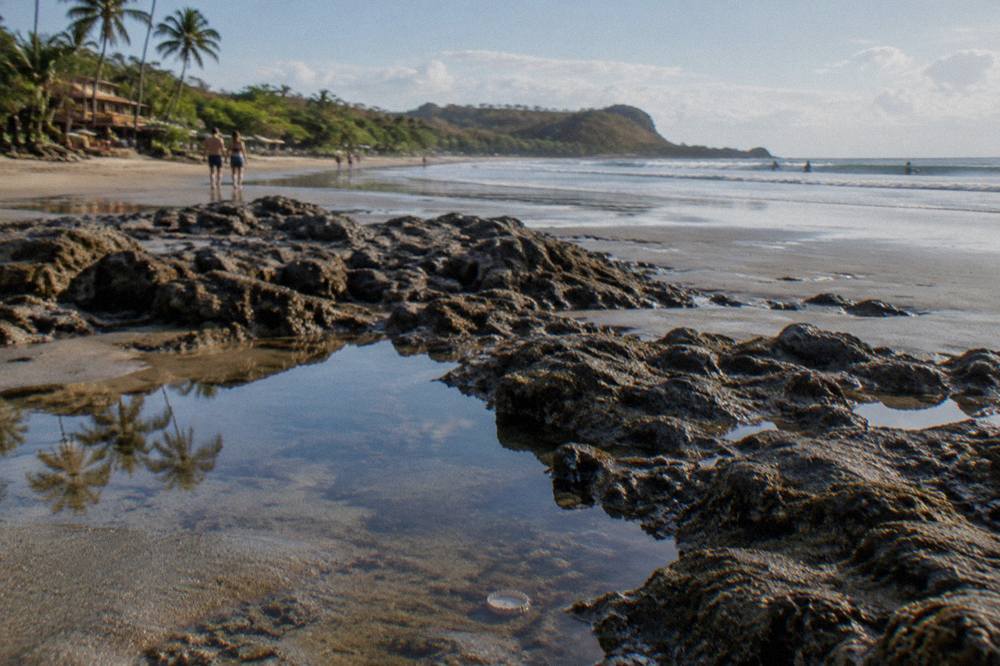
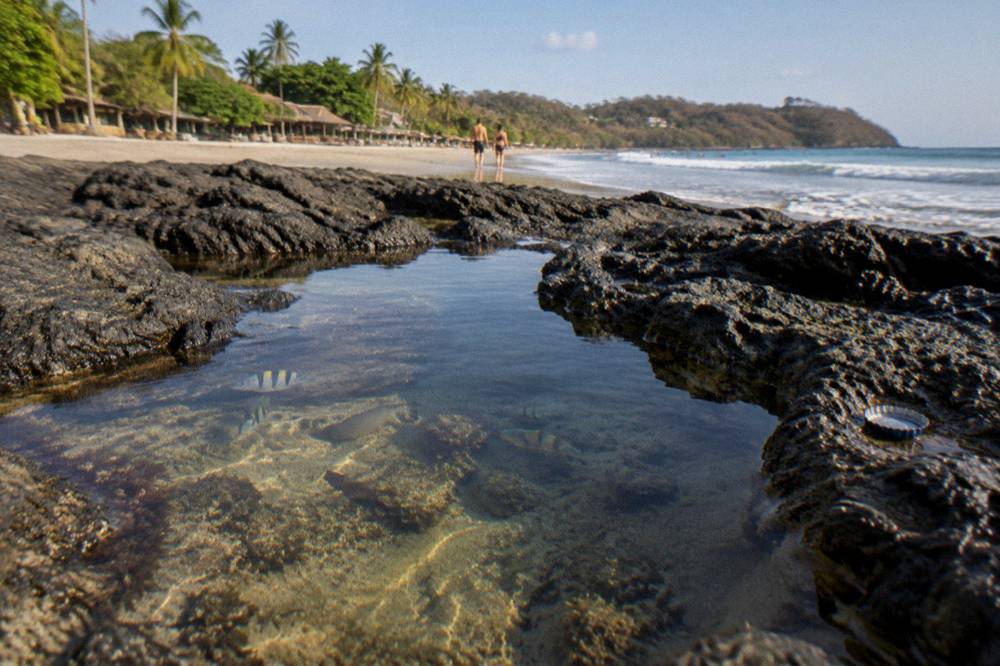
Tide pooling is the classic zero-cost activity on this coast. The rocky stretches south of central Tamarindo and around Playa Langosta hold pools at low tide where small reef fish, crabs and occasionally octopus shelter in the warm shallows. Water clarity on the open Tamarindo beach itself is often reduced by sediment and wave action, but the coves and rockier corners hold their water clearer between tides, which is the same reason snorkel tours from this coast head to coves and the Catalina Islands rather than the main beach. Go within an hour or two of low tide, wear reef shoes if you have them, and leave everything living where it is.
Beyond the pools, the free walking list is short but good. Walking the full length of Playa Tamarindo, town end to estuary mouth, takes about an hour round trip on foot. Cross the estuary and Playa Grande opens up, an emptier stretch that feels far wilder than the town beach, and the park's daytime hours leave room for an early or late-afternoon visit. Surfing on your own board costs nothing at Grande or Langosta, both named by the park service as surfing beaches. Rentals and lessons are where that activity starts costing money.
| Free activity | Where | Best timing | What it costs |
|---|---|---|---|
| Tide pooling | Rocky sections, Langosta end | Within 2 hours of low tide | Nothing |
| Beach walk end to end | Playa Tamarindo | Early, before the midday heat | Nothing |
| Wildlife walk | Estuary edge, north end of beach | Low tide, early or late day | Nothing |
| Wild beach walk | Playa Grande, inside park hours | Morning, before the heat builds | Nothing, transport aside |
| Sunset from the sand | Main beach or Langosta rocks | 45 to 60 minutes before sunset | Nothing |
| Surfing, own board | Grande, Langosta, Tamarindo | Mornings, wind builds after about 11 am in the windy months | Nothing beyond the board |
One weather note worth folding into free-day planning: the Papagayo winds peak December to March, and operators report that on this coast the wind typically rises after about 11 am, roughening the sea surface. That pattern shapes paid boat trips too, since only a few true morning departures exist among them. It applies just as well to tide pooling and shore walking: the calm, photogenic hours are the early ones, and the afternoons belong to shade and, later, the sunset.
When Is A Paid Catamaran Trip Worth It On A Budget?
A paid catamaran day earns its price when the free options stop substituting for it: open-water snorkeling beyond the cloudy surf zone, wildlife odds that only a boat improves, and the sunset from seaward rather than from shore. Across these listings, shared sunset sails with lunch, open bar and snorkel gear included run from $88 to $133.35 per person, while the cheapest private charter comes in at $500.
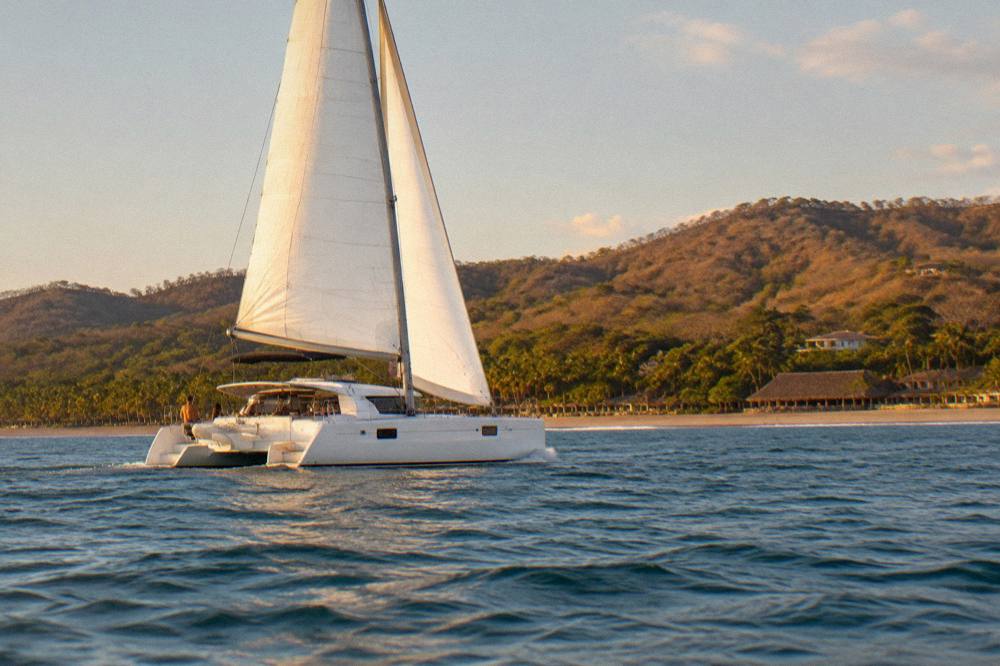
Every catamaran trip on this page is paid, and we will not dress that up. The spread across these trips is real. The cheapest firm-priced shared sunset sail is the Pacific Lounge public catamaran, from $88 per person for 5 hours, with lunch, open bar, snorkel gear, kayak and paddleboard listed. The featured Timarouba sunset sail, rated 4.5 from 504 reviews, runs from $97 per person for 5 hours with lunch, open bar, snorkel gear, two kayaks and a paddle listed. The snorkel sunset cruise from Tamarindo or Playas del Coco, rated 4.7 from 352 reviews, is from $104 per person.
| Listing (card name) | Rating and reviews | Firm price | Duration | Meal and bar listed |
|---|---|---|---|---|
| Budget Pacific Lounge Sunset | 4.8 from 30 reviews | From $88 per person | 5 hours | Lunch and open bar |
| Timarouba Sunset Sail, Open Bar | 4.5 from 504 reviews | From $97 per person | 5 hours | Lunch and open bar |
| Marlin del Rey Sunset Snorkel Cruise | 4.7 from 352 reviews | From $104 per person | 5 hours | Lunch and open bar |
| Blue Dolphin Day Catamaran | 4.5 from 990 reviews | From $90 per person | 4.5 hours | Meal and open bar |
| All-Inclusive Day Sail | 4.5 from 123 reviews | From $90 per person | 4.5 hours | Lunch and open bar |
| Private Catamaran, 4.5 Hours | New listing | From $800 per group | 4.5 hours | Light meal and open bar |
The decision logic is simpler than the table suggests. If your free days have already given you the beach, the pools, the monkeys and several sunsets from the sand, the only things left unpaid-for are the ones that require a boat: snorkeling in clearer water than the surf zone, the coastline seen from offshore, and a sunset that sets behind you as you face the land. That is precisely the product. Operators along this coast report snorkel visibility of roughly 15 to 25 m in dry season at the coves and islands versus 8 to 12 m or less in green season, and the boats moor at those clearer spots, not off the main beach.
Families and groups should run the per-group math. A private charter from $800 per group for 4 to 5 hours crosses below per-person shared pricing somewhere around eight to ten travelers, where capacity allows, and these private listings, from the intimate sailboat experience for up to 6 to the Marlin del Rey private charter at from $2,972.98 per group, span that whole range. Our private charter cost guide works through it in detail.
How Do Free Days And One Boat Day Fit Together?
The strongest budget structure for a Tamarindo week is free days built around tides and sunset times, with one paid catamaran afternoon slotted in mid-trip: mornings for tide pools and the estuary walk, middays for shade, evenings for the free sunset show, and a single 4-to-5-hour boat booking for the water day. Sample costs for a five-day stay run from essentially zero for activities to under $100 per person with one shared sunset sail added.
The sequencing matters more than the spending. Put the boat day in the middle of the stay, not the last day, so a weather cancellation can be rescheduled. Every one of these trips carries free cancellation, which makes mid-trip booking low-risk. Use the free days before it to learn the coast on foot, and you will recognize the beaches, the estuary and the Catalina headlands from the water when the boat passes them.
| Day | Morning to midday (free) | Afternoon | Evening | Activity spend |
|---|---|---|---|---|
| 1 | Beach walk, town end to estuary | Shade, town | Sunset from the sand | $0 |
| 2 | Tide pools near Langosta at low tide | Free time | Sunset from Langosta rocks | $0 |
| 3 | Estuary edge wildlife walk | Catamaran departure, about 1 pm | Sunset at sea, return after dark | From $88 per person |
| 4 | Playa Grande park beach walk | Shade, town | Free sunset, main beach | $0 |
| 5 | Final swim or tide pools | Pack and depart | Depends on flight | $0 |
Two closing notes keep the plan honest. Transport to the farther beaches, Conchal and Flamingo are each about half an hour away by road, is not free if you do not have a car; budget shared shuttles, taxis or a bicycle accordingly, and our Liberia airport to Tamarindo guide covers arrival costs with real reported ranges. And check your government's current travel advisory before any Costa Rica trip, as standard practice, the same way you would check the tide table before the tide pools.
The site behind this guide, Tamarindo Catamaran Cruises, exists because the boat day is the one purchase most visitors here make, but the free coast is what fills every other day, and it fills them well.

Common Questions About Free Things To Do In Tamarindo
What can you do in Tamarindo without paying?
The public beaches, sunsets from the sand, tide pools at low tide and the estuary-edge wildlife walk are all free. For the land side of Las Baulas National Marine Park, check access and any fee at the park booth before you go. Every catamaran trip on this site is a paid product; the cheapest firm-priced shared sunset sail is from $88 per person.
Is Playa Tamarindo beach free?
Yes. The shoreline in Costa Rica is public land, and Playa Tamarindo, Langosta, Grande, Conchal and Flamingo are all free to walk and swim at. Services like chairs and umbrellas cost money if you want them, and lifeguard coverage is limited, so swim where others swim and ask about conditions.
Can you see turtles for free in Tamarindo?
No, and not paid either, currently. Turtle observation inside Las Baulas is restricted, organized turtle tours at Playa Grande are reportedly unavailable because of very low nesting numbers, and boats do not enter the nesting beach. The park's free daytime land access never includes turtle watching; plan around monkeys, birds and the beach instead.
What time is sunset in Tamarindo?
Sunset falls between about 5:16 pm in early to mid November and about 6:08 pm in late June to early July, with no daylight saving time. Arrive on the sand 45 to 60 minutes before the listed time; the free show needs nothing but a spot on the beach.
Are the Tamarindo estuary boat tours free?
No. The estuary edge can be walked for free from the beach side, but the mangrove boat tours with naturalist guides are paid small-boat outings sold separately and are not in this site's catalogue. The nearest catalogue water trips are the catamarans, from $88 to $169 per person shared.
What is the cheapest catamaran tour in Tamarindo?
The cheapest shared trip among these listings is the Pacific Lounge public sunset catamaran, from $88 per person for 5 hours with lunch, open bar and snorkel gear, rated 4.8 from 30 reviews. The cheapest private charter starts at $800 per group. Several listings show their price only on the live booking page, so compare there before booking.