Can You Swim In The Ocean In Tamarindo?
Yes, you can swim in the ocean in Tamarindo, with caveats: no lifeguard guarantee, variable currents, and season-driven surf. Here is what to know before you get in, and where boat trips find calm water.
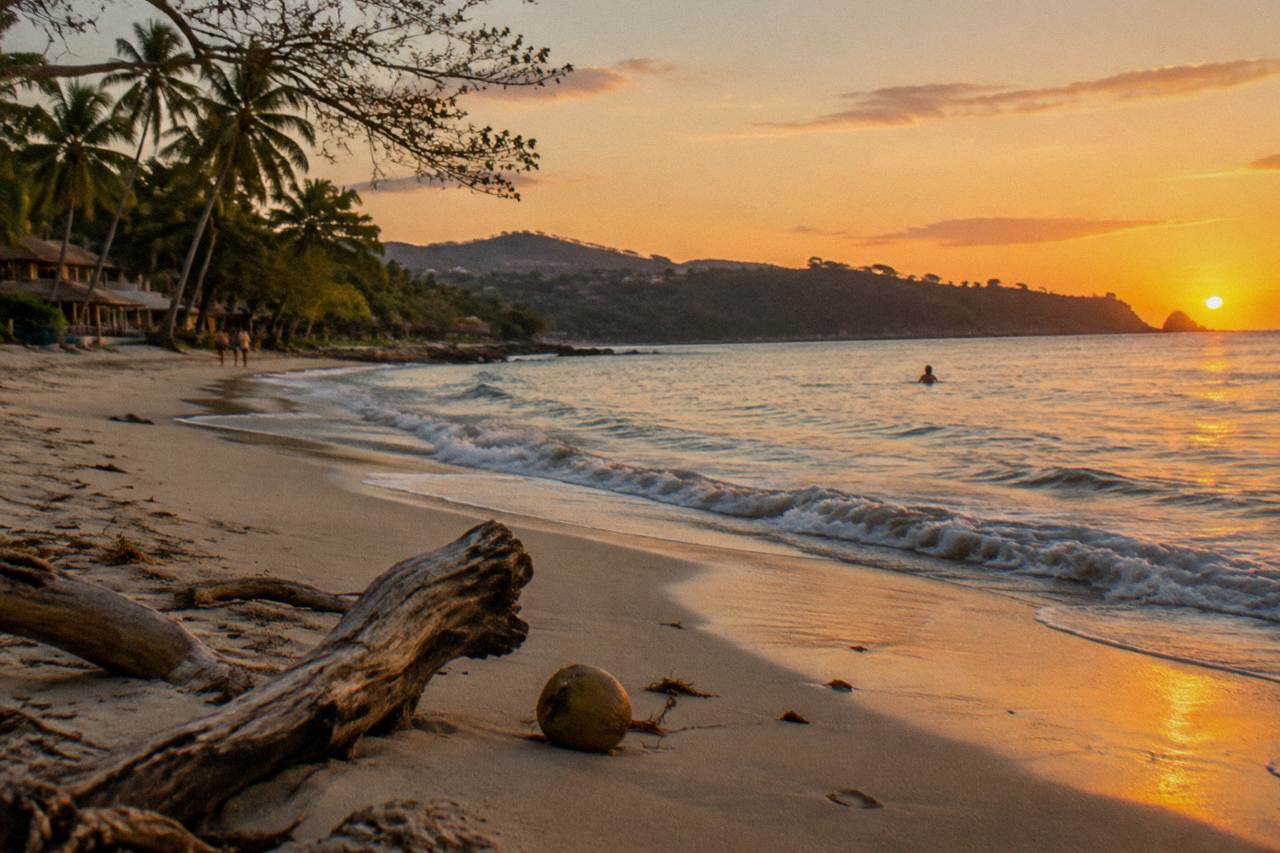
Yes, you can swim in the ocean in Tamarindo for most of the year. The main beach shelves gradually, the water stays warm, roughly 27 to 29 degrees Celsius on monthly averages across the Guanacaste coast, and swimming is a normal part of every day here. The honest caveats are currents that shift with the tide and surf, thin lifeguard coverage, and a green season that brings more swell and runoff.
Those caveats are manageable, and they shape how locals and regular visitors actually swim. In the dry season, December to April, the sea in front of Tamarindo is typically at its calmest and clearest, with operators reporting underwater visibility of 15 to 25 meters at the better spots. In the green season, May to November, afternoon rains and stronger swells arrive, and visibility at the open beach drops to a reported 8 to 12 meters or less. Plenty of people still swim, they just pick their windows, usually mornings, and their spots with more care.
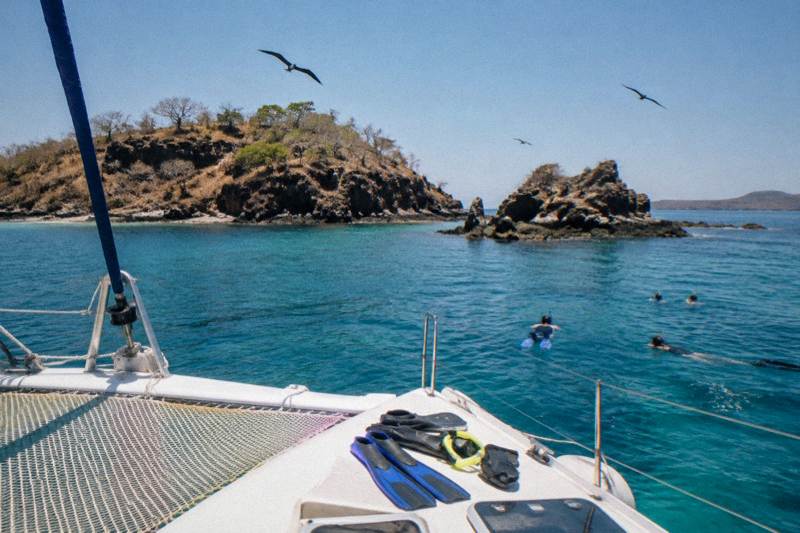
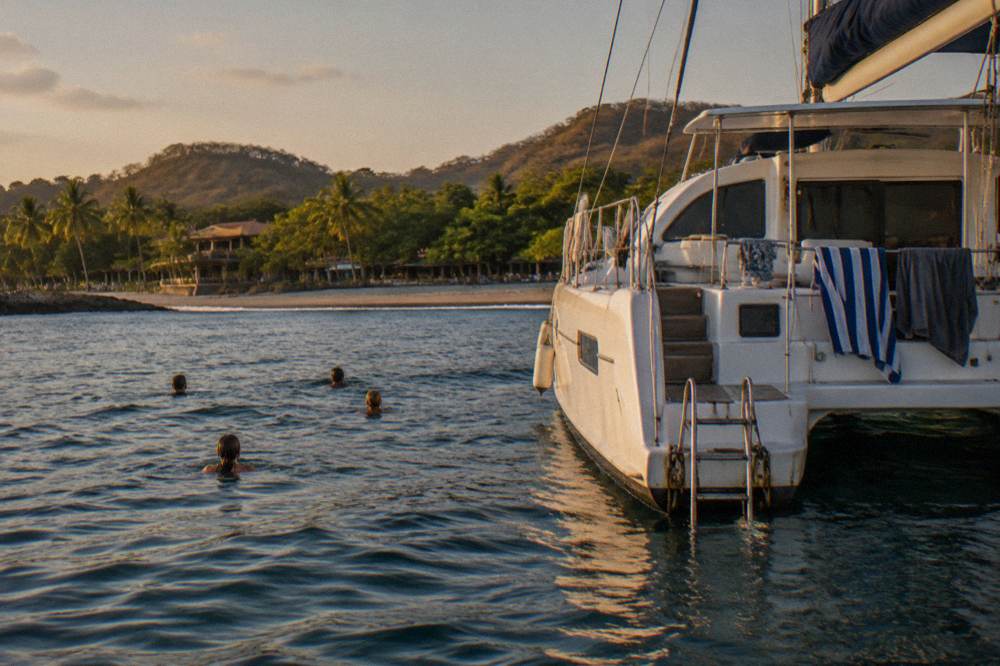
One thing that surprises first-time visitors is how much of the best swimming around Tamarindo is not at the town beach at all. It is off a boat. Nearly every catamaran trip in the area builds its day around a moored swim stop in a protected cove or around the rocky points where the water clears up, away from the sediment and wave action of the open beach. A 45-minute catamaran sail from Tamarindo reaches the Islas Santa Catalina area, and snorkel and wildlife trips from town commonly call at Playa Conchal and local bays where the swimming conditions beat the main beach.
If swimming is the point of your trip, the catalog of sailing trips on this site is the most reliable way to get calm, clear water.
The featured trip, the Timarouba sunset sail with open bar, is a 5-hour shared catamaran from the El Chiringuito area of Tamarindo beach that lists snorkel gear, two kayaks and a paddleboard among its inclusions, from $97 per person and rated 4.5 from 504 reviews. That is a full afternoon built around a swim stop, not a swim squeezed between sightseeing.
Is It Safe To Swim At Tamarindo Beach?
Mostly, yes, with ordinary ocean caution. Tamarindo is a popular swim beach and people swim here daily, but the Pacific is open water: currents vary with tide and surf, many Costa Rican beaches lack warning signs, and lifeguard coverage under the national lifeguard law is still being implemented rather than guaranteed at every beach. Swim near others, ask locals about the day's conditions, and respect the surf.
The Government of Canada's travel advice for Costa Rica notes that coastal waters, including riptides, can be dangerous, that few beaches are supervised and that warning signs are absent at many sites. That is a fair description of the reality along this coast, including Tamarindo. It is not a reason to stay out of the water. It is a reason to treat the ocean as the ocean rather than as a hotel pool.
Costa Rica's Ley 9780, reformed in 2025, mandates lifeguard units on national beaches, with standards based on Red Cross, international lifesaving and health ministry protocols. The law is real and its implementation is ongoing, but you should not plan a swim on the assumption a lifeguard is watching. On busy surf days at the main beach, the strongest swimmers in the water are often the surfers, and they know which pockets of the beach hold a current.
A few habits carry most of the safety load. Swim in the morning, when winds are typically lighter, especially in the Papagayo months of December to March when operators report wind rising after about 11 am and roughening the surface. Don't swim alone or at dawn and dusk. If you feel yourself being pulled along the beach rather than toward it, swim parallel to shore until the pull eases rather than fighting it head on, then angle back in. And on any boat trip, the crew briefs the swim stop, life jackets are available per the listings, and you should simply ask where they want you in the water.
Which Beaches Near Tamarindo Are Best For Swimming?
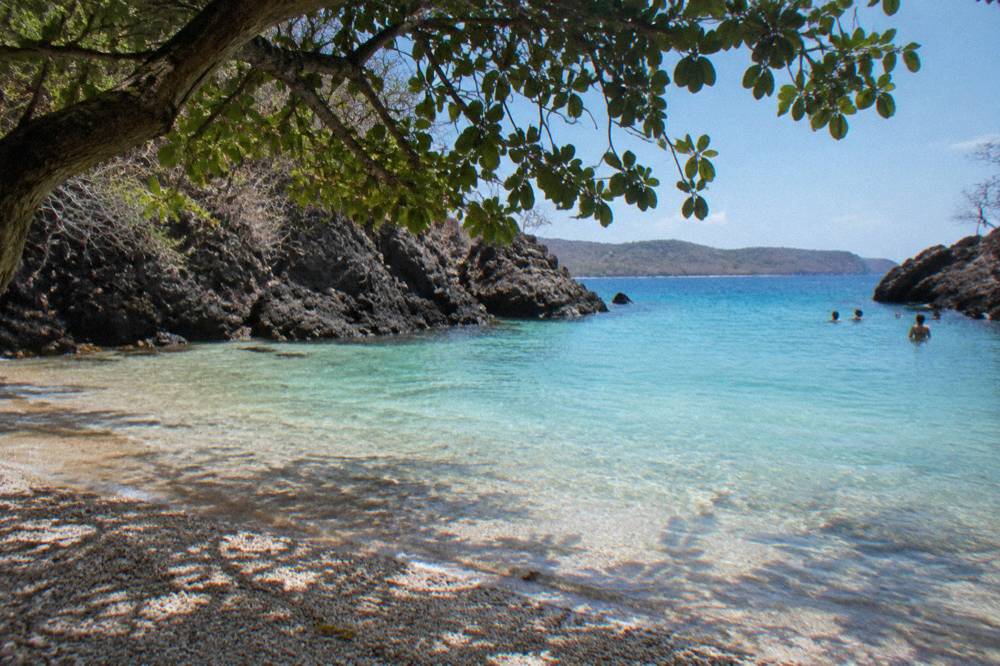
Within easy reach, the calmest swimming tends to be at the protected coves rather than the open town beach: Playa Conchal to the north and the bays the boat trips moor in. Playa Grande to the north is a surf beach, and the Las Baulas nesting beaches are governed by park rules, with boats not landing there.
Tamarindo's own beach is long, sandy and swimmable along most of its length, but it faces open swell and the conditions change with the tide and the season. When the surf is up, the north end around the river mouth and the peaks can carry currents. The gentler stretches move around, and the fastest way to find them is to look at where the families and the swim crowd have gathered that morning.
Playa Conchal, north of Tamarindo on the stretch toward Flamingo, is widely rated for its shells and its swimming, and it is a regular stop for the area's snorkel and wildlife boat trips. The water clarity at the open beach in Tamarindo is often reduced by sediment and wave action, and it improves significantly at nearby coves and around the Catalina Islands, which is precisely why the boats go there. Our guide to Playa Conchal by boat covers how those trips work.
For choosing among the boat options by swimming value, here is how the catalog's most swim-forward trips compare on the facts that matter in the water:
| Trip | Duration | Swim gear listed | Meal listed | Price (from) | Rating |
|---|---|---|---|---|---|
| Timarouba Sunset Sail, Open Bar | 5 hours | Snorkel gear, 2 kayaks, 1 paddle | Lunch | $97 per person | 4.5 from 504 reviews |
| Blue Dolphin Day Catamaran | 4.5 hours | Snorkeling gear, stand up paddle | Meal | $90 per person | 4.5 from 990 reviews |
| Timarouba Day Sail, Lunch and Drinks | 4 hours | Snorkel gear, kayaks, paddleboards | Lunch | $99.50 per person | 4.5 from 203 reviews |
| All-Inclusive Day Sail, 4.5 Hours | 4.5 hours | Snorkel equipment, 2 kayaks | Lunch | $90 per person | 4.5 from 123 reviews |
Every one of these departs from or near Tamarindo and lists snorkel equipment in its inclusions. What varies is the length of the day, the water toys beside the snorkeling, and the price band, which across these four runs from $90 to $99.50 per person. All four list free cancellation, so a rough-sea change of plan is not a lost booking.
When Is The Sea Calmest In Tamarindo?
The calmest, clearest sea runs December to April, the dry season, when operators report visibility of 15 to 25 meters at good spots and rain is minimal, under 5 millimeters in the driest months. May to November is greener and livelier: October alone averages about 354.1 millimeters of rain, swells increase, and reported visibility drops to 8 to 12 meters or less.
The monthly pattern is consistent enough to plan around. Here is the verified 30-year picture for rain at Tamarindo and the average sea surface temperature along the Guanacaste coast:
| Period | Average rain | Sea temperature | What it means for swimming |
|---|---|---|---|
| Dec to Feb | 4.2 to 14 mm per month | About 27.3 to 27.9 C | Driest, calmest water, coolest sea, Papagayo wind chop possible Dec to Mar |
| Mar to Apr | About 4.9 to 36.2 mm | About 28.9 to 29.3 C | Warm, clear, peak conditions; wind can rise after late morning |
| May to Aug | About 181.9 to 286.1 mm | About 28.8 to 29.4 C | Warmest sea of the year, afternoon rains, mixed clarity |
| Sep to Nov | About 117.7 to 354.1 mm | About 27.6 to 28.7 C | Wettest stretch, October peak, more swell and runoff, lowest visibility |
Two practical readings of that table. First, the water is warm enough to swim every month of the year; the sea never drops below roughly 27 degrees Celsius on the monthly averages. Second, the rain numbers are monthly totals, not daily washouts. A green-season morning is often sunny, the sea is at its warmest, and the swimming can be excellent before the afternoon weather builds. Operators recommend morning departures precisely because wind and conditions typically deteriorate after late morning.
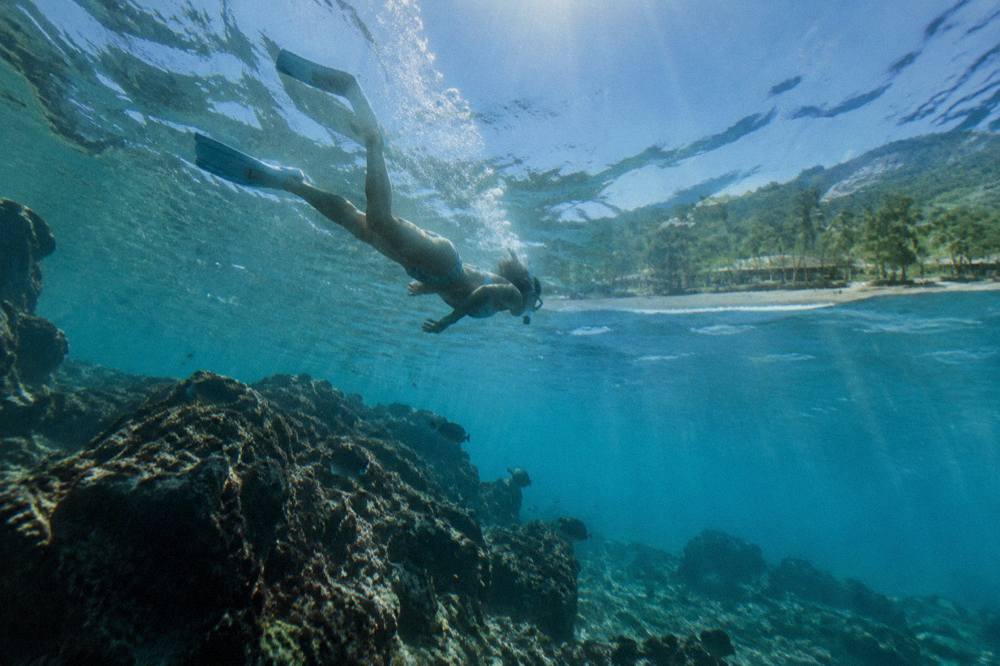
The seasonal detail matters most for snorkelers. If seeing fish is the goal, the dry-season window and the cove and island stops are where the reported 15 to 25 meter visibility lives. The green season is not a write-off, it just shifts the odds toward swim stops closer to shore and away from the open beach, which the boat crews handle as a matter of routine.
Where Do Catamaran Tours Stop For Swimming And Snorkeling?
Catamaran trips from Tamarindo typically sail about an hour along the coast, then moor at a protected bay or rocky point for swimming, snorkeling, kayaking and paddleboarding, before sailing home into the sunset. Commonly named stops include Playa Conchal, local secluded bays and the waters around the Catalina Islands, where clarity beats the open town beach.
The pattern is consistent across the catalog. The all-inclusive day sail from Calle Cruz in Tamarindo heads out with about an hour of sailing before mooring for water activities, listing lunch, drinks, snorkel equipment and two kayaks. The Blue Dolphin day catamaran, from the El Chiringuito area and rated 4.5 from 990 reviews, the second most reviewed trip in the catalog, lists swimming and snorkeling gear alongside its meal and open bar, from $90 per person. These are days built around the water.
What the swim stop looks like depends on the day and the season, and any honest description stops short of promises. The crew anchors in the calmest available spot, briefs everyone on where to swim, hands out gear, and opens the water toys. Some days the water is glassy and the fish are thick around the rocks. Other days, the crew moves the stop or shortens it, and that judgment is exactly what you are paying a licensed operator for.
For swimmers who are unsure about the open beach, the boat stop is genuinely the easier environment. The boat shelters the water behind it, the crew is watching, noodles and life jackets are listed on several trips, and you can climb out whenever you like. The snorkeling tours guide on this site compares the options in detail if fish rather than swimming is the priority.
What Should You Know About Currents And Lifeguards?
Rip currents exist on this coast and shift with tide and surf, warning signs are absent at many Costa Rican beaches, and lifeguard coverage under Ley 9780 is mandated but not universal. Swim in the morning, near others, ask about the day's conditions, and on boats, follow the crew's briefing and use a life jacket if you are not confident.
The national rules around beach safety have tightened recently in ways a swimmer can actually use. Costa Rica's transport ministry guidance for small-boat users advises checking conditions before heading out and avoiding trips in rough seas, and Coast Guard guidance reported in the local press requires boats to carry life jackets matched to their passenger capacity, visible and accessible, with children's sizes on hand, plus a lifebuoy and a valid navigation certificate with annual inspection. When you board a catalog catamaran, that is the equipment standard behind the listing.
On the beach itself, the practical advice is old-fashioned. Pick a swim spot where others are already in the water. Avoid river and estuary mouths, where currents concentrate, particularly around the Tamarindo estuary at the north end of the beach, toward Playa Grande. If caught in a current, swim along the beach, not against it. And check your own government's current travel advisory for Costa Rica before your trip, since conditions and guidance change.
Do You Need To Be A Strong Swimmer For A Boat Trip?
No. Shared catamaran trips are designed for mixed ability: swim stops are in sheltered water, life jackets and flotation noodles are listed on several trips, kayaks and paddleboards offer alternatives to swimming, and the crew supervises the water. Confidence in the water helps, but non-swimmers and families join these trips regularly and stay comfortable.
The inclusions tell the story. The Timarouba day sail lists snorkel gear, kayaks and paddleboards, so a hesitant swimmer can float on a board beside the boat rather than swim in the open. Several listings include noodles and life jackets explicitly. The morning nature catamaran with kids' games, from $98 per person, is built around families, with a listed lunch and open bar and a crew that expects children in the water. Minimum ages vary by tour, so check the listing for your trip.
The one honest warning: the swim stop is in the ocean, not a pool, and the depth under the boat is beyond standing depth. If you or a family member cannot swim at all, say so to the crew at boarding. They will keep a life jacket on that person and a position near the ladder, which is a normal, unremarkable request on these boats.
Can You Swim At Playa Grande And Las Baulas?
Swimming and surfing at Playa Grande are allowed, and the park permits surfing at Playa Grande and Playa Langosta and shallow diving at Playa Carbon, but Las Baulas National Marine Park is a protected nesting area with strict rules, boats do not land on the nesting beach, and turtle viewing is currently restricted because nesting numbers are very low.
The park, officially Marino Las Baulas, is open every day of the year from 6 am to 6 pm, and its wetlands include the Tamarindo Estuary, which SINAC describes as of worldwide importance, with mangrove tours by local guide. During the October to February leatherback nesting season, beach access is limited, groups are capped at 15 people with a local guide, and when observation is available it is from behind, in silence, with no photography or touching, and only the guide carries a flashlight, with a red filter. The official SINAC park page states these rules directly.
For 2026, the important update is that organized turtle observation inside the park at Playa Grande is reported unavailable because nesting numbers have fallen drastically, with recent seasons recording only a handful of leatherback females. No catamaran trip promises turtles, and none should, because a sighting is luck, not an itinerary. What the boats do offer is water that the nesting beach never can: a moored swim in a cove with gear, a drink and a crew watching. Our Las Baulas park and Tamarindo boats guide separates the park rules from the boat trips in full.
What About Swimming In Green Season?
Green season, May to November, is still swimmable, especially on mornings before the wind and afternoon rain build. The sea is at its warmest from May to August, the crowds thin, and boat trips run throughout, with crews shifting swim stops to the most sheltered water available. October is the wettest month, about 354.1 mm of rain on average, and the one to plan around most carefully.
The shift is real but it is a change of emphasis, not a closure. A green-season catamaran day still anchors for swimming and snorkeling, still serves its listed lunch and open bar, and still sails the same coast. The difference is that the crew reads the water that morning and chooses accordingly, and the swim stop may be shorter or closer to shore than in February. Trip capacity is also easier to come by, and the coastline is at its greenest, which many photographers consider the trade worth making. Our piece on Tamarindo boat tours in rainy season goes deeper on what changes and what does not.
One Flamingo-departure option deserves a mention for green-season days, because it includes transport: the Playa Flamingo sunset catamaran, rated 4.9 from 1,170 reviews, the most reviewed trip in the catalog, from $95 per person, with hotel pickup and drop-off listed from close-in locations, unlimited drinks and a local guide. It boards at the Lazy Lizard Sailing area of Playa Flamingo, not Tamarindo beach, and the pickup makes the crossing painless on a gray afternoon.
Whatever the season, the same selection logic holds. Swim-curious travelers do best on Tamarindo Catamaran Cruises style trips, the shared sunset and day sails whose listings include snorkel gear, kayaks and a paddleboard, because the swim stop is the point of the day rather than an optional extra. Price-wise, shared day and sunset trips run from $88 to $169 per person across these listings, with private charters from $500 to $2,972.98 per group, so the water is reachable on almost any budget.
Before locking anything in, these three remain the strongest swim-stop picks across the catalog:
Common Questions About Swimming In Tamarindo
Can You Swim In The Ocean In Tamarindo?
Yes. Swimming in the ocean at Tamarindo is normal and popular year round, with sea temperatures averaging roughly 27 to 29 degrees Celsius. Use ordinary ocean caution: conditions vary with tide, surf and season, lifeguard coverage is not guaranteed, and mornings usually offer the calmest water.
Are there rip currents at Tamarindo beach?
Rip currents occur along this coast and shift with the tide and surf, and warning signs are absent at many Costa Rican beaches. Swim near others, avoid estuary and river mouths, and if you feel a pull along the beach, swim parallel to shore until it eases rather than fighting it.
When is the water clearest for swimming and snorkeling?
Dry season, December to April, when operators report visibility of 15 to 25 meters at good spots. In green season, May to November, visibility drops to a reported 8 to 12 meters or less at the open beach, though coves and island stops stay better.
Can non-swimmers join a catamaran tour?
Yes. Swim stops are in sheltered water, life jackets and flotation noodles are listed on several trips, and kayaks and paddleboards give alternatives to swimming. Tell the crew at boarding if someone in your group cannot swim, and minimum ages vary by tour, so check the listing.
Where is the calmest water near Tamarindo?
Protected coves and the areas around the Catalina Islands, which the boat trips reach in roughly 45 minutes to an hour of sailing, plus Playa Conchal, about a 29 to 35 minute drive away. The open town beach is swimmable but faces more wave action and sediment.
Is it safe to swim at night or after drinking?
No. Swimming in darkness is a bad idea on any unlit beach, and Costa Rica's public drinking law prohibits drinking on beaches outside authorized areas. Save the open bar for after your swim stop.