Tamarindo Beaches: Where To Swim, Surf And Catch Sunsets
A planning guide to Tamarindo, Langosta, Grande, Avellanas and Conchal: swimming conditions, surf breaks, snorkel spots, park rules and how catamaran trips reach the quieter sand.
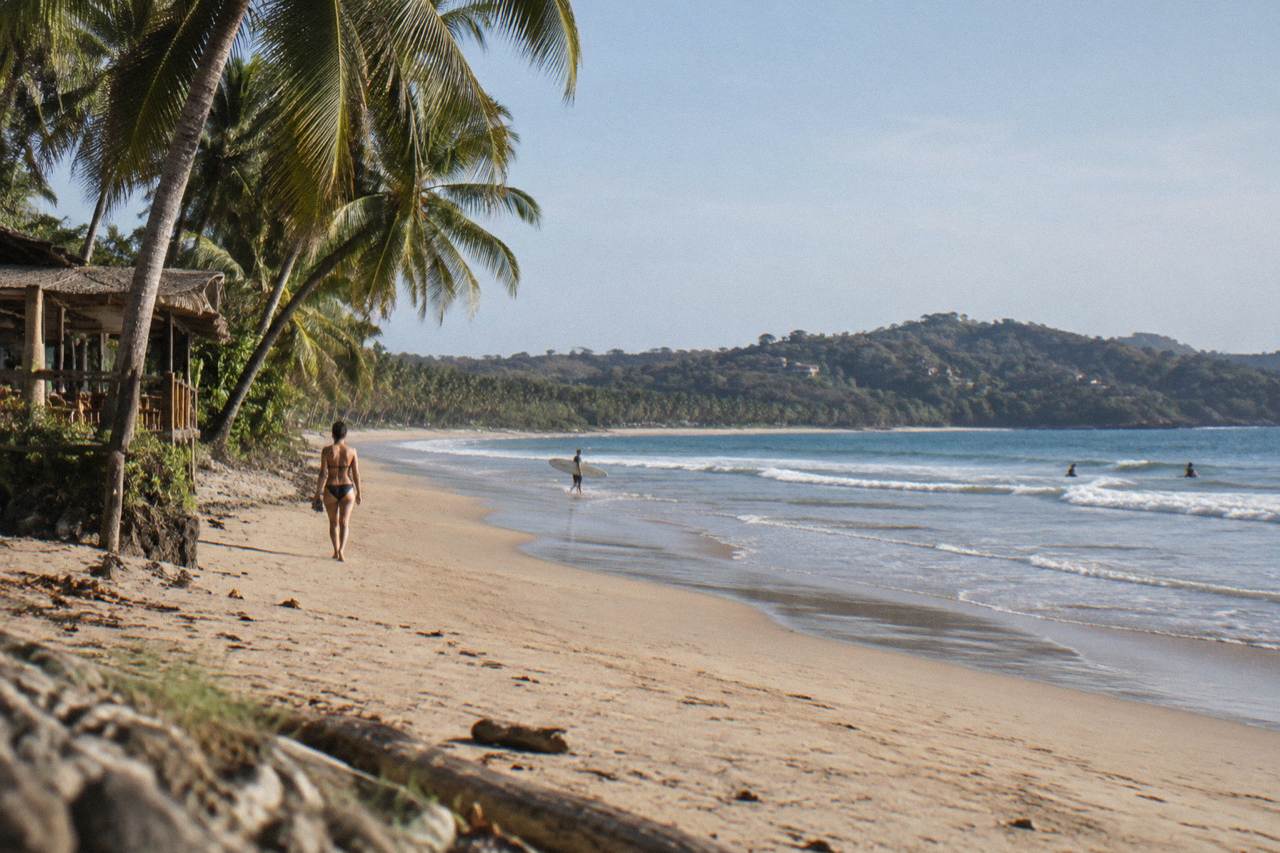
Playa Tamarindo is only one of five beaches most visitors end up using. The town's own bay handles the swimming and the surf lessons. Playa Grande sits across the estuary at the north end of town and Playa Langosta lies just south, both along the national park coast, while Playa Avellanas is a short drive farther south and Playa Conchal sits in the opposite direction, north on the way toward Flamingo. Each has a distinct character, and the differences matter more than the distances: water clarity at the open Tamarindo beach is often reduced by sediment and waves, while the coves and islands nearby hold far clearer water, as recent local reporting puts it.
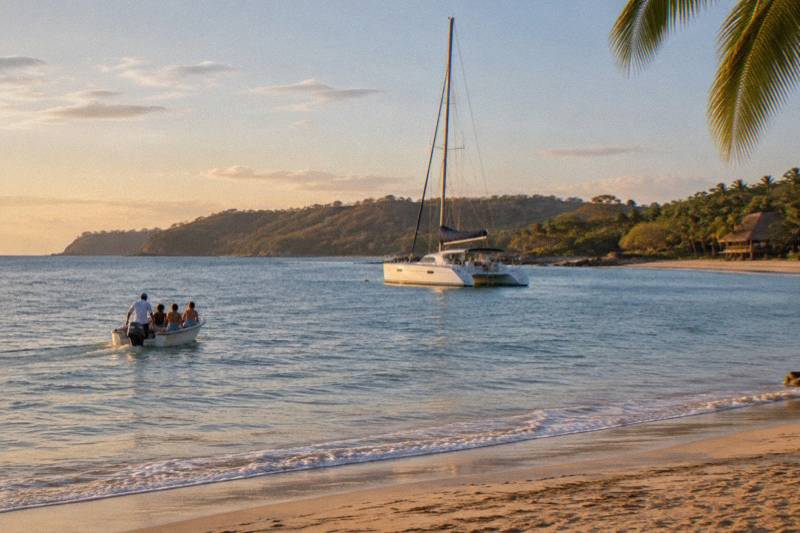
That geography is exactly why these catamaran trips exist. The Timarouba sunset sail, the featured trip on Tamarindo Catamaran Cruises, boards in the El Chiringuito area of Tamarindo beach and spends its five hours reaching the quieter bays along the coast, from $97 per person with lunch, open bar, snorkel gear, kayaks and a paddleboard included. For beach readers, the boats are the practical way to touch sand the road makes awkward.
What Are The Main Beaches Near Tamarindo?
Five beaches carry the visitor weight here: Playa Tamarindo, Playa Langosta and Playa Grande around town, then Playa Avellanas to the south and Playa Conchal to the north. All sit within a short drive, and these catamaran trips depart from Tamarindo beach and Playa Flamingo, from $88 per person, which puts several secluded bays within a single afternoon sail.
Playa Tamarindo is the hub: a long, gently curving sandy bay with a town behind it, surf schools on the sand and the main boat departure points at the El Chiringuito area. Playa Langosta lies just south at the quiet end of the bay, backed by higher-end lodging, and both Langosta and Grande are named by SINAC as surfing beaches inside the marine park. Playa Grande sits to the north, across the estuary mouth: a wide, wilder nesting coast. If most of your days will revolve around sand, surf and sunsets rather than paid excursions, the guide to free things to do in Tamarindo lays out the beaches, tide pools and estuary viewpoints that cost nothing at all.
Farther out, the coast changes character. Playa Avellanas sits south of Tamarindo, a low-key surf stretch rather than a swimming bay. Playa Conchal, about 29 to 35 minutes' drive north per 2026 travel-site data, is the shell-sand cove that snorkel and wildlife boat tours from Tamarindo regularly list as a stop, rated highly by visitors for its shells and snorkeling. Playa Flamingo, 31 to 35 minutes north, is less a beach town than a marina town, and its Marina Flamingo and Lazy Lizard departure points anchor several of these listings. Once you've settled on which beaches to chase, the guide to things to do in Tamarindo beyond the sand rounds out the plan with catamaran cruises, surf lessons and zip lines.
| Beach | Direction from town | Character | Best for |
|---|---|---|---|
| Playa Tamarindo | In town | Sandy surf-town bay, lifeguards variable | Swimming, surf lessons, departures |
| Playa Langosta | Just south | Quieter, rocky points at ends | Walking, sunsets, surfing |
| Playa Grande | North across the estuary | Wide, wild, park nesting coast | Surfing, space, estuary mouth |
| Playa Avellanas | South of Tamarindo | Open surf beach | Surfing, beach bars |
| Playa Conchal | North, 29 to 35 minutes | Shell-sand cove, clearer water | Snorkeling, swimming |
| Playa Flamingo | North, 31 to 35 minutes | Marina harbor beach | Boat departures, marina cafes |

Can You Swim In The Ocean At Tamarindo Beach?
Yes, Tamarindo bay is generally a swimmable, sandy-bottom beach and the sea stays warm year-round, roughly 27 to 29 degrees Celsius on the Guanacaste coast. The caveats are real though: the open beach often carries sediment and wave churn that clouds the water, currents vary, and lifeguard coverage on Costa Rican beaches is limited, so the clearest, calmest swimming near town is usually from a boat at a protected cove.
Sea temperature on this coast barely moves. The monthly averages run from about 27.3 degrees in January and February to about 29.4 in May, which means the water is warm whenever you arrive. What changes is the air side of the equation: the dry season from December to April brings reliable sun and generally calmer seas, while the green season from May to November adds afternoon rain and occasionally stronger swell. October is the wettest month in the 30-year rainfall normals for the town.
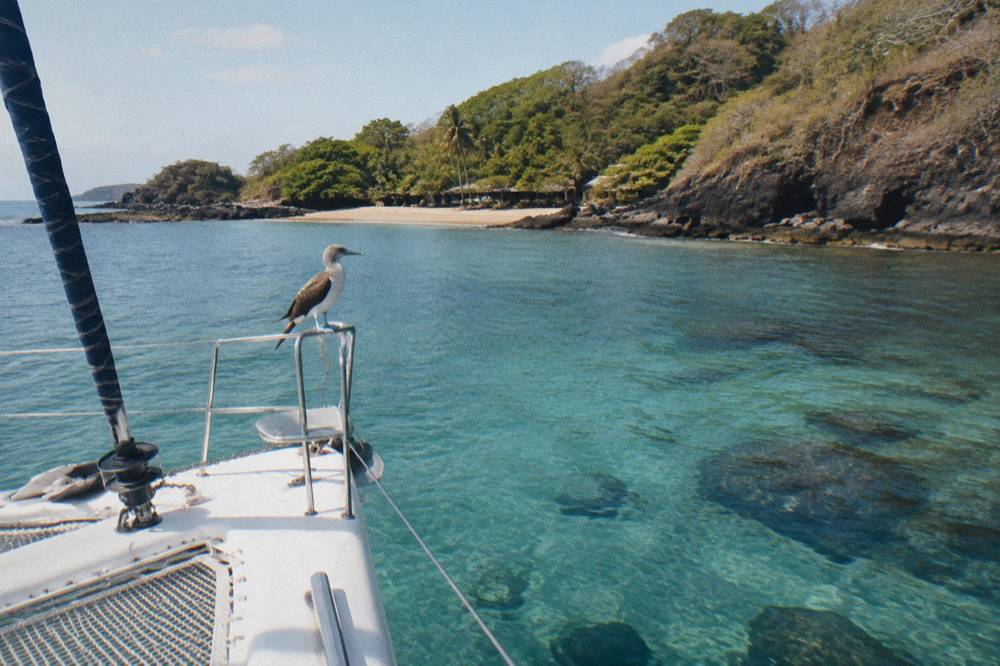
For swimming specifically, the honest local picture is that Playa Tamarindo's own water is often cloudy at the shoreline because of sediment and wave action, a point recent reporting on the area makes plainly, and that clarity improves markedly at nearby coves and at the Catalina Islands. That is the practical argument for the day trips: the Blue Dolphin day catamaran, rated 4.5 from 990 reviews and from $90 per person for 4 hours 30 minutes, lists swimming and snorkeling gear among its inclusions, along with a fajita-style meal and open bar, and it boards at the El Chiringuito area of Tamarindo beach.
On currents and safety, keep it general and keep it real. Costa Rican beaches have limited supervised coverage: Ley 9780, reformed in 2025, mandates lifeguard units on national beaches under Cruz Roja and health-protocol standards, but posted guards are not everywhere. Swim near others, ask about conditions on the day, and on any boat trip ask the crew where they recommend entering the water. The Coast Guard guidance reported in the local press is that boats must carry life jackets matched to passenger capacity, including children's sizes, plus a lifebuoy and a valid navigation certificate, so the gear should be on board.
Which Beaches Have The Best Snorkeling On The Guanacaste Coast?
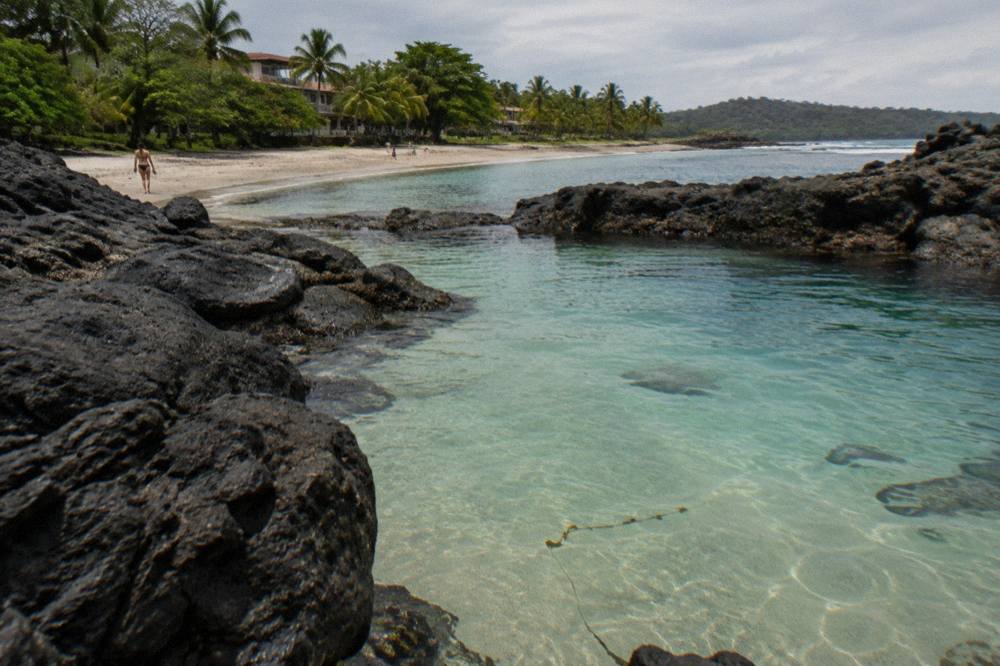
Not Tamarindo's own bay: its open-beach water is often cloudy. The better snorkel water sits north of town, in the protected coves at Playa Conchal and around the Catalina Islands off Flamingo and Potrero. Listings describe the Catalinas as reachable by about a 45-minute sail from Tamarindo. Clarity at these stops improves on what the beach in front of town usually offers, though conditions still vary through the year.
The snorkel geography works in rings. Closest to town, the rocky ends of Langosta and the coves toward Avellanas hold fish when the water settles. Next ring out, Playa Conchal's shell sand and clearer patches make it a regular stop on snorkel and wildlife boat tours from Tamarindo, per 2026 operator listings. The outer ring is the Catalina Islands, which listings describe for manta rays and dolphins, reached by what one operator page calls a 45-minute catamaran sail from Tamarindo to the Islas Santa Catalina.
Season matters as much as location. Operators report dry-season underwater visibility of 15 to 25 meters, dropping to 8 to 12 meters or less in the green season when runoff and swell increase, and they recommend morning departures because wind typically rises after about 11 am, roughening the surface, especially in the Papagayo-wind months of December to March. A morning boat, in other words, buys you both the calmer sea and the clearer water.
| Snorkel spot | Reached by | Commonly reported draws | Visibility notes |
|---|---|---|---|
| Playa Tamarindo bay | Walk on | Convenience, warm water | Often cloudy from sediment and waves |
| Rocky points, Langosta | Walk or short drive | Reef fish when calm | Settles in dry-season mornings |
| Playa Conchal | Road 29 to 35 min, or boat stop | Shells, clearer patches | Better than the open bay |
| Catalina Islands | Boat, about 45-minute sail | Manta rays, dolphins, reef fish | Best reported clarity, weather dependent |
Shared day sail options run from $90 to $169 per person, with midday to afternoon departures. The all-inclusive day sail from Calle Cruz, from $90 per person for 4.5 hours with lunch, open bar and two kayaks listed, heads north along the coast for about an hour of sailing before mooring for water activities, per its listing. The Flamingo catamaran with lunch and drinks, rated 4.9 from 20 reviews and from $100 per person, departs Marina Flamingo. And the morning nature catamaran with kids' games, from $98 per person for 4.5 hours, is the family-shaped option, listing lunch, open bar, snorkel gear and an English-speaking crew. See the fuller lineup in Tamarindo Snorkeling Tours.
Which of those fits depends mostly on where you are staying and what time you want on the water. Free cancellation is listed on all three.
Where Can You Learn To Surf Around Tamarindo?
Tamarindo bay itself is the learning beach: sandy bottom, a town's worth of surf schools behind it and waves that suit beginners on the right tide. Playa Grande and Langosta serve better surfers. Avellanas lies to the south, and the coastal route north out of town continues toward Conchal and Flamingo. This site sells no surf lessons, so treat this section as orientation for the sand, not a booking guide.
The town beach works for lessons because the sand keeps the consequences gentle and the bay faces a manageable stretch of open Pacific. Surfing at Playa Grande and Playa Langosta is listed by SINAC among the water sports the marine park area supports, and Grande in particular holds bigger, hollower waves on its day. Playa Avellanas, south of town, draws surfers as well, while the coastal road north runs toward Conchal and the Flamingo area.
What the boats add to a surf stay is the evening. After a morning of lessons, the sunset trips give you the coast from the water. The 5-hour guided sunset boat tour from the El Chiringuito area, 4.6 from 180 reviews and from $95 per person, lists a burrito-bar dinner, paddle boards and snorkel gear.
How Do You Reach Playa Conchal And Playa Flamingo?
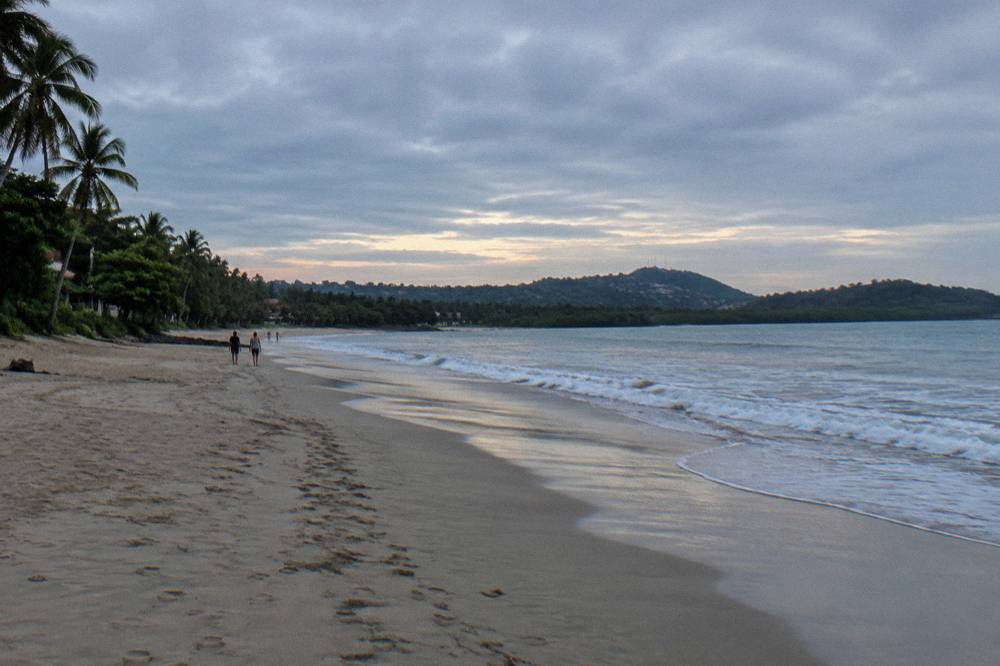
By road, Playa Conchal is about 29 to 35 minutes from Tamarindo and Playa Flamingo about 31 to 35 minutes, per 2026 travel-site data on the roughly 13 to 23 km distances involved. By boat, both sit inside the standard afternoon arc of the Flamingo-departing catamarans, several of which list Tamarindo hotel pickup, and the sailing time is part of the trip rather than a transfer.
The road option is straightforward: the coastal route north toward Conchal and the Brasilito area continues on toward Flamingo and Potrero. If you are flying into Liberia, the airport-to-town run is about 67 km on Route 21, typically 1 hour 15 minutes to 1 hour 45 minutes, and the details are covered in Liberia Airport To Tamarindo.
The boat option is where Flamingo earns its keep. The Playa Flamingo sunset catamaran, the most reviewed of these trips at 4.9 from 1,170 reviews and from $95 per person, departs the Lazy Lizard sailing area with hotel pickup and drop-off from close locations listed. The Flamingo catamaran with meal, 4.7 from 178 reviews and from $95 per person, lists local hotel pickup and drop-off covering Potrero, Las Catalinas, Playa Flamingo and Tamarindo, plus kayaks, SUPs and snorkel equipment. In other words, you can stay in Tamarindo and board a Flamingo boat without arranging your own transfer on those trips; where a listing says pickup is not stated, check the listing for transport. More departures are compared in Playa Flamingo Boat Tours.
One caution worth repeating: never treat any beach or boat as a zero-risk setting, and check your government's current travel advisory for Costa Rica before you travel. The Canadian government's advice, for instance, notes that coastal waters including riptides are dangerous, that supervised beaches are few and warning signs absent at many sites. None of that argues against the water here; it argues for swimming where others swim and listening to the crew.
What Are The Rules At Las Baulas National Marine Park?
Las Baulas, the park wrapping Playa Grande, Playa Langosta and the Tamarindo estuary, is open daily 6 am to 6 pm, and its beaches and wetlands carry firm rules: groups of at most 15 with a local guide, no photographing or touching turtles, guide-only red-filter flashlights, and boats do not land on the nesting beach. Turtle observation inside the park is currently reported unavailable because nesting numbers are very low. If you're wondering where turtles can actually be seen these days, our guide to the best places to see turtles in Costa Rica lays out which nesting beaches deliver and what boat trips from Tamarindo can honestly show you.
The park's SINAC page states the basics plainly. It is visited by three turtle species, leatherback, olive ridley and black turtle, with the leatherback nesting beaches at Langosta, Grande and Ventanas, and the nesting season running October to February, with the observation window described as beginning 20 October and ending 15 February. Daytime activities it lists include surfing at Playa Grande and Playa Langosta and shallow diving at Playa Carbon, with no pets, no single-use plastics, no vehicles or fires on the beach and no camping.
The part visitors most often get wrong is turtles. 2026 reporting from press and operator pages, aligned with the Spanish SINAC page, says organized turtle observation tours inside the park at Playa Grande are not currently available because nesting numbers have fallen drastically, with press reporting a decline of more than 95 percent since the late 1980s and only single-digit leatherback females per recent season. The park's own stated rules for any nesting-season access cap groups at 15 with a guide, limit total beach capacity to 120 people, and prohibit photography and touching. Catamarans never enter the nesting beach, so no sailing trip here includes turtle watching. No turtle sightings are promised anywhere on this site, and the honest planning read is in Las Baulas National Park And Tamarindo Boats.
What the park does offer the beach visitor is the estuary. SINAC lists the Tamarindo Estuary wetlands as of worldwide importance, with mangrove tours by local guides and a checkpoint on the beach, and those small-boat trips, tide-dependent and sold separately from this catalogue, are how you see the mangrove side of the park. The estuary's crocodiles, howler monkeys and birds are covered in Tamarindo Estuary Boat Tour.
Which Tamarindo Beaches Are Best For A Sunset?
From the sand, Playa Tamarindo and Playa Langosta face the open Pacific and take the full sunset, which swings between its earliest hour in early to mid November and its latest from late June into early July. Out on the water, every sunset catamaran in these listings builds the trip around that same light, anchoring sail times in the early afternoon for a return after dark.
Sunset in Tamarindo keeps a tight schedule. The latest sunsets of the year fall in late June into early July, the earliest in early to mid November, and the swing between them stays small, per the time-and-date records for the location. Day length likewise shifts only modestly between the June and December solstices at this latitude. There is no bad sunset month, only different weather around it: dry-season evenings are the reliable ones, green-season evenings the dramatic ones.
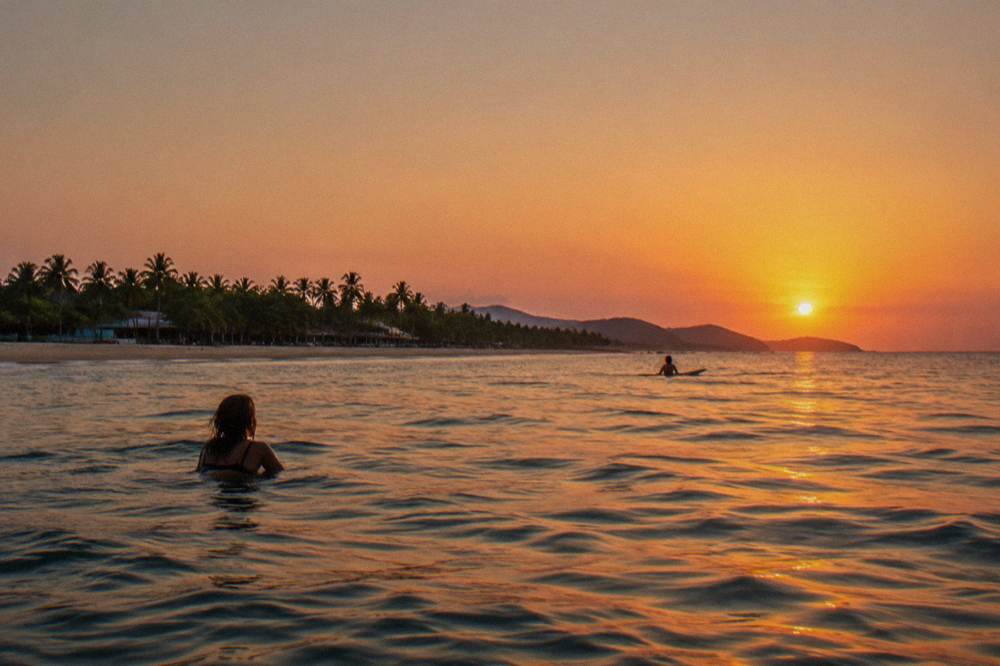
The beach choice is mostly a crowd choice. Playa Tamarindo's sand fills with everyone in town; Langosta, minutes south, is quieter; Grande, north over the estuary at the river mouth, is the wildest foreground. The boat choice is its own thing entirely: the Timarouba sunset cruise, 4.5 from 504 reviews and from $97 per person for 5 hours, lists lunch with vegetarian options, an open bar, snorkel gear, two kayaks and a paddle, departing the El Chiringuito area. The Blue Dolphin sunset snorkel cruise from the same departure area, 4.3 from 112 reviews and from $119 per person, lists lunch and an open bar of fruit cocktails, wine, beer and soda plus snorkel and kayak equipment. Compare the full evening field in Tamarindo Sunset Cruise and the timing detail in Tamarindo Sunset Times.
Season shapes the sky more than the clock does. Dry-season sunsets, December through April, tend to run clean and gold over low humidity; green-season evenings, May through November, can deliver the towering-cloud versions photographers chase, at the price of a wetter afternoon before them. Either way the departure math barely moves: operator pages describe sunset catamarans leaving around 12:45 to 2 pm and returning after the sun is down.
Should You See The Beaches By Road Or By Boat?
Do both, split by purpose. The road wins for Avellanas' surf peaks, Conchal's shell sand on your own schedule and the park's daytime beaches; the boat wins for snorkel clarity, secluded bays, food and drink handled, and the sunset from the water. On price, shared trips run $88 to $169 per person, with sunset sails between $88 and $133.35 and day sails topping out at $169 on the 1:30 pm departure from Tamarindo. Private charters run $500 to $2,972.98.
The honest budget picture across these listings: shared sunset and day trips span from the budget Pacific Lounge public cruise at from $88 per person, 4.8 from 30 reviews, through the day sail with hotel transfer at from $169 per person. Private charters run from the $500-per-group snorkel boat with photos listed, through intimate sailboats from $900 per group for up to 6, up to the private Marlin del Rey charter at from $2,972.98 per group, 4.7 from 70 reviews. Every figure is a listed "from" price; check each live listing for your date.
| Way to see the coast | Typical trip cost | What it does best | Watch for |
|---|---|---|---|
| Shared sunset catamaran | From $88 to $133.35 per person | Snorkel stop, meal, open bar, sunset | Groups of varying sizes aboard |
| Shared day sail | From $90 to $169 per person | Midday to afternoon departures | Returns before sunset |
| Private charter | From $500 to $2,972.98 per group | Your route, your group, flexible timing | Per-group pricing, split needed |
| Rental car and beaches | Not sold here | Avellanas, Conchal, park beaches on demand | Parking and road time |
Families have a specific fit: the morning nature catamaran with kids' games, from $98 per person for 4.5 hours, lists lunch and an open bar on a modern catamaran with a rooftop area, though with too few reviews so far for a star claim. Groups celebrating something have the private flank: the private tropical sunset catamaran at Playa Flamingo, 5.0 from 50 reviews and from $1,900 per group with hotel pickup listed, or the private sunset sail from Tamarindo, 4.8 from 33 reviews and from $1,167 per group with lunch and open bar listed. Check the listing for age minimums, which vary by trip.
The through-line of this whole guide is simple: Tamarindo's beaches are good, and the coast they sit on is better than any one of them. The town beach is for the easy swim and the lesson; Grande and the park are for space and rules; Conchal and the Catalinas are for clear water; and the boats from Tamarindo beach and Playa Flamingo stitch the whole arc together in an afternoon with lunch and an open bar handled. Pick the sand for the morning, pick the boat for the evening.
Common Questions About Tamarindo Beaches
Can you swim in the ocean at Tamarindo beach?
Generally yes: the bay is sandy and the sea stays warm, roughly 27 to 29 degrees Celsius year-round. Water clarity at the open beach is often reduced by sediment and waves, and lifeguard coverage is limited, so swim near others and ask about conditions on the day. The clearest water nearby is at the coves and islands the boat trips reach.
Which beach near Tamarindo has the clearest water?
Not the main bay. Open water right off Tamarindo is often cloudy. Playa Conchal and the protected coves north of town, between Tamarindo and Flamingo, hold clearer water, and the Catalina Islands, about a 45-minute sail from Tamarindo per operator listings, are the standout spot for snorkeling.
How far is Playa Conchal from Tamarindo?
About 29 to 35 minutes by road, roughly 13 to 20 km, per 2026 travel-site data. Playa Flamingo is similar at 31 to 35 minutes. Several Flamingo-departing catamarans list Tamarindo hotel pickup, so the transfer can be folded into a boat trip instead.
Can you see turtles on Tamarindo beaches?
Turtle viewing around Las Baulas is restricted. The park's beaches are nesting habitat for leatherback, olive ridley and black turtles, but organized observation inside the park is reported unavailable in 2026 because nesting numbers are very low, and boats do not enter the nesting beach. None of these trips promises a turtle sighting.
What time is sunset in Tamarindo?
Sunset shifts through the year, latest in late June to early July and earliest in early to mid November, per time-and-date records. Sunset catamarans typically depart between about 12:45 and 2 pm and return after dark.
Do I need a boat to enjoy the beaches near Tamarindo?
No, the road reaches all of them. Still, many beach-focused visitors book a trip anyway: these cruises start at $88 per person, reach secluded snorkel bays no road touches, cover lunch, open bar and gear, and keep you on the water for the sunset.