Las Baulas National Park Beside Tamarindo: Turtles And Boat Rules
Las Baulas National Marine Park wraps around Tamarindo's back door, yet almost nothing about it works the way visitors expect. The turtles that made it famous are barely nesting, night access is tightly restricted, and no catamaran lands on the beach. Here is what the park actually allows, and what a boat trip can honestly show you.
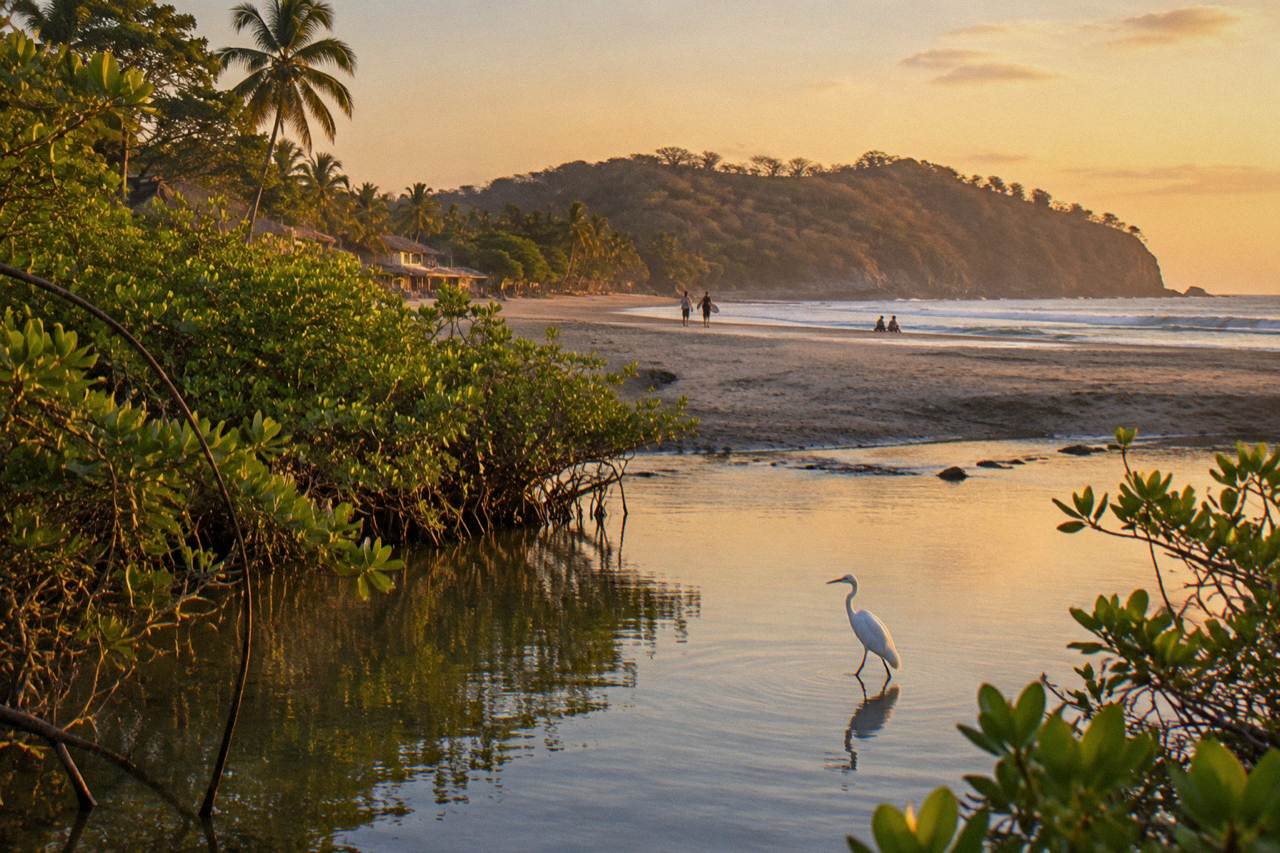
The park that made this stretch of Guanacaste famous is not a place you sail into. Las Baulas National Marine Park protects Playa Grande, Playa Langosta and Playa Ventanas, the nesting beaches of the critically endangered leatherback, plus the Tamarindo Estuary mangroves that lie literally behind Tamarindo town. The turtle numbers that built its reputation have collapsed, and the rules have tightened with them. That leaves most visitors confused about what they can actually see, and tour pages that hint at turtles only make it murkier. For a straight answer on which beaches still deliver, our guide to the best places to see turtles in Costa Rica separates the real nesting sites from the marketing copy.
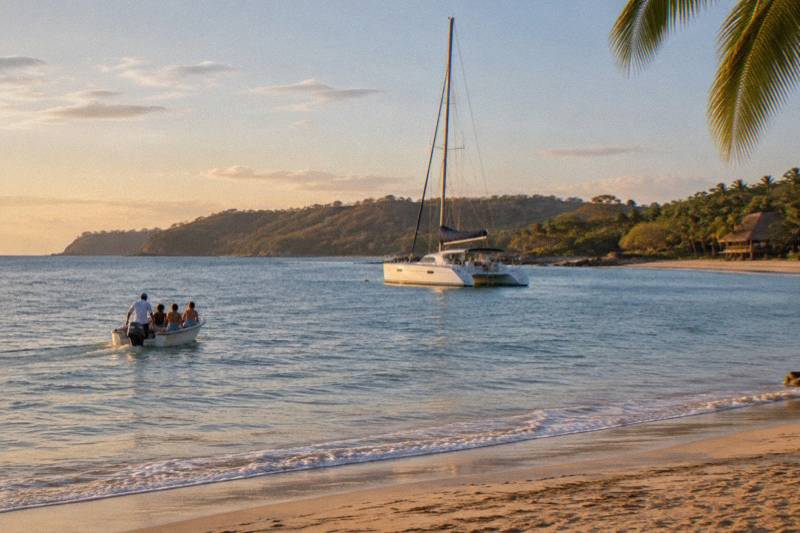
This guide separates the two experiences that get blended together. The park side is a land-and-estuary story with strict hours and guide requirements. The water side is the Tamarindo Catamaran Cruises catalogue: shared and private catamarans that sail the open Pacific along the coast the park shelters, snorkeling at coves and islands, sunset on the water. Those trips never enter the nesting beach, and honest copy should say so plainly. What follows is what the official park page states, what recent seasons have looked like, and which trips fit a turtle-curious traveler who still wants a day on the water.
What Is Las Baulas National Park And Where Does It Sit Relative To Tamarindo?
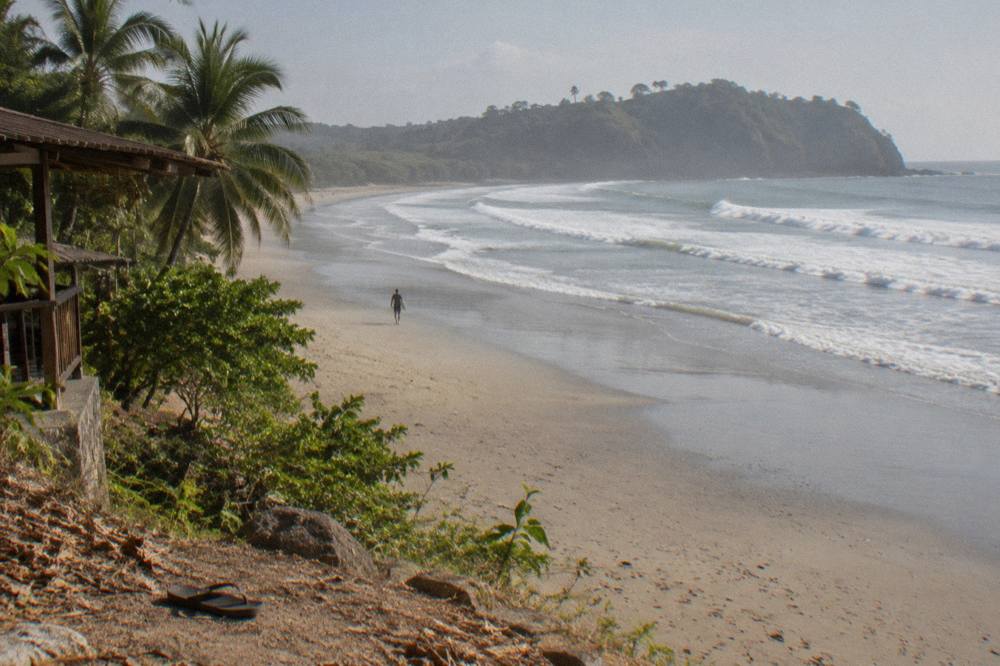
Las Baulas National Marine Park is a protected area immediately north and south of Tamarindo, created to shield leatherback nesting beaches and the Tamarindo Estuary wetlands. Its core pieces are Playa Grande, Playa Langosta, Playa Ventanas and the estuary's mangroves, and the park is open every day of the year from 6:00 AM to 6:00 PM. The estuary mouth sits at the north end of Tamarindo beach, separating it from Playa Grande, and the beach itself is not a nesting beach.
The park is unusually intimate with the town. The Tamarindo Estuary, which the official park page describes as a wetland of worldwide importance, separates Tamarindo from Playa Grande, and you can stand at the channel and look directly across at the park. Playa Langosta, the southern nesting beach, is a short walk or drive down the coast from central Tamarindo. There is no gate, no entrance arch, no single visitor center the way many parks have; access runs through two official beach entrances, booth one at the MINAE offices and booth two at the edge of the estuary, per the park's published rules.
What the park is not is an ocean playground with borders boats respect by crossing them. The marine portion matters for fishing and conservation zoning, but the experiences sold to visitors split cleanly: estuary mangrove tours by small boat, run with local guides and dependent on the tide, and the open-water catamaran trips that depart from Tamarindo beach or Playa Flamingo and sail outside the nesting beaches and estuary. The zones and what each allows look like this:
| Park zone | What it is | Visitor activity permitted |
|---|---|---|
| Playa Grande | Main leatherback nesting beach, north of the estuary | Daytime surfing; seasonal evening restrictions in nesting months |
| Playa Langosta | Southern nesting beach, close to Tamarindo | Daytime surfing; same seasonal limits |
| Playa Ventanas | Nesting beach within the protected set | Limited access under park rules |
| Tamarindo Estuary | Mangrove wetland of worldwide importance | Small-boat mangrove tours with local guides, tide-dependent |
| Playa Carbon | Beach within the park's waters | Shallow diving and snorkeling permitted |
For the full run of the sailing options, see the Tamarindo catamaran tours overview; for the park's most famous residents and the rules around them, read on, because the last two seasons changed the picture considerably.
When Is Leatherback Nesting Season At Las Baulas?
The official nesting window for leatherbacks at Las Baulas runs from about October 20 to February 15 each season, with the park's published material listing October to February as the spawning period broadly. During those months beach access is limited in the evening, and any authorized observation would be by guided group only. Nesting numbers in recent seasons have been extremely low, with monitoring reports counting only a handful of females per season.
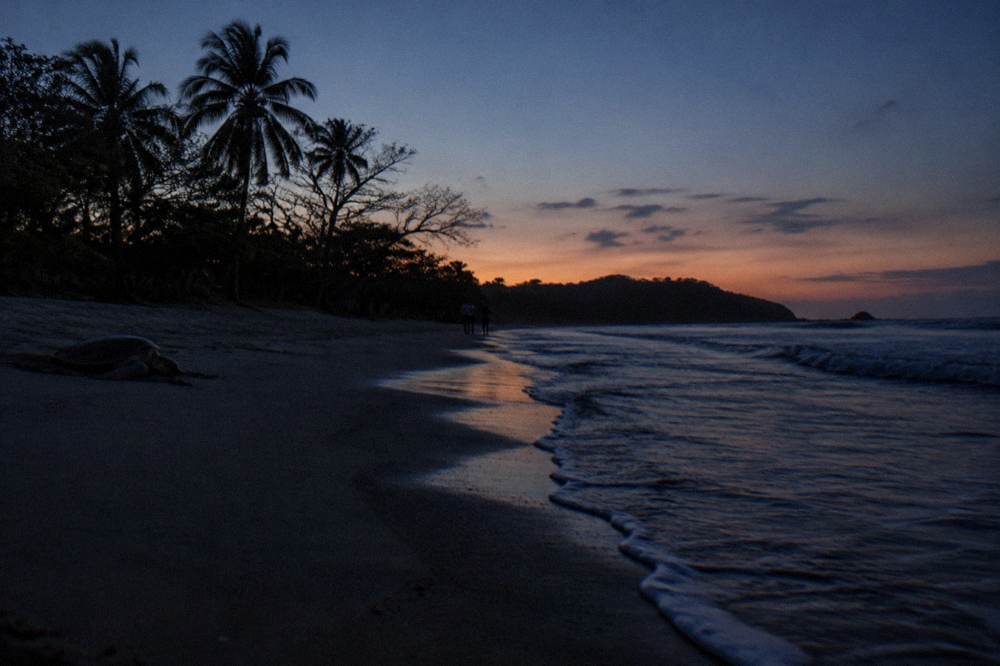
The leatherback, called baula locally, is the reason this park exists. It is the largest sea turtle on earth and one of the most endangered, and Playa Grande was once one of the Pacific's significant nesting colonies. The trajectory has been steep: conservation and community sources tracking the park report a decline of more than 95 percent since the late 1980s, and recent seasons have recorded somewhere between 2 and 8 nesting females across the entire park. Two olive ridley and black turtle species also visit in smaller numbers, per the official park page, but the leatherback is the headline, and the headline is grim.
For a traveler, the practical meaning is this: the calendar still says October to February, but the experience of watching a nesting leatherback is effectively not for sale right now. Operators and press covering the park report that organized turtle observation tours inside Playa Grande are currently unavailable because of the low numbers and the regulations that followed. The park's own Spanish page, as reported by secondary sources, states plainly that turtle observation is not on offer. Nothing about this is promised on any catamaran listing either, and none should be.

Other seasonal details shape a visit too. Evening beach access tightens during those months, surfers share Playa Grande and Playa Langosta by day, and the estuary tours, which depend on the tide rather than the turtle calendar, run in every month of the year. If your dates fall in the October to February window and turtles are the reason you picked them, plan around the mangroves and the coastline rather than around a nesting walk. Turtles at sea are possible but never promised: some 2026 guest reviews of area sailings mention them, and any such sighting should be treated as luck rather than an itinerary item. Whether a trip is timed for the height of the dry season or the green months, the best time for a Tamarindo boat tour depends more on wind and swell than on the turtle calendar.
Can You See Turtles From A Tamarindo Boat Tour?
Honest answer: maybe, and never by promise. Some 2026 guest reviews of Tamarindo-area catamarans mention turtles, dolphins and even whales, but no operator can promise any of them, and no boat enters the Las Baulas nesting beach. The park's nesting turtles are observed from the sand under park rules, not from a vessel, and that observation is currently restricted.
The distinction matters because marketing copy loves a turtle silhouette. What the record actually supports is modest: reviews of the Marlin del Rey catamaran trips dated June, July and October 2026 mention sea turtles, dolphins and flying fish seen from the boat, and snorkel listings for the Catalina Islands area note turtles among commonly reported marine life alongside reef fish, rays and occasional dolphins. These are real reports from real guests. They are also, by nature, a sample of luck, season and attention, not a schedule.
Turtles in the water are a different matter from turtles on the beach. The nesting females of Playa Grande come ashore at night, under park supervision that is presently suspended, and a catamaran has no part in that. A turtle swimming past a moored catamaran at a snorkel stop is a wild animal going about its day. The first is a protected, currently unavailable experience; the second is a possibility on any of the roughly four to five hour sails that leave Tamarindo beach, the El Chiringuito area or Playa Flamingo. The Tamarindo snorkeling tours guide covers where the water clarity is best for the reef life that does reliably show up.
For families, the morning slot deserves the nod over the sunset sail if marine life is the priority. The morning nature catamaran with kids' games, from $98 per person, lists a 4.5 hour morning run with lunch, open bar and snorkel gear, timed for the calmer hours before the afternoon wind fills in; check the listing for age guidance. Adults chasing the same water in a party frame of mind can compare the Tamarindo booze cruise and party boat options, though the quieter sails keep you closer to the water and whatever is moving through it.
What Are The Night Rules And Beach Access Limits At Playa Grande?
Outside nesting season the park is open 6:00 AM to 6:00 PM daily, and during the October to February nesting period evening access is restricted, with authorized entry only by guided groups of at most 15 people through two official booths capped at 120 total. The conduct rules are strict: no photography, no touching, silent observation from behind, and the guide alone carries a red-filter flashlight.
The published rules are specific because leatherbacks are fragile in exactly the ways careless visitors stress them. Flash and camera light disorient nesting females and hatchlings. Crowds and noise interrupt laying. Touching a turtle or standing in front of one can abort a nesting attempt entirely, a costly failure when a season's entire population is counted in single digits. Hence the red-filter flashlight carried only by the guide, the behind-and-silent posture, and the hard group cap.
| Rule area | Published requirement |
|---|---|
| Daily hours | Open every day, 6:00 AM to 6:00 PM |
| Nesting-season access | Evening beach stays restricted, October to February |
| Group size | Maximum 15 people with a tourist promoter or local guide |
| Entry points | Two official booths; capacity 120 people total, 60 per booth |
| Conduct | No photographing, no touching, observe from behind in silence |
| Lighting | Flashlight only by the guide, with a red filter |
| Other beach rules | No pets, no single-use plastics, no vehicles, fires or camping |
Two cautions for planners. First, the official page's wording about a 5:00 PM beach-stay exception during the season is ambiguous as published, so treat the 6:00 PM close and the seasonal evening limits as the frame and confirm current access locally; the park's page at SINAC, the national conservation system is the authoritative source. Second, do not print or trust any quoted entrance fee from third-party sites; the official page does not list one, and we won't either. What we can say is that daytime use of Playa Grande, including its well-known surf, remains normal outside the seasonal restrictions.
The night rules also explain a common disappointment. Travelers arrive in November expecting a turtle tour the way they might in Tortuguero, and find that the thing simply is not running here at present. The park's estuary visits with local guides, which need no reservation per the official page, and the daytime beaches are what's on offer inside the park boundary.
What Can Boats Legally Do In The Water Near The Park?
Catamarans and sailing tours operate on the open Pacific outside the park's beach and estuary zones: sailing the coast, mooring at coves and islands for snorkeling, kayaking and paddleboarding, and returning by or after sunset. No tour boat lands on the nesting beach, enters the estuary, or conducts turtle observation inside the park. General coast-guard safety rules apply to every vessel: life jackets matched to passengers, a lifebuoy with rope, and a valid navigation certificate.
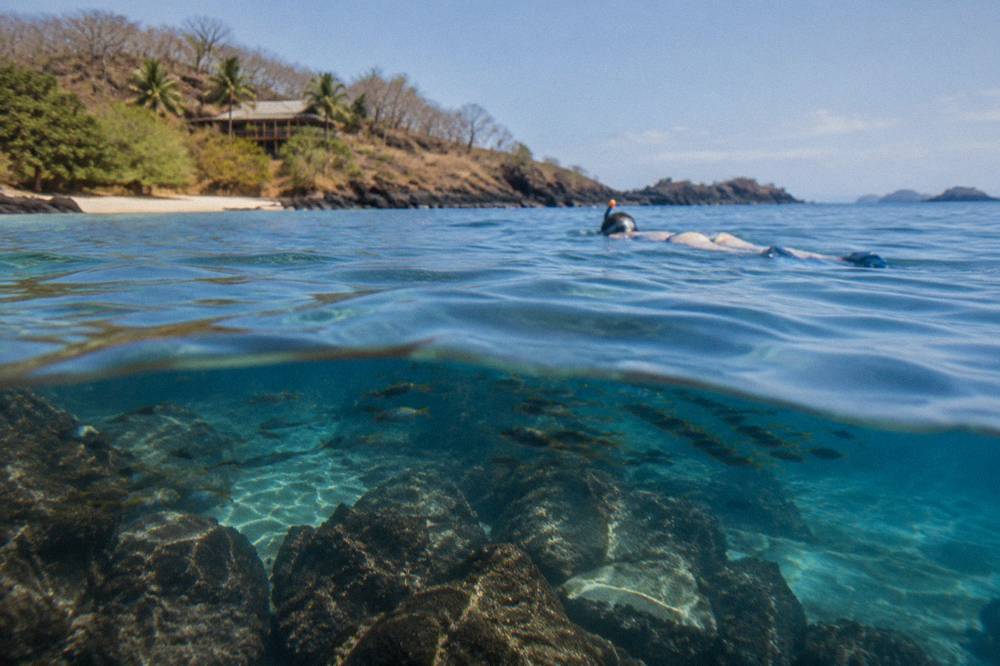
A look at what the trips actually do makes the boundary obvious. The typical sailing day from Tamarindo runs north along the coast for roughly an hour before mooring at a secluded bay, where passengers swim and snorkel off the boat. Listings name spots like Playa Conchal, praised for its shells and snorkeling, and the Catalina Islands, reached by a roughly 45 minute sail from Tamarindo, where manta rays and dolphins are the commonly reported draws. None of that touches Playa Grande. The nesting beach faces the open ocean with no anchorage a tour would use, and the park's conservation rules leave it alone. Back on shore, deciding which stretch of sand to explore under your own steam gets easier with the beach-by-beach guide to Tamarindo and its neighbors, which covers swim conditions, surf breaks, and how catamaran runs reach the quieter spots.
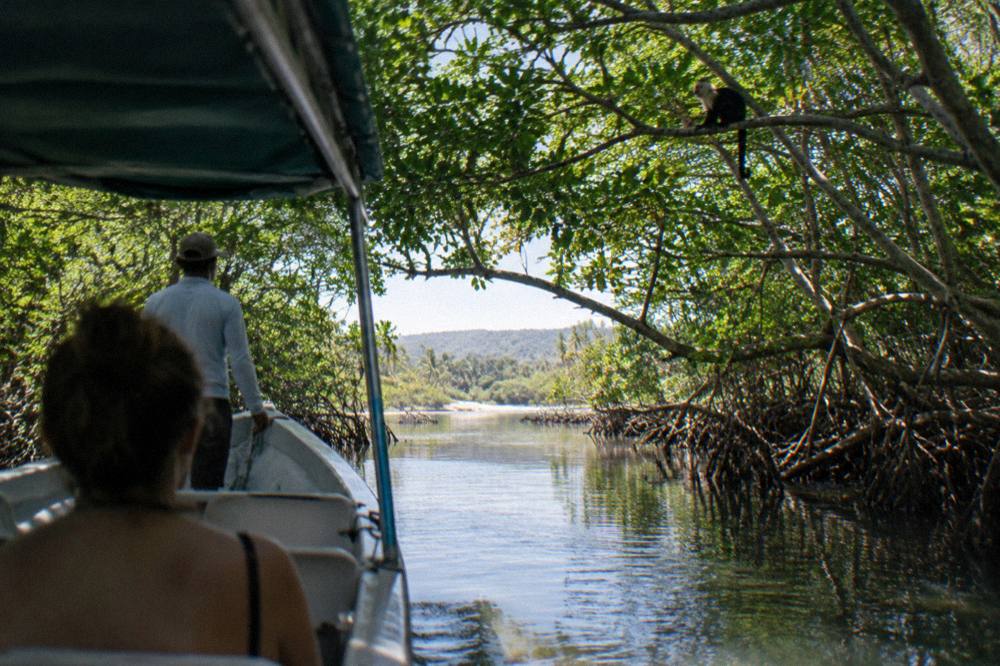
The estuary is the other legal world: small boats, local guides, tide-dependent scheduling, and wildlife of the mangrove kind, howler monkeys, crocodiles and birds rather than reef fish. Our Tamarindo estuary boat tour guide covers it honestly, including the fact that it is sold outside this site's catalogue. Between those two, the catamaran fleet owns the open water. On the safety side, Costa Rica's coast guard guidance, reported in local press, requires life jackets for the full passenger count including children's sizes, at least one lifebuoy with rope, and a current navigation certificate with annual inspection; reputable operators meet this as a baseline, and it is fair to ask. If seas run heavier than expected, the question of whether catamarans can handle rough seas has its own answer, but operators avoid rough days rather than test it.
Which Catamaran Trips Sail Closest To The Park's Coast?
The trips that track the Las Baulas coastline most directly are the morning and sunset catamarans departing the El Chiringuito area of Tamarindo beach, which pass the estuary mouth and Playa Grande's coast as they head north toward snorkel coves. Flamingo departures sail the same wider coast from the north. Firm prices run from $88 to $169 per person on the shared day and sunset trips.
The Blue Dolphin day catamaran, from $90 per person, rated 4.5 from 990 reviews, departs the El Chiringuito area for a 4.5 hour sail with meal, open bar, snorkel gear and a stand up paddle board, and its coast-hugging route north is the classic Las Baulas shoreline view. The Timarouba sunset sail, from $97 per person, rated 4.5 from 504 reviews, boards in the same area with lunch, open bar, two kayaks and a paddle, and its five hour arc covers the coast in the gold light. Both list free cancellation, and neither promises a creature of any kind.
From the north, the Flamingo departures frame the same coast differently. The Flamingo sunset catamaran from Lazy Lizard, from $95 per person and the catalogue's most reviewed listing at 4.9 from 1,170 reviews, includes hotel pickup from close locations, snacks, unlimited drinks and snorkel gear. The all-inclusive version pairs a 4.9 rating from 37 reviews with transfers by air-conditioned minivan; its price is on the listing. The practical difference for park watchers: Tamarindo departures look the estuary and Playa Grande in the face as they clear the bay, Flamingo boats approach the coast from Potrero, and both end in the same Pacific sunset.
Timing matters as much as route. Sunset in Tamarindo swings from about 5:16 pm in early to mid November, the earliest of the year, to about 6:08 pm in late June and early July, the latest, so afternoon trips are timed to that window and typically depart between 12:45 and 2:00 pm for a four to five hour sail. Mornings buy calmer water. Operators report wind rising after about 11 am in the Papagayo months of December to March, along with snorkel visibility of roughly 15 to 25 m in the dry season against 8 to 12 m or less in the green season. Those are operator figures, not guarantees. More on that in Tamarindo sunset times.
How Does The Estuary Differ From The Open-Water Cruises?
The estuary is a small-boat, slow-speed mangrove tour inside the park's wetlands, dependent on the tide and focused on monkeys, crocodiles and birds; it is a wildlife-watching outing, not a swim or snorkel trip. The catamaran cruises are open-water experiences with swimming, snorkeling, meals and bars. They are complementary, not competing, and they are sold by different operators with different setups.
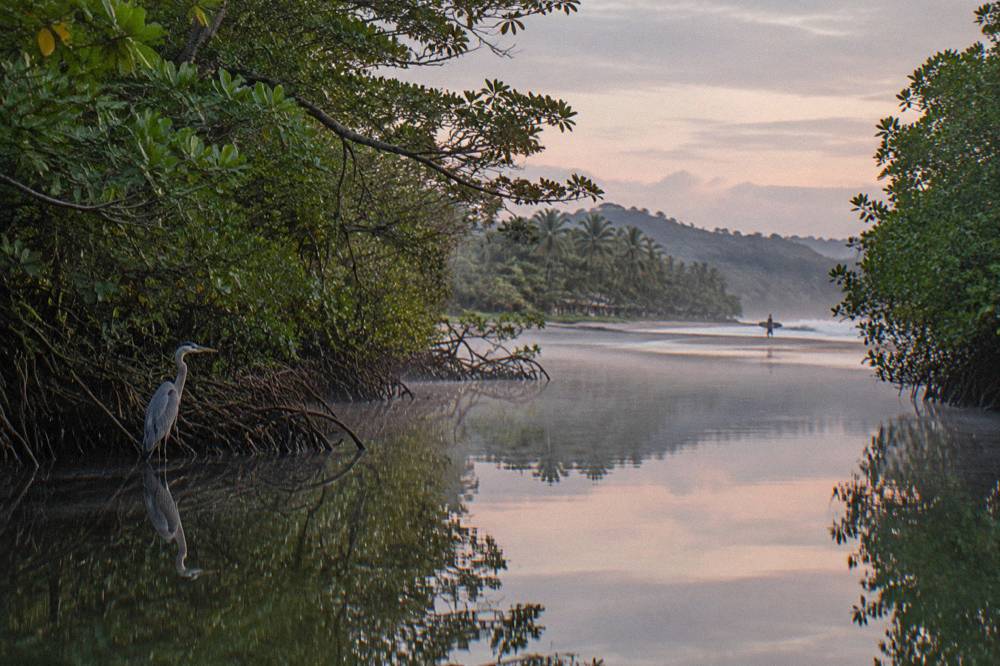
The estuary's character comes from the mangroves. The channel behind Tamarindo is narrow, shaded and quiet, which is exactly why howler monkeys, crocodiles, herons and other birds thrive there and why the trips creep rather than sail. Scheduling follows the tide rather than the clock, since the channel's depth changes through the day; listings note the tours are tide-dependent, and morning slots typically work best. The official park page lists mangrove tours with local guides among its services, and notes a checkpoint on the beach.
The catamaran day is the opposite temperament: wide decks, music or quiet as the crowd dictates, an open bar, a jump into the sea at a mooring. Water clarity on Tamarindo's open beach is often reduced by sediment and wave action, as local reporting notes, but improves markedly at the coves and the Catalina Islands the boats sail to. That is the honest trade: the estuary gives you the best odds of monkeys, crocodiles and birds, the catamaran delivers the water, the coast and the sunset, and marine life on the sail stays a bonus, reported in recent reviews but never guaranteed.
For a fuller comparison of the vessel types and routes, the Tamarindo boat tours compared guide lays the categories side by side. Families with young children often string both together across a week: a morning catamaran like the kids' games nature tour, from $98 per person, for the swim and the sail, and an estuary hour for the monkeys, with ages and details on the listing.
What Should Turtle-Curious Visitors Actually Book?
If turtles are your main draw, book the estuary mangrove tour for the best odds of monkeys, crocodiles and birds inside the park's wetlands, and add a catamaran for the coast itself, understanding that a turtle in the water is a possibility, not a program. Humpback whale windows, a northern group December to March or April and a southern group roughly July to mid November peaking August to September, give your sail a second wildcard. No current booking includes turtle observation on the nesting beach.
Set expectations the way the evidence sets them. The nesting beach experience is suspended, and the population that justified it is a remnant. The estuary delivers its cast reliably. The open water delivers scenery, swimming and a real chance at dolphins, turtles, rays, flying fish and, in the whale windows, humpbacks; sightings from Tamarindo catamarans appear in 2026 guest reviews but are never guaranteed, and no verified whale-watch distance rule specific to Guanacaste exists to cite. The season reporting on Pacific humpbacks is the clearest public summary of the two migratory groups.
| Experience | Where it runs | Wildlife reliably seen | Firm price basis |
|---|---|---|---|
| Estuary mangrove tour | Tamarindo Estuary, inside park | Howler monkeys, crocodiles, birds | Sold separately, not in this catalogue |
| Morning nature catamaran | Open coast from El Chiringuito | Coast and swim stops; marine life reported | From $98 per person |
| Blue Dolphin day catamaran | Coast north of Tamarindo | Reef fish at snorkel stops | From $90 per person |
| Timarouba sunset sail | Coast to sunset, El Chiringuito | Scenery, sunset; sightings possible | From $97 per person |
| Night nesting walk, Playa Grande | Inside park | Currently unavailable | Not bookable |
The seasonal wildlife calendar sharpens the choice further. What you might meet on the water depends heavily on the month you sail:
| Window | Marine life context on the Guanacaste coast |
|---|---|
| December to March or April | Northern humpback group reported; Papagayo winds peak, morning sails calmer |
| Roughly July to mid November | Southern humpback group, peaking August to September |
| October to February | Leatherback nesting season at Las Baulas; observation currently unavailable |
| Dry season, December to April | Operators report snorkel visibility of 15 to 25 m |
| Green season, May to November | Operators report visibility of 8 to 12 m or less; afternoon rains |
Budget framing helps too. Shared catamaran days and sunset sails run from $88 to $169 per person, private charters from $500 to $2,972.98 per group depending on vessel and length, and the estuary tours are sold on their own operators' pages. The Tamarindo catamaran cruise prices guide breaks the whole ladder down. Whatever you choose, free cancellation is listed across these trips, so booking ahead of a trip costs little flexibility.
Common Questions About Las Baulas And Tamarindo Boat Tours
What Is Las Baulas National Park And Where Does It Sit Relative To Tamarindo?
It is a national marine park immediately beside Tamarindo, protecting the Playa Grande, Playa Langosta and Playa Ventanas nesting beaches plus the Tamarindo Estuary mangroves. It is open daily from 6:00 AM to 6:00 PM, with two official beach entrances.
Can You See Turtles From A Tamarindo Boat Tour?
Possibly, never certainly. Guests on 2026 Tamarindo catamaran trips have reported sea turtles, dolphins and whales, but sightings are luck, not itinerary. No boat enters the Las Baulas nesting beach, and organized nesting observation inside the park is currently unavailable.
When Is Leatherback Nesting Season At Las Baulas?
The official season runs about October 20 to February 15. Recent seasons have seen only single-digit nesting females park-wide, which is why observation tours are not operating despite the calendar.
What Are The Night Rules At Playa Grande?
During the nesting period, beach access is restricted in the evening; authorized access is by guided groups of at most 15, capped at 120 people across two booths, with no photography, no touching, silent observation from behind, and only the guide carrying a red-filter flashlight.
How Does The Estuary Tour Differ From A Catamaran Cruise?
The estuary is a tide-dependent small-boat mangrove trip inside the park, focused on monkeys, crocodiles and birds. Catamarans are open-water cruises with swimming, snorkeling, meals and drinks, sailing the coast outside the park's beach zones.