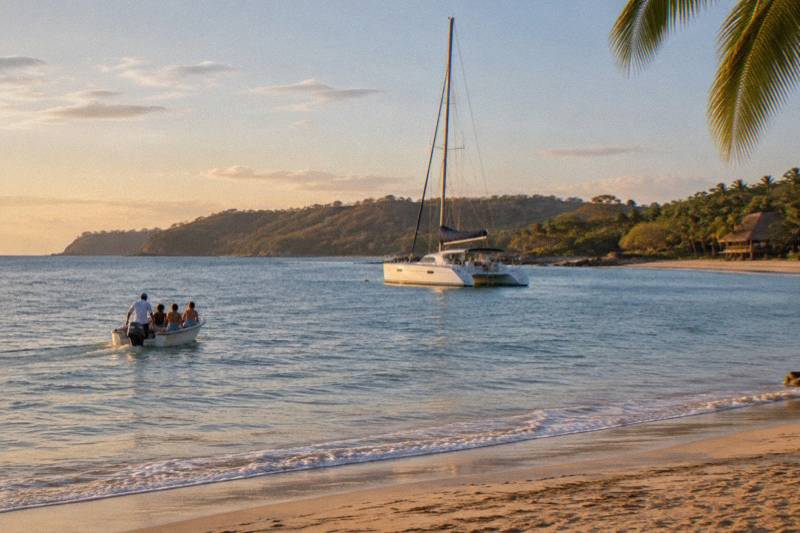
What To Bring On A Tamarindo Catamaran Cruise
What you wear and pack decides how much you enjoy five hours on the Pacific. This guide covers clothing, sun protection, seasickness strategy, snorkel extras and valuables for the catamaran trips that sail from Tamarindo, Playa Flamingo and the Guanacaste coast.
Short answer
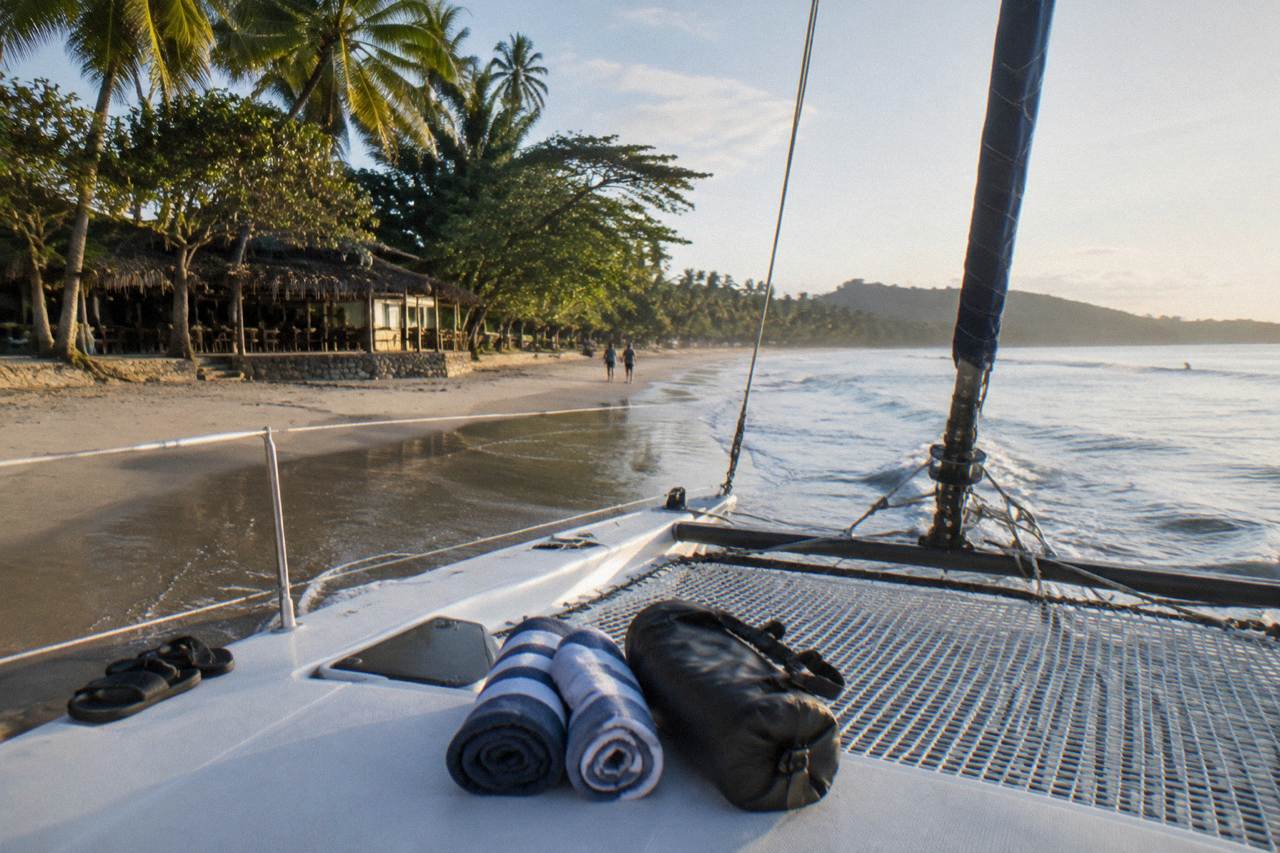
Pack light: swimsuit, quick-dry cover-up, light long-sleeve shirt, sandals, reef-safe sunscreen, hat, sunglasses, towel, seasickness remedy and a dry bag. Most shared Tamarindo catamaran cruises from $88 per person include snorkel gear and drinks, and many add a meal, so bring almost nothing else. Sunset falls between about 5:16 pm and 6:08 pm year-round.
Five hours on the Pacific is a long time to be underdressed for the sun or over-dressed for the heat, and the difference between a great afternoon and a miserable one usually comes down to a bag packed in two minutes at the hotel. The catamaran cruises that sail from Tamarindo beach and Playa Flamingo share one climate: hot, bright, humid, with a breeze that hides how much sun you are absorbing until the sail home. This guide walks through exactly what to wear, what to pack and what to leave behind, based on what the listings themselves include and what the Guanacaste coast actually throws at you across the year.
The good news is that the packing list is short, because the tours carry most of the heavy gear themselves. The featured Timarouba sunset sail, rated 4.5 from 504 reviews and from $97 per person, lists lunch, an open bar, snorkel equipment, two kayaks and a paddle in its inclusions, which is typical of the sunset fleet. A family booking the morning nature catamaran with kids' games, from $98 per person, gets an open bar and a quality lunch served by the crew. Your job is mostly clothing, sun protection and a few personal items.
What Should You Wear On A Boat Tour From Tamarindo?
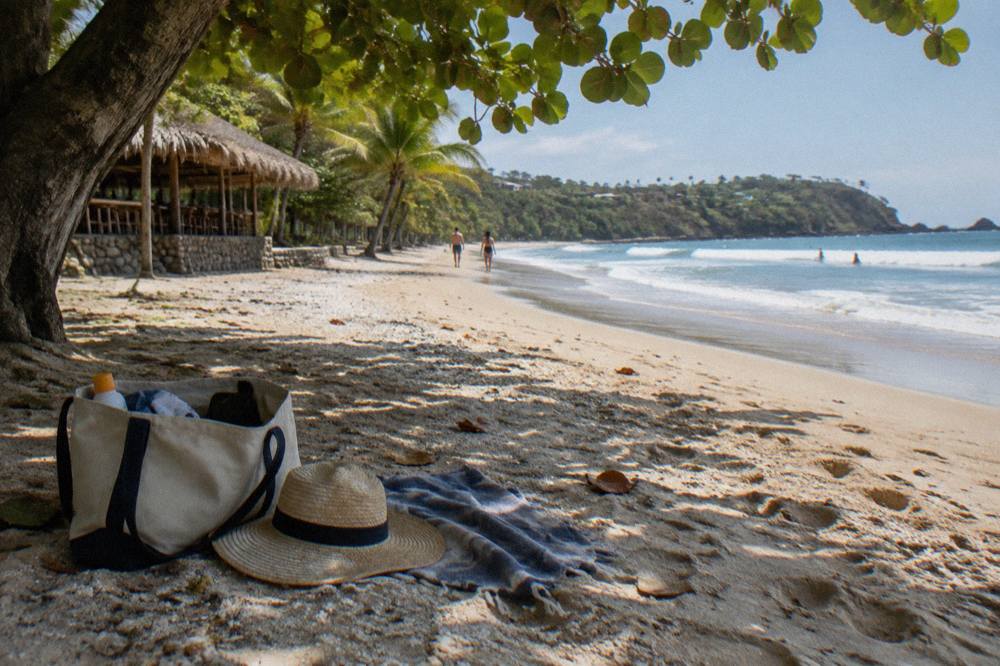
Light, quick-dry clothing wins on a Tamarindo catamaran: swimsuit under a cover-up or tee, a light long-sleeve shirt for the afternoon sun, and non-marking sandals or flip-flops. Evenings offshore can feel breezy after about 5:20 pm, so a light layer for the sail back earns its space in your bag. Avoid heavy denim, which never dries.
Think in layers you can shed. Boarding usually happens in the early afternoon, typically between about 12:30 pm and 1:15 pm for sunset trips, when the beach is at its hottest. You will want the least clothing you are comfortable in for the first hour, then more cover, not less, as the sun climbs and the boat turns west into it. A light long-sleeve rash guard or sun shirt is the single most useful item on this list: it protects shoulders and arms during the snorkel stop and the sunset sail, and it dries in minutes.
Footwear matters more than people expect. Most catamarans ask for shoes off at the gangway or the beach boarding point, and deck surfaces get hot underfoot by early afternoon. Flip-flops or slip-on sandals you can carry in one hand are ideal; anything with heavy dark soles that marks the deck will spend the trip in a locker. A pair of water shoes is worth considering if you are booked on a trip that beaches for snorkeling, since some coves along the Guanacaste coast have rocky entries.
For the evening sail back, a light layer is enough even in the green season. Sunset in Tamarindo lands between about 5:16 pm in mid November and about 6:08 pm in late June, and the hour after it can be cool with the wind on deck, especially on a fast catamaran hull. Women often pack a light wrap or sundress over the swimsuit; men a dry tee. Nobody has ever regretted a light windbreaker on this coast, and plenty have regretted not bringing one. For fuller timing detail, see our guide to Tamarindo sunset times by month.
| Item | Why It Earns Its Space | Notes For The Guanacaste Coast |
|---|---|---|
| Swimsuit worn under clothes | Snorkel stop happens mid-trip; no changing rooms | Quick-dry fabrics beat cotton |
| Light long-sleeve sun shirt | Sun stays intense until late afternoon | Rash guard doubles as snorkel cover |
| Cover-up or dry tee | Comfort for lunch and the sunset sail | One per person is enough |
| Flip-flops or slip-on sandals | Shoes usually come off at boarding | Carry them; decks are hot barefoot |
| Light wrap or windbreaker | Breezy hour after sunset offshore | Useful year-round, vital December to March |
| Wide-brim hat with a chin cord | Shade for the west-facing sail | Cord keeps it on the trampoline |
| Polarized sunglasses | Cuts glare off the water | Cheap pair, not your good pair |
What Sunscreen And Sun Protection Do You Need On The Guanacaste Coast?
Reef-safe mineral sunscreen, SPF 30 or higher, applied before boarding and reapplied after the snorkel stop, plus a hat and polarized sunglasses. Costa Rica has no nationwide chemical sunscreen ban, but marine protected areas and operators along this coast increasingly encourage mineral products, and the crew will notice the difference.
The sun here is not the sun most visitors are used to. Tamarindo sits at about ten degrees north latitude, which means UV intensity stays high even when cloud cover builds in the green season, and a five-hour cruise puts you on reflective water for the entire peak of the day. Operators report that wind frequently rises after about 11 am, which is why the sunset sail itself is comfortable, but the 1 pm boarding and the snorkel stop are the burn windows. Burn prevention is a clothing problem as much as a lotion problem: the long-sleeve shirt from the section above does more work than any SPF.
On the sunscreen itself, choose a mineral (zinc or titanium) product labeled reef-safe. A 2026 customs resolution created a reduced tariff line specifically for reef-safe sunscreens without components toxic to coral reefs, which tells you the direction official policy is moving, and the marine protected areas near the sailing grounds, including Las Baulas National Marine Park's waters, are exactly the environment that concern is about. Spray sunscreens tend to waste half their contents in the breeze on deck; lotions and sticks are more reliable. Pack enough to reapply, because one application will not survive a swim stop and five hours.
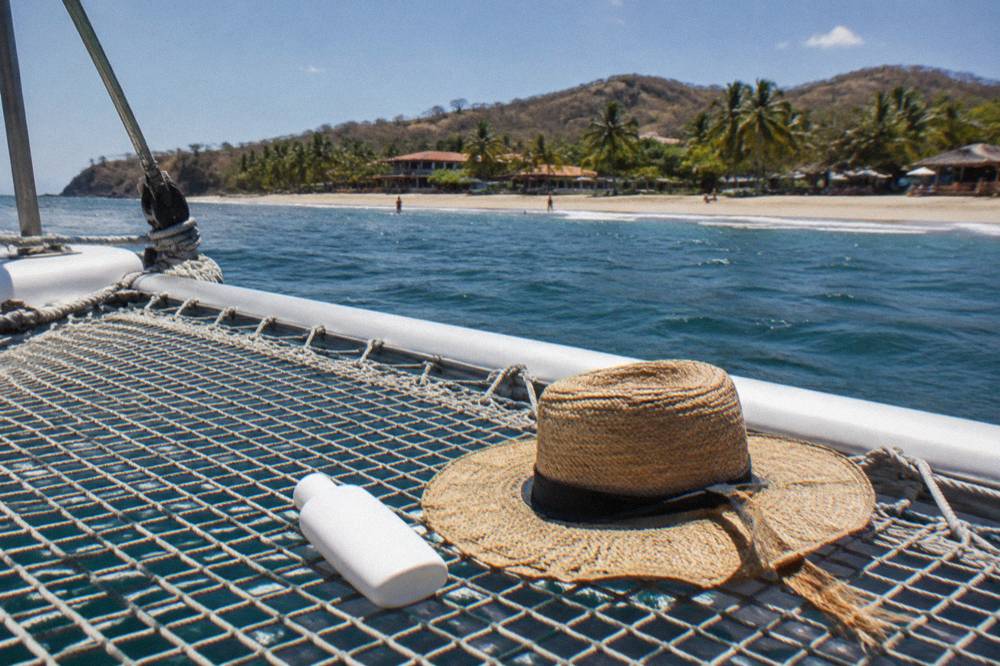
Beyond lotion, the rest of the kit is simple. A hat with a chin cord stays on when the boat moves; a baseball cap without one becomes a donation to the Pacific. Polarized sunglasses cut surface glare and make the water life easier to spot. Lip balm with SPF is the item most people forget and most need by the second hour. If you want to understand how the season changes both sun and sea conditions before you pick a departure date, our best time for a Tamarindo boat tour guide breaks down the calendar month by month.

These are the trips readers preparing for a day on the water most often compare:
What Do You Pack For Snorkeling Stops Near Playa Conchal?
Almost nothing, because the listings include the gear: every shared cruise among these trips lists snorkel equipment in its inclusions. Bring only what is personal, a rash guard for float time, defogger or a little baby shampoo, and swimwear that fits. Towels are the one item to confirm on your specific listing before you assume.
The snorkel reality on this coast is that the boats handle the hardware and the location. The sailing grounds favor coves and islands over the open beach: listings describe stops at secluded bays along the Guanacaste coast, Playa Conchal for its shells and water, and the Catalina Islands area, and water clarity improves markedly at those spots compared with the sediment and wave action of Tamarindo's own beach. Operators report visibility of roughly 15 to 25 meters in the dry season versus 8 to 12 meters or less in the green season, which is a real argument for a December to April trip if snorkeling is your priority. Our dedicated Tamarindo snorkeling tours guide covers where the stops actually are.
What you add is comfort. A rash guard keeps you in the water longer, since you float stationary watching fish and lose track of time and temperature. Masks fog; a small bottle of defogger or a drop of baby shampoo rinsed in the mask beats spitting, which is the boat's traditional answer. If you wear glasses, contact lenses are far easier than trying to use a mask over frames, and a mask with prescription lenses is a niche but real option if you own one.
One honest note on towels: these trips list meals, bars and snorkel gear consistently, but towel inclusions are not stated on most listings, so check your specific tour's page or bring your own. A quick-dry microfiber towel packs to the size of a paperback and is the safest assumption. The same goes for flotation: listings mention noodles and life jackets on some trips and stand-up paddleboards or kayaks on others, so if floating rather than swimming is your plan, confirm what your boat carries.
| Snorkel Item | Provided On The Boat? | Bring Your Own If |
|---|---|---|
| Mask and snorkel | Yes, listed on every shared cruise here | You have a well-fitted personal mask |
| Fins | Listed on most sunset and day cruises | You need a specific size or stiffness |
| Rash guard | No | Always; it is your sun armor in the water |
| Defogger | Rarely | Always; baby shampoo works |
| Towel | Not stated on most listings | Always, quick-dry microfiber |
| Waterproof phone pouch | No | Always, for photos at the stop |
How Do You Handle Seasickness On A Pacific Catamaran?
Take a remedy before boarding, not after feeling queasy, because catamarans are stable but the swell off the Guanacaste coast is real. Choose non-drowsy tablets, ginger chews or acupressure bands, eat a light lunch rather than a heavy one, and stay mid-deck looking at the horizon. Most days are mild; the Papagayo wind months are the exception.
Start with the honest boat science: a catamaran's twin hulls make it one of the most stable platforms on the water, which is exactly why these boats dominate the sunset cruise fleet here. If you are curious about how these hulls behave when the sea gets genuinely lively, our piece on whether catamarans can handle rough seas goes into the design detail. The shorter answer for a Tamarindo afternoon is that typical conditions are a gentle swell plus thermal breeze, and most guests are fine with no remedy at all.
The timing of your remedy is the whole game. Oral tablets need to be in your system before boarding to work, so take them at the hotel or with the light pre-boarding meal. A heavy lunch of gallo pinto and fried plantain before a rolling afternoon is a classic mistake; eat lightly before, and let the boat's own lunch, which most trips serve after the snorkel stop, be your real meal. Ginger chews and acupressure bands have no drowsiness downside and work well enough for mild cases, which is most cases.
Know your season, too. The Papagayo winds peak December to March and can build short, choppy seas by afternoon, which is why operators recommend morning departures for water activities in those months. Booking the morning family nature catamaran rather than an afternoon sail is a legitimate seasickness strategy in deep December, quite apart from its games and lunch. In the green season, May to November, mornings are typically calmer before afternoon rain builds. If your dates are fixed in the wetter months, our Tamarindo boat tours in rainy season guide covers what actually changes on the water.
Onboard, position and gaze do the rest. Mid-deck, where pitch and roll are smallest, facing the horizon, is the spot. The open bar is a seasickness accelerant on an empty stomach; alternate cocktails with water, a rule the crew will quietly appreciate as well. Fresh air beats the cabin or a spot behind the trampoline where the boat's motion is amplified. Almost nobody who follows this sequence has a problem, and those who do usually skipped the before-boarding step.
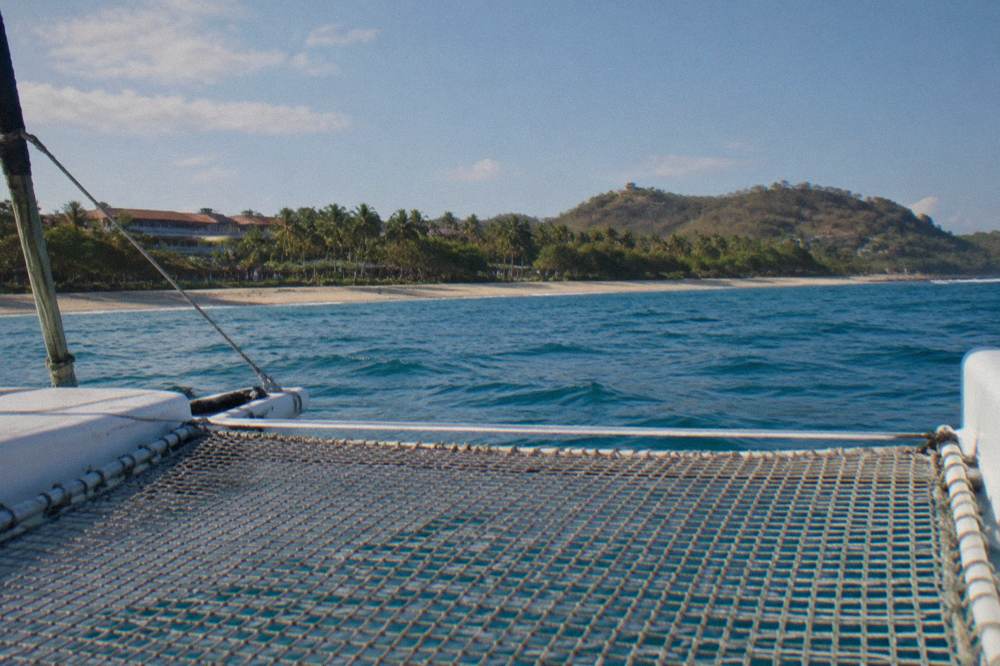
Should You Bring Valuables On A Tamarindo Sunset Cruise?
Bring as little as you can: the boat moves, bags sit in shared space, and nobody watches them during the snorkel stop. A phone in a waterproof pouch, cards and a little cash for the crew tip, and nothing else of value. Passports stay at the hotel; a photo of the ID page covers nearly any situation on the water.
The practical risk on a shared sunset cruise is not theft, it is gravity and seawater. Phones go over the rail, sunglasses go under the trampoline, and a bag left open at the bow takes spray on the reach back. A waterproof phone pouch on a lanyard solves the biggest exposure, both for photos at the snorkel stop and for the sunset itself, which is the shot everyone on board is trying to get. The listing for the most reviewed trip on the coast, the Playa Flamingo sunset catamaran rated 4.9 from 1,170 reviews, is one of the few that also lists hotel pickup from Tamarindo-area locations, which means your valuables can stay locked at the hotel and your pockets can stay nearly empty.
Cash deserves a sentence of its own. Boat crews on Guanacaste tours commonly receive about 5 to 10 USD per person for a half-day trip as a tip, a commonly reported custom rather than any rule, so bring small bills in a zip bag. The open bar and meal are already in your ticket price on the trips that list them, so the cash is purely for the crew and anything you buy ashore after landing.
Everything else stays home base. Jewelry, good watches, laptops and tablets have no role on a wet deck, and passports belong in the hotel safe. If you carry medication, keep it in the small dry bag, and if the medication matters for the day, tell the crew where it is at boarding. Life jackets matched to passenger capacity are required on board under Costa Rican coast guard guidance, so safety equipment is one thing you never need to pack.
| Item | Bring On Board? | Best Practice |
|---|---|---|
| Phone | Yes | Waterproof pouch on a lanyard |
| Cards and small cash | Yes | Zip bag; small bills for the crew tip |
| Passport | No | Hotel safe; photo of ID page on phone |
| Good camera | Only if insured | Strap it; decks are wet |
| Jewelry and watches | No | No role on deck |
| Medication | Yes, essential only | Small dry bag; tell the crew |
What Should Kids Bring On A Family Catamaran Morning?
For children, pack the same sun kit scaled up: swimwear, rash guards, hats, reef-safe mineral sunscreen applied thickly before boarding, and motion-sickness consideration taken early. Age minimums vary by tour, so check the listing rather than assuming, and bring water shoes for rocky snorkel entries.
Children burn faster, dehydrate faster and get bored on the downwind legs, so the kid version of this packing list adds a few items the adult list skips. The morning nature catamaran with kids' games is built around exactly this: the listing describes a full morning cruise with an open bar, a quality lunch served by the crew and sunbathing, swimming and snorkeling in the Guanacaste coves. Its games and morning timing do a lot of parental work, but the sun protection and the snacks-between-meals still come from your bag.
The sun math for kids is unforgiving. A mineral sunscreen you can see going on, reapplied at the swim stop, plus a rash guard and a hat with a cord, is the standard combination. Pack more water than you think, since open bars serve adults and the soda supply on board varies by listing. A dry change of clothes for the ride home is the item parents most often wish they had packed, and the least often do.
For young sailors prone to queasiness, the before-boarding rule applies doubly, with children's dosing checked with your pediatrician before the trip rather than guessed at on the beach. Check the listing for minimum ages, since these vary by product and no single rule applies to these trips. If your group wants the water-toy side of the morning, the Blue Dolphin day catamaran, rated 4.5 from 990 reviews and from $90 per person, lists a stand-up paddleboard and snorkeling gear alongside its chicken fajita meal, giving kids two distinct activities between meals. The crew will brief everyone at boarding, and coast guard guidance requires children's-size life jackets on board, so the floatation side is covered.
What Changes Between Dry Season And Green Season Packing?
In the dry season, December to April, pack for intense sun and wind: stronger SPF, the windbreaker, and secure hats. In the green season, May to November, add a light rain shell and dry bags, while keeping the full sun kit, because rain arrives in afternoon bursts and UV stays high under cloud. The sea itself changes less than people expect.
The dry season is the sun-and-wind season. Papagayo winds from December to March build chop by early afternoon, so hats need cords, sunglasses need straps, and the light layer becomes a wind layer rather than a warmth layer. Rainfall is minimal, under 40 mm a month from December through April, with February the driest month of the year at under 5 mm on the 30-year averages. Visibility for the snorkel stop is at its best in these months, which is one more reason the rash guard and defogger earn their space.
The green season flips the emphasis without replacing it. September and October are the wettest months of the year, with October the wettest of all, but the rain characteristically arrives in afternoon bursts rather than all-day soakers, and the morning departures are often dry. The full sun kit stays, because UV at this latitude burns through cloud. What you add is a packable rain shell for the boarding walk and the ride home, and a genuine dry bag instead of a beach bag, since a squall on the sail back soaks everything on deck that is not sealed.
Temperature barely changes, which surprises visitors most. Sea surface temperature along the Guanacaste coast runs from about 27.3 degrees in the coolest months, January and February, to about 29.4 in the warmest month, May, a range so narrow that no wetsuit is ever needed for snorkeling here. Air temperatures follow the same flat pattern. Pack for sun and rain, not for cold, in any month you choose.
| Packing Item | Dry Season, Dec To Apr | Green Season, May To Nov |
|---|---|---|
| Sunscreen, SPF 30+ mineral | Essential, reapplied often | Essential, still reapplied |
| Hat with chin cord | Essential, winds build afternoons | Useful, calmer mornings |
| Light windbreaker | Essential in Papagayo months | Yes, doubles as rain shell |
| Packable rain shell | Rarely needed | Essential |
| Dry bag | Useful | Essential |
| Water shoes | Useful for rocky coves | Useful, entries murkier |
| Seasickness remedy | Take before boarding, windier seas | Take before boarding |
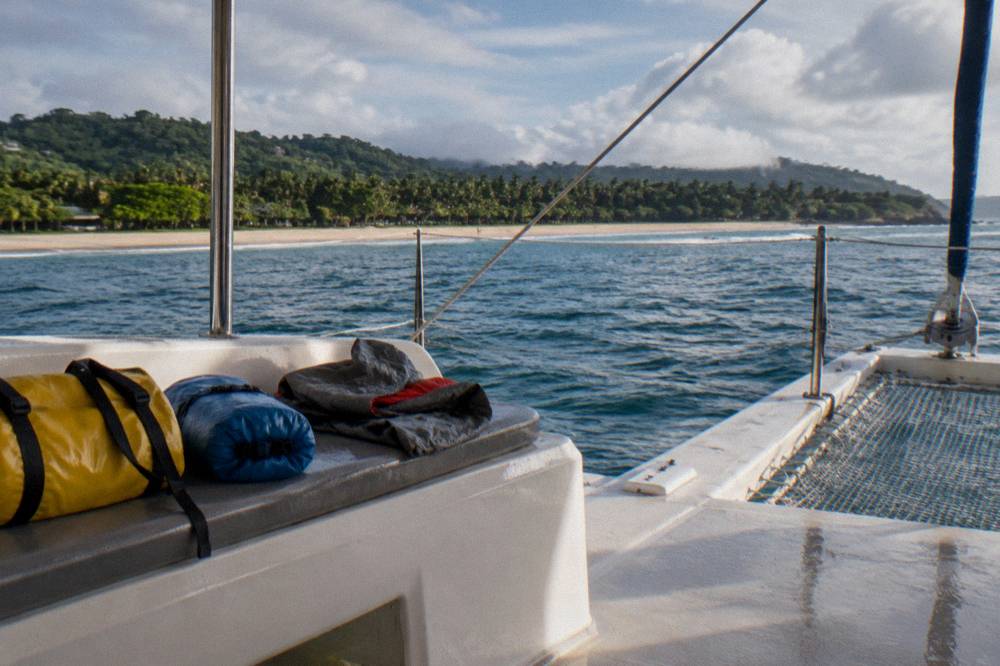
What Can You Leave Behind Because The Tour Already Includes It?
Snorkel gear, food and drinks are covered on nearly every shared cruise here: meals and open bars are listed inclusions on almost the whole sunset and day fleet, so skip the cooler and the sandwiches. Only one listing names fins, so bring your own pair if you want them. Check your own listing's line for towel and pickup specifics, since those vary, and let the boat carry the rest.
This is where the packing list earns its shortness. Across these listings, the pattern is consistent: the Timarouba sunset sail lists lunch with vegetarian options, an open bar, snorkel equipment, two kayaks and a paddle. The Marlin del Rey sunset snorkel cruise, rated 4.7 from 352 reviews and from $104 per person, lists taxes and fees, beverages, lunch, unlimited drinks and snorkel equipment. The 4-hour sunset cruise from Marina Flamingo, rated 4.9 from 160 reviews, goes further with grilled fish kabobs, a waterslide and national beer. You are not catering this trip; you are attending it.
The items you genuinely supply are the personal ones this guide has covered: clothing, sun kit, remedies, dry bag, towel and tip cash. Anything beyond that is weight on a boat that already carries ice, food, bars and water toys. If your listing says pickup is included, like the all-inclusive sunset sail with transfers or the Playa Flamingo trips that shuttle from Tamarindo hotels, you can even leave the beach walk out of the equation. Where a listing does not state pickup, check the listing for transport rather than assuming a shuttle exists.
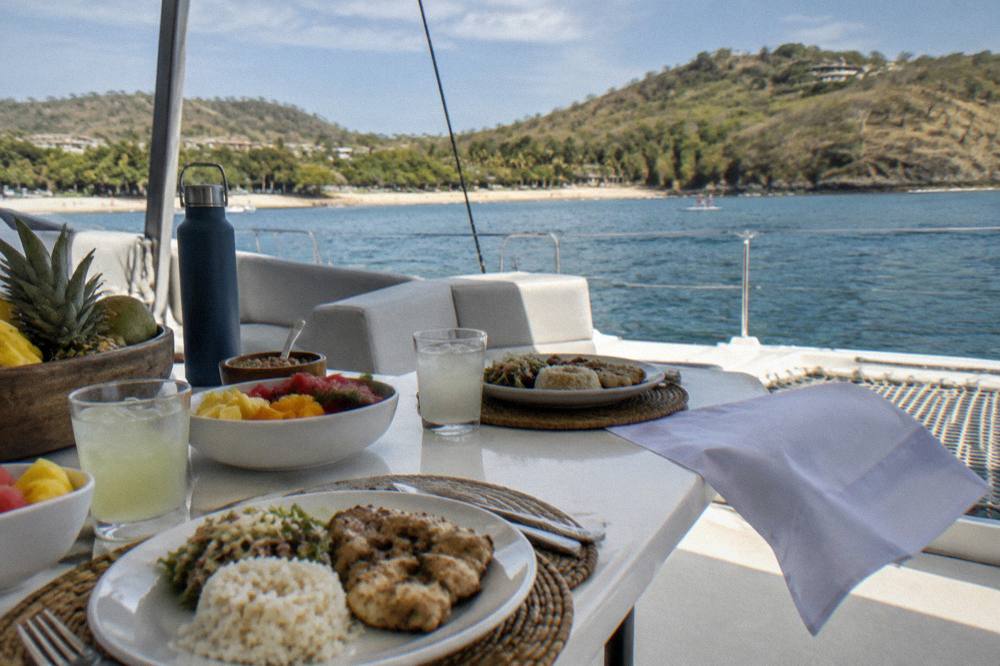
Preparation is the quiet half of a good day on the water, and it is the half this site exists for. Tamarindo Catamaran Cruises compares every bookable trip on this coast so that the decision, and the packing, take minutes instead of evenings.
Common Questions About Packing For A Tamarindo Catamaran
Do I need to bring my own snorkel gear?
No. Every shared catamaran cruise on this coast lists snorkel equipment in its inclusions, from the Timarouba sunset sail to the day trips. Bring a personal mask only if you own one that fits you well, since a good seal matters more than a new mask.
Should I bring a towel on a Tamarindo catamaran cruise?
Yes, bring one. Towel inclusions are not stated on most listings, so a quick-dry microfiber towel is the safe assumption. It packs small and doubles as a seat pad on the trampoline.
Is reef-safe sunscreen required in Costa Rica?
There is no nationwide ban on chemical sunscreens, but marine protected areas and operators along the Guanacaste coast increasingly encourage or prefer mineral reef-safe products, and a 2026 customs resolution created a reduced tariff line for them. A mineral sunscreen is the respectful choice for the waters these tours sail.
What should I wear on a boat in Tamarindo in the evening?
A swimsuit with a cover-up or dry tee for the sunset hours, plus a light wrap or windbreaker for the sail back after dark. Sunset falls between about 5:16 pm and 6:08 pm across the year, and the breeze on deck after it can be cool, especially December to March.
Can I bring a cooler or my own drinks?
There is no reason to. Nearly every shared cruise lists an open bar and a meal in its inclusions. Check your specific listing, since a few products, like the 5-hour guided sunset boat tour, do not state an open bar and instead list dinner and snorkel gear.
What do I do with my passport during the cruise?
Leave it in the hotel safe. Bring a phone in a waterproof pouch with a photo of your ID page, cards and small bills for the crew tip. Passports and valuables have no place on a wet, moving deck.