Is Tamarindo Worth Visiting In Costa Rica?
An honest look at who Tamarindo suits and who it does not, from the surf beach and the catamaran fleet to prices, crowds and the seasons that shape a visit.
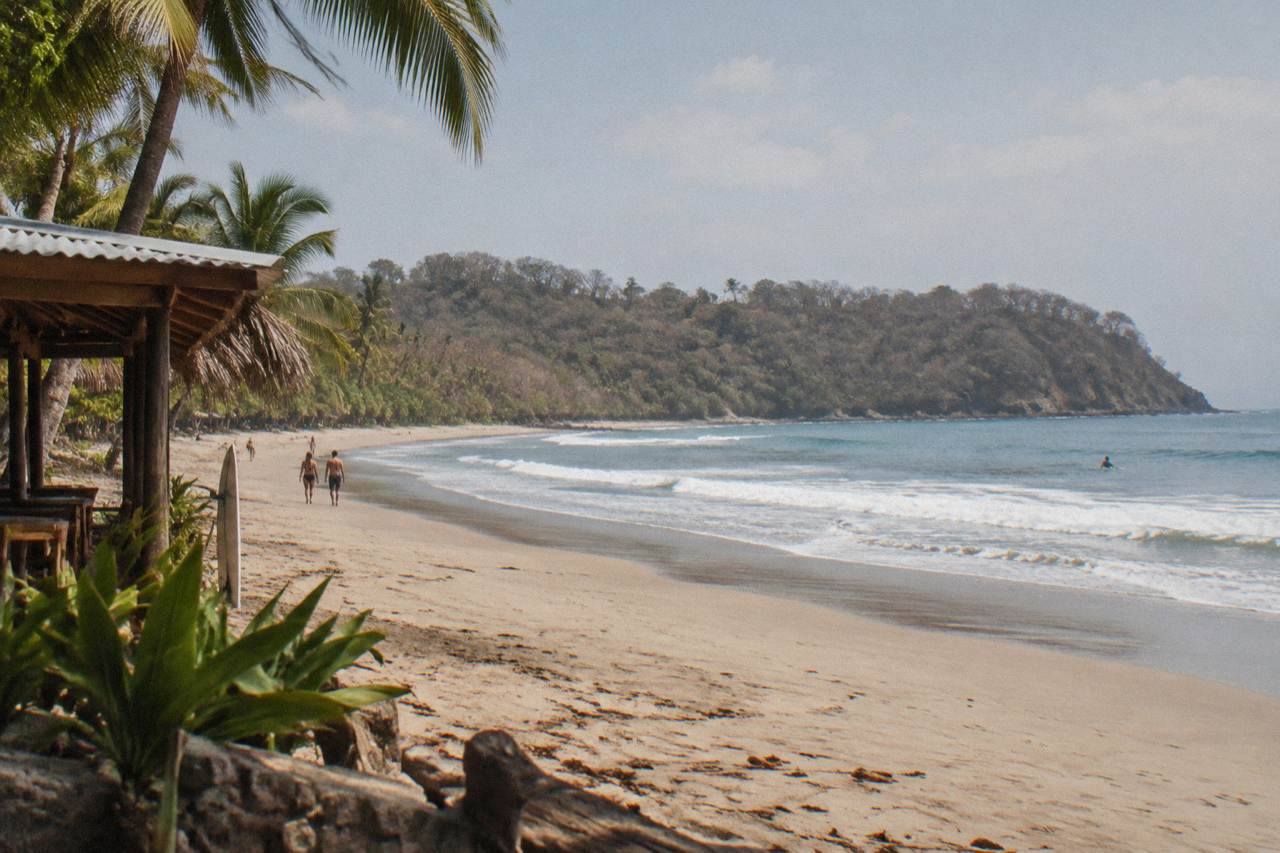
Yes, for most travelers who want a beach town with easy logistics, a walkable center, dependable surf, a busy dining scene and same-day access to sailing trips on the Pacific. It disappoints people chasing a quiet, undiscovered fishing village, because Tamarindo is developed, touristy and, in dry season, genuinely crowded. It earns its place for convenience and water activities rather than solitude. If the water activities sound appealing, our guide to what Tamarindo is actually known for explains how the surf, the sunset-facing beach, and the catamaran sails fit together.
The honest framing matters here. Tamarindo is not a hidden corner of Costa Rica and has not been one for a generation. It is a long-established resort town on this stretch of the Guanacaste coast, reachable from Liberia airport on a paved road, with a wide range of places to stay and plenty of tour boats departing from the beach. People who arrive expecting raw, empty coastline sometimes leave disappointed. People who arrive expecting a functional beach hub with a lot to do usually leave happy, and a large share of them spend one of their days on the water.
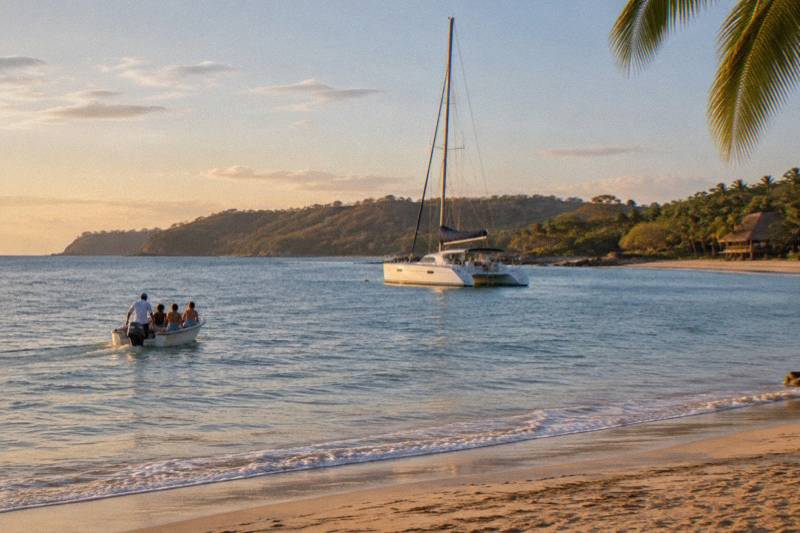
The town's core product on the water is the catamaran trip. Twenty-three shared sunset sails and day cruises work out of the El Chiringuito area of Tamarindo beach and the marinas at nearby Playa Flamingo, plus a spread of private charters from about $500 to $2,972.98 per group depending on the boat. The featured trip on this site, the Timarouba sunset sail, runs five hours with an open bar, lunch, snorkel gear, kayaks and a paddleboard, rated 4.5 from 504 reviews, from $97 per person. If your version of a good beach vacation includes a few hours on the ocean with a drink in hand, that alone answers much of the question.
Who Tamarindo Suits Best
Tamarindo suits three kinds of traveler very well: beginner and intermediate surfers who want a forgiving beach break with boards and lessons on hand, families who want a base with restaurants, pharmacies and short transfers all in one place, and groups who want to be on the water, since the town and its neighbors offer a wide choice of sailing and snorkel departures. All three groups get real value here.
The surf is the original draw, and it still delivers. Playa Tamarindo is a long, sandy bay with a beach break that works for learners most of the year, which is why the town filled up with surf schools in the first place. The waves are far from expert-level, but that is precisely the point: this is one of the easiest places in the country to stand up on a board on your first morning.
Families do well because the logistics compress. Liberia airport is about 67 km away, a drive of roughly one hour and fifteen minutes to one hour and forty-five minutes on a paved, flat two-lane route with no mountain sections, so a midday arrival can still mean an afternoon on the sand. Once in town, almost everything is walkable. The boat scene leans family-friendly too: the morning nature catamaran with kids' games runs 4.5 hours from the El Chiringuito area with lunch, an open bar and snorkel gear, from $98 per person, though with too few reviews to quote a rating.
The third group is the one this site exists for. Water people, meaning anyone whose ideal day involves sailing, snorkeling, kayaking or watching the sun go down from a deck, have the widest choice of trips on this coast. The Blue Dolphin day catamaran, rated 4.5 from 990 reviews and from $90 per person, the Marlin del Rey day sail with lunch at 4.6 from 685 reviews, from $132, and the all-inclusive day sail from $90 all depart from Tamarindo or its immediate area. That density of departures is itself an argument for the town, and you can compare them all in the Tamarindo catamaran tours overview.
Who Should Skip Tamarindo
Skip Tamarindo if you want solitude, an authentic working fishing town, or budget travel. The beach and the main street get busy, especially December through April, prices sit at the top of the Guanacaste range for food and lodging, and the nightlife runs loud in high season. Quieter alternatives like Playa Conchal or the Potrero area trade convenience for calm. If the tradeoffs still look manageable to you, our guide to the best things to do in Tamarindo lays out catamaran trips, snorkeling days, and estuary tours with prices and departure points.
Development is the real cost. The town grew around tourism and it shows in the good ways and the bad: there are excellent restaurants, a well-stocked supermarket and reliable services, and there are also souvenir stalls, juice bars on every corner and real traffic on the beach road in the late afternoon. Travelers who last loved Costa Rica a decade ago sometimes describe modern Tamarindo as more Florida than Central America. That is an exaggeration, but the sentiment is not baseless. The same tradeoff thinking applies to the town's signature sunset sail, and this candid look at the real downsides of catamarans helps you decide whether the comfort is worth the cost.
Budget matters too. As a rough planning range drawn from operator and press reporting, a shared shuttle from Liberia airport runs about $30 to $49 per person and a private transfer from about $130 per vehicle, and once you arrive, restaurant and hotel prices sit at resort levels rather than local ones. The town is doable on a mid-range budget, but it is not a shoestring destination by Guanacaste standards, and the most affordable way onto the water, the shared catamaran cruises from $88 to $169 per person on the firm-priced listings, is a paid activity like everything else here.
The escape valve is real, though. Playa Conchal sits about 29 to 35 minutes away by road and Playa Flamingo about 31 to 35 minutes, and several catamarans actually depart from Flamingo's marina and the Lazy Lizard sailing area, including the most reviewed trip on this coast, the Flamingo sunset catamaran at 4.9 from 1,170 reviews, from $95 per person. Some visitors split the difference: sleep in a quieter village, sail out of Tamarindo or Flamingo, a pattern the Playa Flamingo boat tours guide breaks down in detail.
What The Town Is Famous For
Tamarindo is known first as a surf town turned full resort, second for its estuary and the leatherback nesting beaches of Las Baulas National Marine Park next door, and third for its sunsets, which run about 5:16 pm in mid November to about 6:08 pm in late June. The catamaran fleet that sails those sunsets is the modern extension of the surf-and-nature identity.
The layered identity is worth understanding before you book anything. The beach made the town, first as a surf spot, then as a base for visiting the nesting turtles of Playa Grande, and finally as a resort in its own right. Las Baulas National Marine Park, the protected area that wraps the Tamarindo estuary and the leatherback beaches to the north, is open daily and is visited by three turtle species: leatherback, olive ridley and black turtle. One honest caveat: organized turtle observation inside the park is currently reported unavailable because nesting numbers have fallen steeply, conservation reporting notes only a handful of leatherback females per recent season, and boats do not land on the nesting beach in any case. The park's official SINAC page states the current rules, including guided groups capped at 15 and no photographing or touching of turtles.
What the town does deliver reliably on the nature front is the marine side. Guest reviews of the Marlin del Rey catamaran through 2026 report dolphins, sea turtles, whales and flying fish on the sail and snorkel outing, and humpback whale windows are reported for both a northern group from December to March or April and a southern group from July to mid November, peaking August to September. None of that is promised by anyone honest, but the reports are frequent enough that the water, not the land, is where Tamarindo's wildlife story now lives.
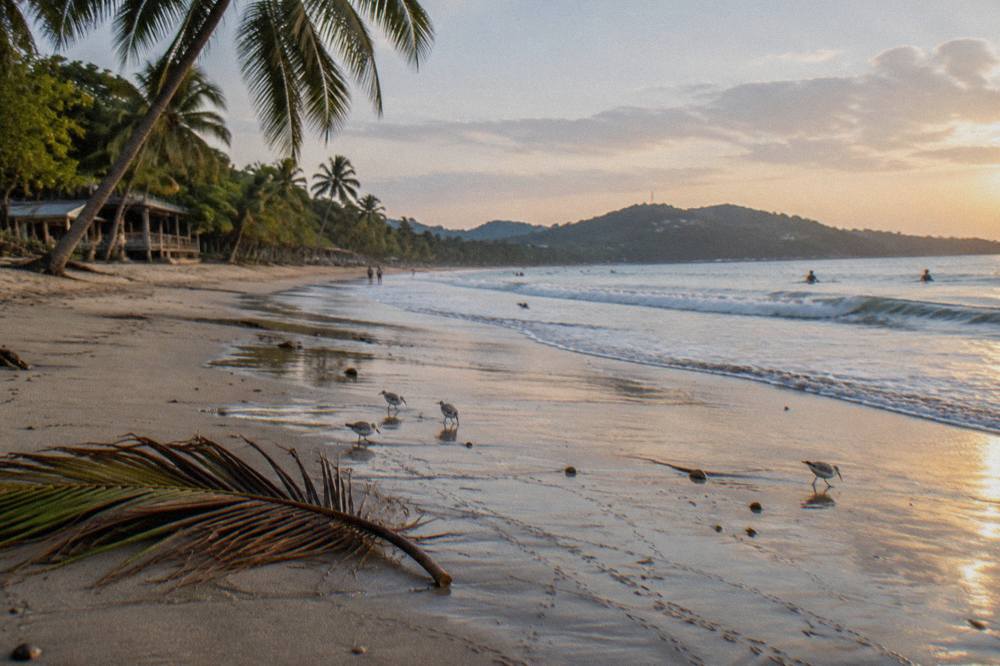
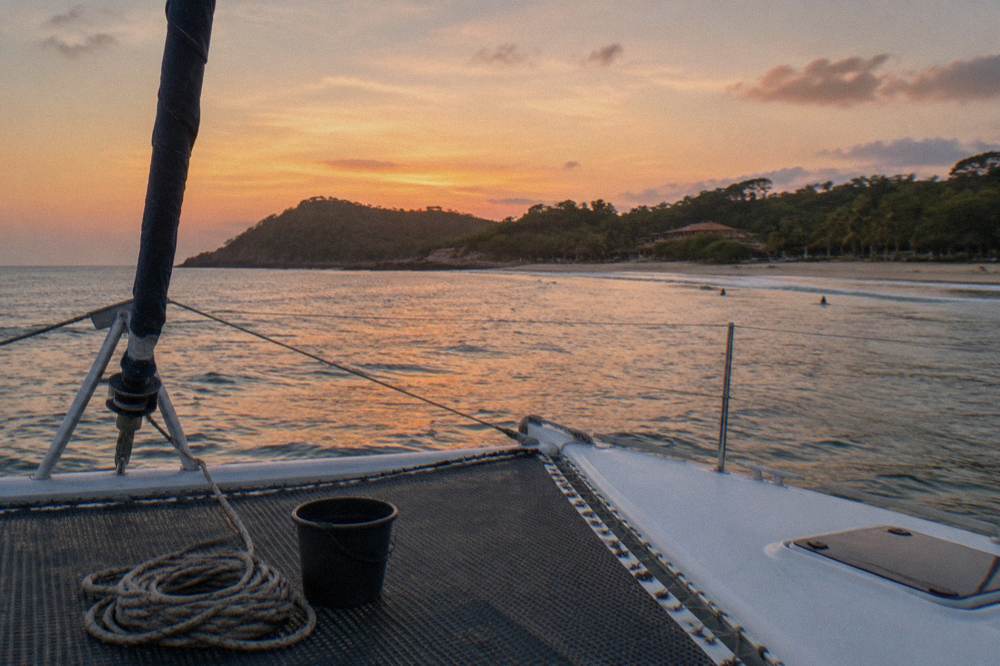
The sunset is the daily ritual. Because the town faces almost due west over the Pacific, the whole place pauses for it, and the sailing fleet is built around it, with typical departures between about 12:45 pm and 1:15 pm and returns near 6:00 pm after the sun is down. You can read the wider picture in the Tamarindo sunset times guide, but the short version is that the sky over the bay is the shared entertainment every evening of the year.
How The Seasons Change The Answer
Dry season, December through April, brings dependable sun, calmer seas and the biggest crowds. Green season, May through November, brings lower prices, greener hills and afternoon rain, with October the wettest month at about 354.1 mm on 30-year normals. Both seasons work for a visit, but they produce two different Tamarindos.
The weather facts come from 30-year rainfall normals and coastal sea-temperature records, and they are stark. January through March average under 5 mm of rain per month; October averages about 354.1 mm. The sea stays warm all year, from about 27.3 C in January to about 29.4 C in May, so swimming and snorkeling never really close. What changes is the sky, the crowd level and the price of a room.
For boat trips the trade-off is visibility versus atmosphere. Operators report snorkel visibility of roughly 15 to 25 m in dry season against 8 to 12 m or less in green season, and the Papagayo winds that peak December through March can roughen the surface in the afternoon, which is one reason morning departures are often recommended for snorkeling in those months. Green-season afternoons can bring rain during exactly the hours a sunset sail runs, yet plenty of sails go out and plenty of guests report dramatic skies. If the boat day is the centerpiece of your trip and you can only travel once, the January-to-April window is the safer bet, and the best time for a Tamarindo boat tour guide works through the same trade-off month by month.
The budget answer flips. Green season, roughly May to November, is when accommodations discount hardest and the town exhales. A five-day green-season trip with two boat days can cost dramatically less than the same week in February.
| Factor | Dry season (Dec to Apr) | Green season (May to Nov) |
|---|---|---|
| Crowd level | Peak, busiest February onward | Noticeably lighter, lowest October |
| Snorkel visibility, operators report | About 15 to 25 m | About 8 to 12 m or less |
| Sea temperature, monthly average | 27.3 to 29.3 C | 28.7 to 29.4 C |
| Boat trip conditions | Calm mornings, windy afternoons Dec to Mar | Humid, possible afternoon rain, lush coast |
What A Catamaran Day Actually Looks Like
A shared sunset trip boards between about 12:45 and 1:15 pm, sails up or down the coast for about an hour, anchors at a cove for swimming, snorkeling, kayaks and paddleboards, serves a meal, then positions offshore for the sunset and returns to the beach near 6:00 pm. Total time on the water is four to five and a half hours depending on the listing.
The structure is consistent across the fleet, and it explains why these trips get booked so heavily. You leave the hot beach behind around midday, the wind picks up as the boat clears the headland, and the anchor goes down somewhere with better water than the open beach, since sediment and wave action often cloud the water right off Playa Tamarindo while coves and the Catalina Islands area to the north hold clearer water. The crew hands out masks, fins, noodles and life jackets; kayaks and paddleboards go over the side on most boats; then lunch comes out.
The Timarouba sunset sail, the featured trip on this site, lists lunch with vegetarian options, an open bar, snorkel gear, two kayaks and a paddle, and covers all of that ground in its five hours, from $97 per person. The listing states free cancellation, and transport is not stated, so check the listing for how you reach the departure point at the El Chiringuito area of the beach.
Families with small children or anyone who prefers calmer water and earlier nights should look at the morning format instead. The morning nature catamaran with kids' games runs 4.5 hours from Tamarindo beach with lunch and an open bar, from $98 per person, though it has too few reviews for a star rating. The Flamingo morning catamaran next door is a stronger reviewed option, a perfect 5.0 from 44 reviews with snacks and unlimited drinks, though its price is on the listing rather than published as a number.
What Tamarindo Costs For A Short Trip
Count on $88 to $169 per person for a shared catamaran trip, $88 being the cheapest firm-priced shared sunset sail, $133.35 the priciest sunset cruise and $169 an open-bar day sail from Flamingo with hotel transfer, plus $500 to $2,972.98 per group for a private charter. Add food and lodging at resort prices, and airport transfer at $30 to $49 per person shared or about $130 per vehicle private, and a comfortable four-day visit budgets itself.
The tour numbers are firm from the listings. On the shared side, the budget Pacific Lounge sunset runs from $88 per person at 4.8 from 30 reviews, the Blue Dolphin sunset from $119, the no-meal Playa Tamarindo sunset sail from $133.35, and the day cruises from $90 for the Blue Dolphin day catamaran and the all-inclusive day sail up to $132 for the Marlin del Rey day sail with lunch. Several listings, including the Albatros sunset sail and the all-inclusive sunset sail with transfers, publish their price only on the live listing, so treat those as check-before-you-plan.
Private charters span a wide band. The private snorkel boat with photos included starts from $500 per group for four hours, the intimate sailboat experience from $900 per group for up to six, the private sunset sail with food and open bar from $1,167 per group, the private Pacific Lounge sunset from $1,020 per group, the private Flamingo sunset catamaran from $1,900 per group at a 5.0 rating from 50 reviews, the five-hour yacht charter from $2,900 per group for up to 12, and the private Marlin del Rey charter from $2,972.98 per group. Split six ways, the low end of that band starts to rival shared prices.
| Spending line | Reported or listed range | Basis |
|---|---|---|
| Shared sunset or day catamaran | From $88 to $169 per person | Firm prices for these trips |
| Private catamaran charter | From $500 to $2,972.98 per group | Firm listed prices |
| Airport shared shuttle, LIR to town | $30 to $49 per person | Operator and press reporting |
| Private transfer, LIR to town | From about $130 per vehicle | Operator and press reporting |
| Crew tip, half-day boat tour | Commonly $5 to $10 per person | Reported custom, not law |
Tipping deserves one honest line, since it confuses visitors. Restaurants add a service charge by law and boat crews are tipped separately; operators and travel sites report $5 to $10 per person for a half-day tour and $10 to $20 for a full day as the usual custom. It is a custom, not an obligation. The official Costa Rica tourism site covers entry requirements for the trip itself, and checking current rules there before flying is the sensible move.
How Many Days Are Enough
Three to five days is the sweet spot for most visitors: day one for the beach and the town, day two for a catamaran sail, day three for a second water activity or a side trip to Conchal or Flamingo, and optional extra days for surf lessons or a private charter. Fewer than three days and you lose a day to weather risk; more than five and you will likely move on.
The reasoning is practical rather than sentimental. Boat trips run on the weather and the season, and a one-boat-day itinerary gambles everything on that single afternoon. With two possible sailing days, one shared sunset and one morning format, a wet or windy afternoon stops being a disaster. The sunrise-to-sunset pattern of the town also burns energy fast; four days of it satisfies most people.
A sample shape for four days: arrive from Liberia, settle in, walk the beach at sunset from the sand, which costs nothing. Day two, the Timarouba sunset sail or the Flamingo sunset catamaran, both afternoon commitments. Day three, a midday trip, the Blue Dolphin day catamaran or the all-inclusive day sail, then a lazy lunch and the afternoon off. Day four, a road trip to Playa Conchal, 29 to 35 minutes away, or an estuary-side wander, then a final dinner in town. Groups celebrating something often swap day four for a private charter, and the from-$1,167 private sunset sail with food and open bar is the entry point for that.
The estuary deserves a specific mention because it is the town's other water story. The Tamarindo Estuary, part of Las Baulas, is a mangrove wetland of worldwide importance where small-boat trips run with local guides and report howler monkeys, crocodiles and birds, all tide dependent. Those estuary outings are sold separately from this site's catamaran catalogue, and prices for them vary by operator, so treat the mangrove trip as a bonus activity to arrange locally, and read the Tamarindo estuary boat tour guide before counting on it.
The Honest Verdict
Tamarindo is worth visiting for the majority of beach-bound travelers: it is the easiest launch point on this coast for catamaran trips, it has the infrastructure to make a short trip frictionless, and its marine side, from dolphin reports to whale season to nightly sunset sails, delivers more reliably than its crowded reputation suggests. It is not worth it if your goal is escaping other tourists.
The town's critics are right about the crowds and the prices. They are also, mostly, comparing it to a version of the coast that requires more effort: quieter beaches need a car, a plan and a tolerance for thinner services. Tamarindo trades mystery for convenience, and for a four-day trip built around a sunset sail, a morning snorkel and a couple of good dinners, that trade is usually worth making. This site, Tamarindo Catamaran Cruises, exists because the boat scene here is a genuinely busy one, with 32 bookable catamaran trips spread across sunset sails, day cruises and private charters.
One closing perspective trick: judge the town from the water, not the beach road. From a deck half a mile offshore, Tamarindo reads exactly as the brochures promise, a green headland, a long curve of sand and a Pacific horizon that ignites most evenings. The astronomical tables for the town put sunset between about 5:16 pm and 6:08 pm across the year, and every sunset trip in these listings is timed to it. That view is the reason most visitors answer this question with a yes, and it is the one thing the town's critics rarely see.
If the verdict is a yes for you, these three trips cover the range of what the fleet does best.
Common Questions About Visiting Tamarindo
Is Tamarindo Worth Visiting In Costa Rica?
For most travelers, yes. The town offers a walkable center, dependable surf, a deep lineup of catamaran sails from $88 to $169 per person on firm-priced shared listings, and a location under two hours from Liberia airport. It suits people who want convenience and water activities over solitude.
Is Tamarindo too touristy?
It is genuinely developed, with busy streets in dry season and resort-level prices. Visitors who want quiet usually base in Playa Conchal, Potrero or another nearby beach and still sail out of Tamarindo or Flamingo.
What is the best time of year to visit Tamarindo?
December through April for reliable sun, calmer seas and the best reported snorkel visibility, at the cost of crowds. May through November for lower prices and greener scenery, accepting possible afternoon rain and reduced water clarity.
Can you see turtles or whales in Tamarindo?
Organized turtle observation inside Las Baulas park is currently restricted, and boats do not land on the nesting beach. Humpback whales are reported in two windows, December to March or April and July to mid November, and 2026 guest reviews report dolphins, turtles and whales on catamaran trips, but no sighting is ever guaranteed.
How many days do you need in Tamarindo?
Three to five days covers the beach, one or two boat trips, a side visit to Playa Conchal or Flamingo and some downtime, without wearing out the town's limited range of activities.